
Make senseHearthlandsSoma Isles
Letter 2: Trust your own lead
Whether leading or following, the first person you have to trust is you.
 Grokkist Press
Reading Room
Make senseHearthlandsSoma Isles
Whether leading or following, the first person you have to trust is you.
Make senseEntangled ValeWild Margin
Can our awareness breathe life into even the most transactional spaces?
Make senseEntangled ValeWild Margin
How facilitators can design for aliveness by trading certainty for presence, and making room for what wasn’t in the plan.
Make senseEntangled Vale
Teaching is often much easier in theory.

Make senseEntangled Vale
Sometimes a change in perspective is all that stands between our worst weaknesses and our greatest gifts.

Make senseEntangled Vale
How can we know what's fair when our understanding of the word may depend on the hand we've been dealt?

Make senseEntangled Vale
As we struggle to raise ourselves up, what are we willing to bury in the process?

Make senseEntangled Vale
As inexorable as the forces of division may seem, everything a river erodes is deposited somewhere downstream.

Make senseWild Margin
When change is the status quo, how do we know if we're changing for the better?

Make senseWild Margin
When our best laid plans go awry, can we learn to trust the process?

Make senseSoma Isles
What if you’re not stuck — just circling the wrong question?
Make senseEntangled ValeMaker's Forge
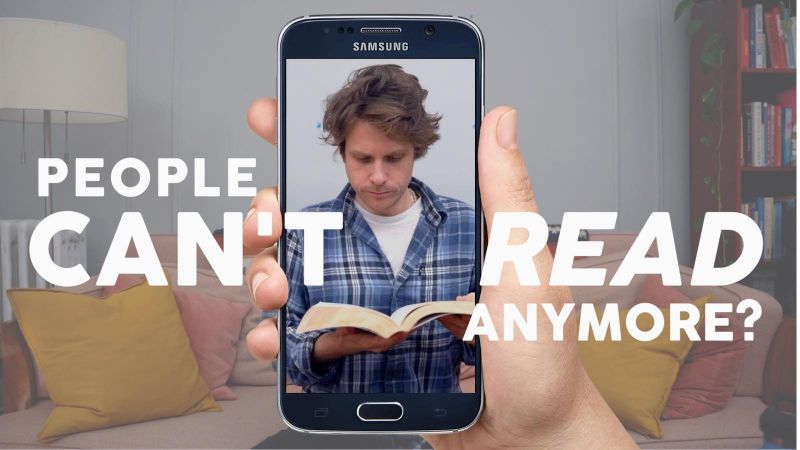
In a world flooded with content and hungry for context, what if the future of reading isn’t about books, but about reclaiming art, attention, and literacy through a return to the Didactic Muse — reviving bardic acts of gathering and sense-making in the algorithmic age.
Lessons from Edward Gibbon and his history of Rome's collapse. Decline, as Gibbon tells it, isn't just geopolitical but psychological, even spiritual — a civilisation continuing outwardly while 'a pervasive nihilism can incapacitate a people from within'. Not doom-saying so much as pattern
Read the note ↗'Your inability to focus isn't a moral failing. It's a design problem.' Humans have fretted about declining literacy for centuries — from Thomas More to penny dreadfuls to comic books. Carlo Iacono argues the real issue isn't screens but the environments built around them: notifications, i
Read the note ↗Adam Neely turns what could've been a cranky 'AI is bad' rant into a rich meditation on what music means — to artists, listeners and communities. A careful walkthrough of the culture forming around tools like Suno: why so many musicians recoil, why some lean in, and where the real stakes l
Read the note ↗A century before your favourite productivity guru, neuroscience pioneer Santiago Ramón y Cajal handed out devastatingly precise diagnoses for what ails the creatively ambitious but motivationally cursed — six 'diseases of the will,' a lovingly savage taxonomy of minds that can't get out of
Read the note ↗A neat fix for a problem every podcast listener knows: you hear something worth remembering, but by the time you try to capture it the moment's gone. Screenshot your player (with a visible timestamp), email it in, and within a minute you get back the clip and a full transcript — no app, no
Read the note ↗Kahneman gave us fast intuition vs. slow reason. Mathematician David Bessis gently rebels, pointing at what's missing: System 3, the inner bridge where intuition and logic learn to talk to each other. 'When my intuition tells me A and my reason tells me B… that's the moment to resort to Sy
Read the note ↗