
Guide to the Grokkist Press
What the Press is, how it thinks about knowledge, and how to find your way around.
It is a joy to be hidden, and a disaster not to be found.
Publishing has never been easier, and many of us still hesitate to turn our most meaningful work into disposable content. The Grokkist Press makes context, not content: a place where thoughtful work finds the people it was written for. What matters here is not how many people see a piece, but that it reaches the ones who care.
The Press publishes essays, letters, talks, stories, poems, albums and books in the making, by people working out what they know in public. Most of it comes from the Grokkist community; some comes from writers elsewhere whose work belongs in the same conversation.
How the Press knows
Every publisher works from an idea of what knowledge is and what makes a piece good, whether or not it says so. Ours is different from the one most of us were trained in, and it shapes everything here: what we publish, how we edit, and how we help you find your way around.
The familiar scholarly idea treats knowledge as statements about the world, made by someone who stands outside it, checked by method and credentials, and valued for being new. That idea has given us a great deal. It also leaves out most of what people actually know.
| The familiar scholarly idea | How the Press works | |
|---|---|---|
| What knowledge is | Statements, detached from whoever knows them | Something that lives in people, practices and relationships. A piece of writing is a trace of a living practice. |
| What a piece is | A finished product | A moment in something still becoming |
| What counts as knowing | Mainly arguments and claims | Lived, aesthetic, practical and propositional knowing, none above the others |
| What makes it trustworthy | Method, peer review, credentials | Honesty about where you stand, fidelity to experience, and recognition by people who know the territory |
| Where authority comes from | Speaking as if from nowhere | Saying clearly where you speak from |
| Boundaries | Disciplines | The question decides the shape |
| What it's worth | Novelty and citations | What happens when someone meets it |
| The editor's job | Gatekeeping | Accompanying a piece until it is legible |
None of this means anything goes. Rigour moves to different places. We look for a writer who is reflexive about their own position, faithful to what actually happened, coherent, generous to the reader, and willing to be accountable to a community that can recognise the work.
Nor is it new. It draws on a long line of thinkers about knowing in practice: Michael Polanyi on tacit knowledge, Donald Schön on the reflective practitioner, John Heron and Peter Reason on participatory inquiry and its four ways of knowing, Donna Haraway on situated knowledge, Gregory Bateson on the ecology of mind. What Grokkist adds is legibility as the central move: becoming legible to yourself, then to your peers, then to the world. The Press is where that becoming goes public.
We are still working this out, and saying so is part of it.
Finding your way in
Because most of what we publish crosses subjects, we don't sort by them. Instead every piece is filed in a few ways, each answering a different question.
By register: how settled is the thinking?
- Field notes are written close to the experience, while it is still happening: dispatches, diaries, recaps, first explorations.
- Studies work something through over time: essays that develop an idea with care, series in progress, practice in conversation with a tradition.
- Syntheses are integrated and stand on their own: pieces that pull a body of thinking together, and finished made things like a poem, a story or an album.
This is not a ladder. Field notes carry the authority of immediacy; syntheses carry the authority of integration. An early, unguarded exploration can be exactly what a reader needs, and a book can be field notes.
By mood: what would you like to read next?
Each piece answers one of seven requests a reader might bring. Surprise me (what could change the way I see things?). Give me something to wonder about (what happens if I follow this curiosity?). Spark my imagination (what could I imagine that doesn't exist yet?). Move me (what might touch something in me?). Help me feel less alone (does anyone else experience the world this way?). Help me feel grounded (what might bring me back to myself?). Help me make sense, or find a next step (what could I understand, try or change?). The Snackables, the things we find elsewhere and pass on, use the same seven.
By Realm
If you know the Grokkist map, the seven Realms gather writing by the kind of attention it asks for, from the Crossroads to the Wild Margin.
Series and collections
A series is one writer's work published in parts, best read from the beginning. Some series are books in the making. A collection is gathered by the editors from several writers, and can be read in any order.
How to read a fingerprint
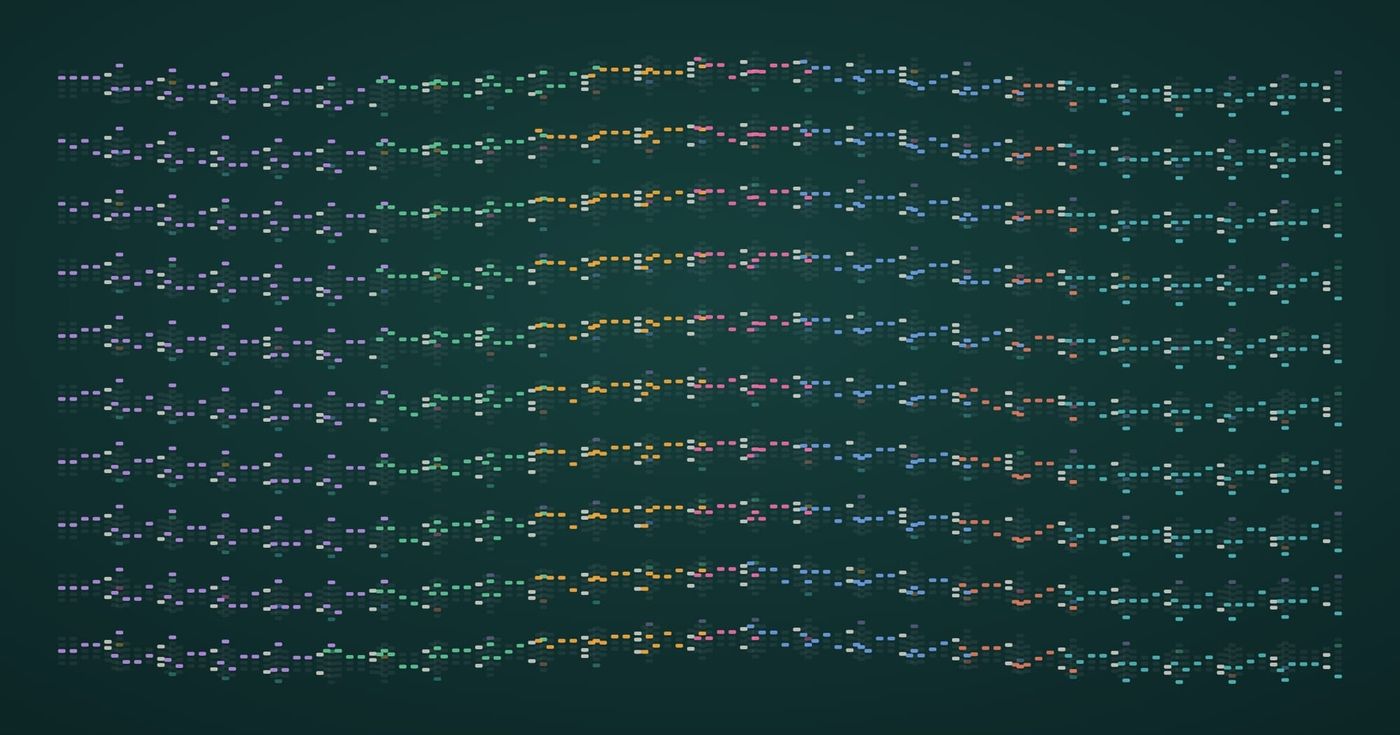
At the end of every piece, and beside it on every card, you'll find a small signature like this one. It is the Press's reading of the piece: where it comes from and how it was made. It is not a score. Nothing on it is better at one end than the other, and there is nothing to add up.
It's a signature in six short lanes, read from left to right. Each lane is one question, and the filled cell is this piece's answer. Every lane hangs from the same line at the top, and empty slots are drawn as outlines, so you can count them. In the first four lanes, cells run from the intimate end at the top to the public end at the bottom:
- How far from the experience: from written close to it, down to fully integrated.
- Stance: from openly exploring, down to making a clear claim.
- What it stands on: personal experience, a practice or tradition, or a community of practice.
- How it was made: alone, accompanied (by an editor, a guide or a programme), or in a circle.
The fifth lane, in ochre, shows the kinds of knowing it carries: lived, aesthetic, practical and propositional. A piece often lights more than one, and none is above the others. The last lane, in colour, is its mood; a paler cell is a second one it might also answer.
You soon learn to read the shape at a glance: a signature that sits high is a piece kept close to its writer, one that sits low was made out in the open, and most land somewhere in between.
The readings were made carefully but quickly, and some will be wrong. Writers can ask for theirs to be changed, and in time we hope readers will add their own readings too: where the Press, the writer and the readers see a piece differently is itself worth seeing. You can also see the whole Press mapped by these readings, which shows where the writing gathers and where it is sparse.
Who writes here
Members finding their voice. For many contributors, publishing is part of becoming legible: to others, and to themselves. A first piece here is often a stretch, and it is met by a generous audience.
Seasoned writers and makers. Some contributors already have their own newsletters, channels or books. The Press brings their work into conversation with grokkists, sometimes by cross-posting.
Disgruntled academics and intellectual reimaginers. Scholars who want to reconnect with the curiosity that started them, and write rigorously in ways that let the person behind the work be present in it.
Artists and creators of beauty. Artists bring their own kind of inquiry. Here they can share not only finished work but the ideas, processes and stories behind it.
How a piece comes to be
Every piece starts with a conversation with an editor. From there, the editor's job is accompaniment rather than gatekeeping: helping the work become what it wants to be, at whatever register suits it. Pieces often grow in relationship with the rest of Grokkist. An article can become a gathering where people talk it through, and a gathering can crystallise into an article. Over longer arcs, a run of pieces can become a series, and a series can become a book.
Who you'll work with
The Press is small on purpose. If you write for it, these are the two people you'll be talking to.
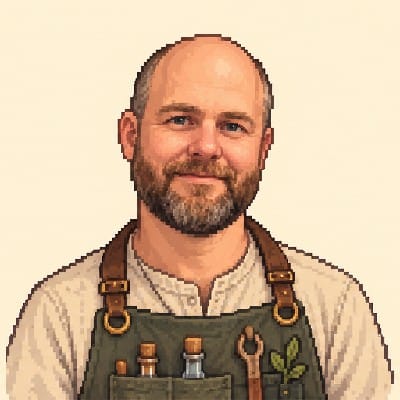

Write to us both at [email protected]. The portraits are from the Hearthlands, the Grokkist village, where you can also visit Will's library and Danu's workshop.
Copyright and publishing rights
All written works published in the Grokkist Press remain the intellectual property of their authors, who keep full copyright over their contributions. Grokkist holds copyright over the design, layout and presentation of the Press, including site styling, curatorial framing and associated branding. Authors grant Grokkist a non-exclusive right to publish their work here and may reuse it elsewhere as they wish.
Your invitation
The Press is always looking for new voices. Whether you have a finished piece or the seed of an idea, start with a conversation about what you'd like to share. Get in touch at [email protected].