
Less aloneMaker's ForgeFlirting with Wisdom
Against the Grain
Struggling at something doesn’t mean you’re bad at it—sometimes it just means you’re starting from a different place.

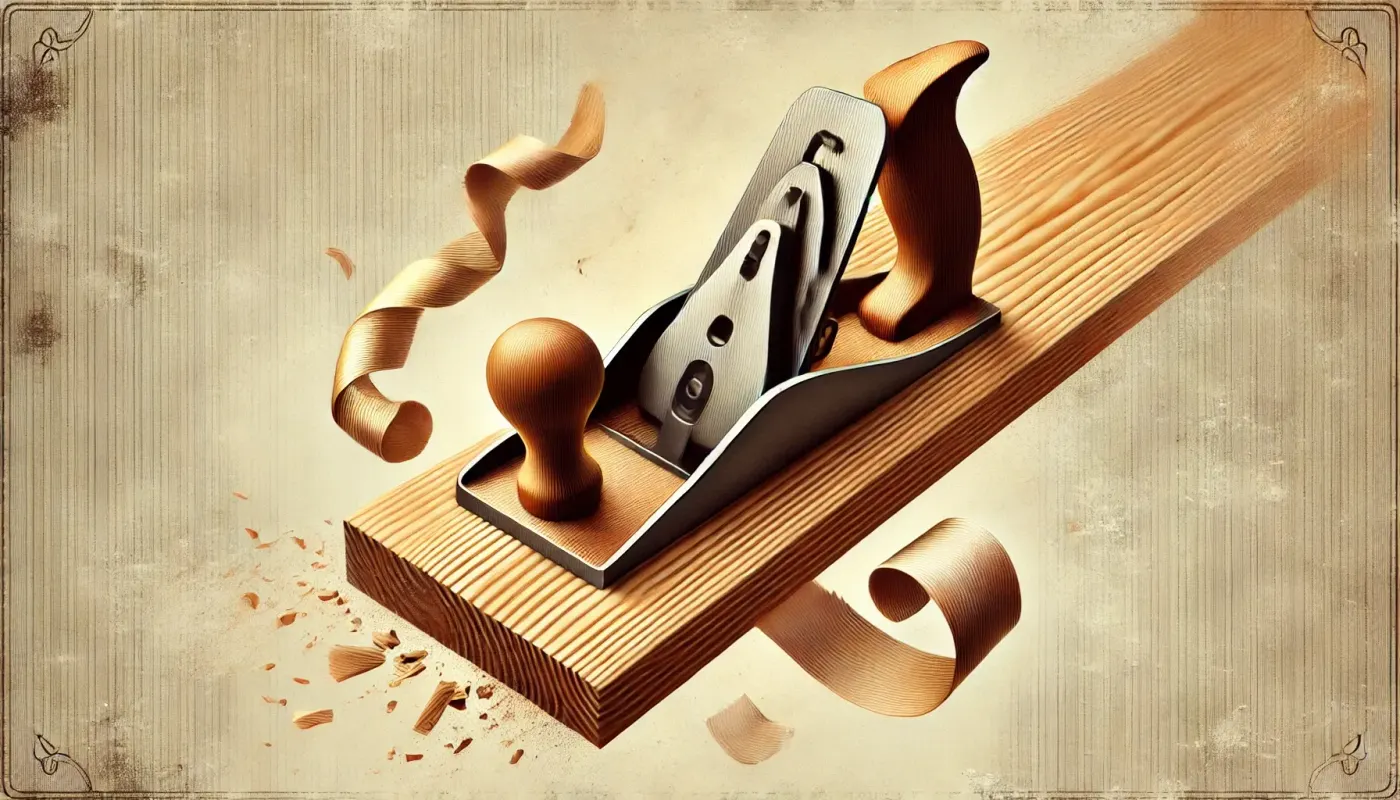
I was eleven years old and not enjoying my Woodwork class.[1]
Cutting off a large chunk of my little finger while learning how to use a plane hadn’t helped. This new low followed a series of very average woodworking projects, every one of them bearing the scars of mistakes or ineptness.
Around me, my peers produced nicely worked pieces that each highlighted how mediocre my efforts were by comparison.
I think it was after the plane mishap that I consciously decided that I was never going to be any good at woodwork and should stop worrying about it. In effect I gave up trying or expecting any better of myself.
The sad thing is that I loved wood and still do. I love its feel, its grain, its smell and I would give my eye teeth to be able to work it competently.
My woodworking incompetence had come as a shock, since I usually did well at things. Being at the bottom of the pack was a novel and unwelcome experience.
I wasn’t used to struggling. Finding myself at the bottom of the pack was a novel and unwelcome experience.
What I failed to appreciate, however, was that my woodwork class was not a level playing field. It all depended on parents. While my father did try DIY, he was self-taught, and his attempts were usually accompanied by a large dollop of tension, as he tried to figure out what he was doing. I learned to steer well clear. Hence, when I hit woodworking class, I was a complete beginner.
By contrast, many of my classmates were the children of builders and other such practical people. Kiwi Dads pride themselves on their Mr. Fix-it skills and my classmates had all learned the rudiments from their fathers well before they hit woodwork class.
It may very well be that I was brilliant, for a complete beginner. I will never know. But no-one told me this, and instead I felt useless.
Fast-forward to me as a teacher, where I spent much of my career trying to teach designers how to write an essay and to present seminars.
Most of my students had become designers precisely because they hated writing (and exams even more). And most shared a common story. At some point they had decided (or, even worse, a teacher had told them) that they could not write. Every year, the first tutorials resounded with the defeatist sound of students saying, “but I can’t write.”
The problem with this, and with what I had done in my woodworking class, was that it became self-fulfilling. If you say to yourself that you can’t do something, then you have categorically ruled out the situation ever changing, and you leave yourself no incentive to put in the effort to improve. Instead, you spend your time refining the things you already do well, rather than developing the ones you are weaker at.
I don’t remember the exact moment, but at some point around 2000 I discovered there was a simple way to counter this mindset. From then on, if ever a student said something involving “I can’t do x” I would tell them to repeat the phrase and then add the word ‘yet’.
“I can’t write, yet” is not final. It admits the possibility of change over time. And it sows the seed of doubt in the student’s certainty about their own inability.
‘I can’t write, yet’ leaves the door open. It plants a seed of doubt in the certainty of ‘I can’t.’
In the end it became a running joke with the students. But it served its purpose. It’s the moralising equivalent of an earworm. Once you have heard it, it is difficult to unhear, and it pops up whenever given an opportunity. Hopefully they still have it with them.
Mind you, it has rebounded on me. I now have no real excuse for not improving my woodworking – except that it was one of the things that I have had to put on hold to write this series. It will happen. Just not yet.
Notes
[1] Americans would call this class ‘Shop’ or variants thereof.



In good company
Replies from signed-in readers. They open in their own space, so you can sit with the piece first.
In good company
Talk about this piece