
Move meEntangled ValeFlirting with Wisdom
Find a Penny
The tactile history of coins and the fading art of the coin toss—how a simple flip can uncover our deepest desires.


As a small child, one of my favourite activities was waiting for my parents to buy something. I was a budding coin collector, and I lived in hope that the small change would reveal something exciting to add to my collection.
England, in the 1960s, was still using its old currency. That meant that it was possible to get coins minted from any time after 1860 in your change.
I was not interested in all the boring Georges and Edwards that inhabited the early twentieth century. I wanted coins with the head of Queen Victoria.
But not just any ones.
The coins from the 1890s, in which Victoria was depicted as an old widow, lacked elegance. The coins from 1860-90, on the other hand, oozed it.
Called ‘bun pennies’, because of the way Victoria’s hair was shown, the portrait was of a young and flowing Victoria.
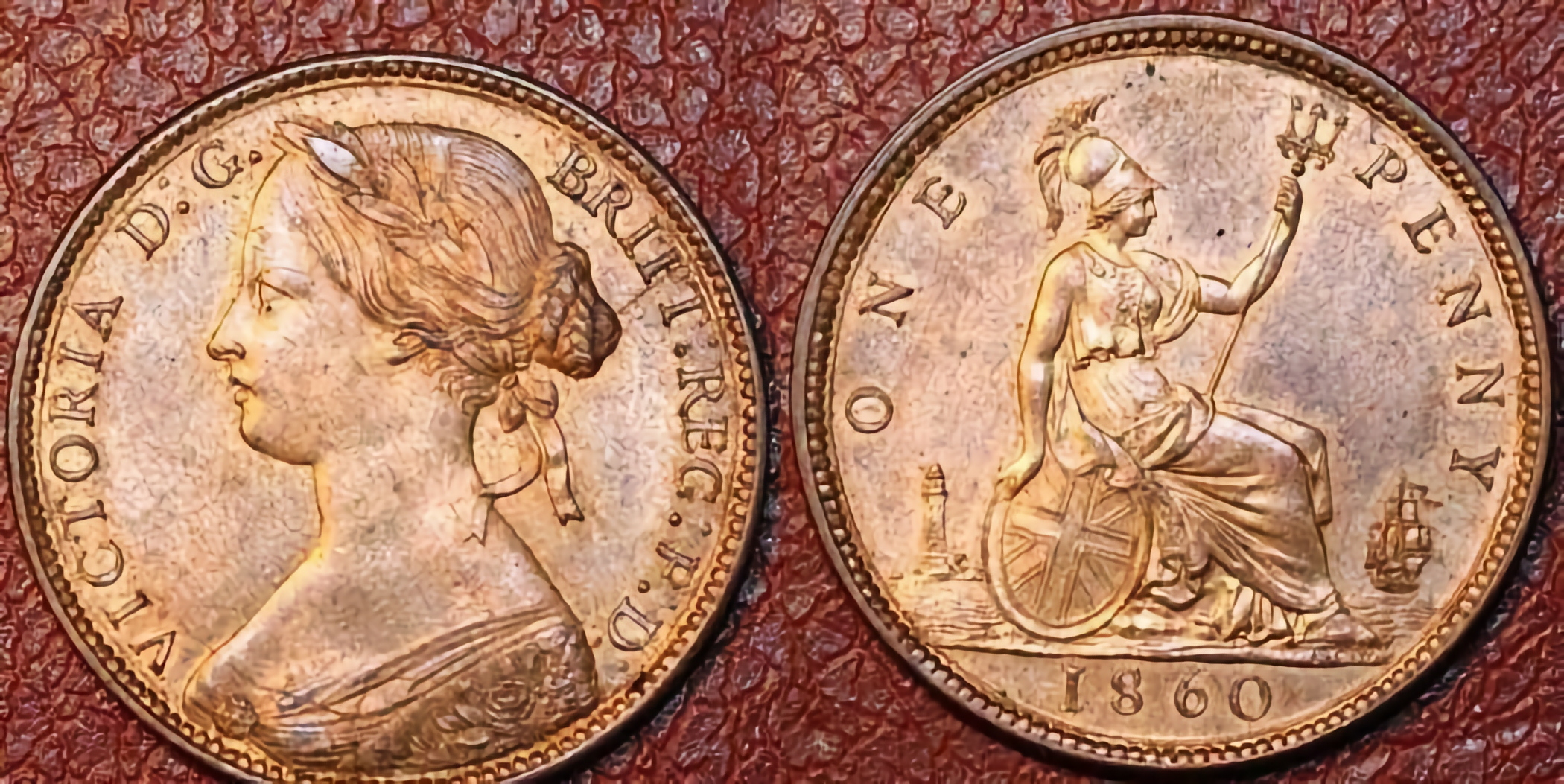
How I coveted those coins. On receiving one, I would imagine who might have held it before me. Put it in their pocket. Taken it out of their purse. Who had dropped it in the street, and who had found it.
Coins brought a hands-on connection to history, meaning you could hold a penny that thousands had held before you – some of them elegant ladies, others whiskered gentlemen.
Having history in your pocket was a wonderful thing for a child.
Coins meant having a hands-on connection to history in your pocket — a wonderful thing for a child.
It is a bit sad to think that coming generations are unlikely to share, or even understand, my experience. Online payment will mean that individually tailored cards take over from shared, tactile cash. The historical wonder that I encountered will be no more – yet another example of the erasure of history that is so prevalent in our culture.
The other reason to mourn the loss of coins is that children will gradually forget how to toss them. Tossing a coin well was something of a rite of passage in my youth: learning how to flick it and watch the coin whirr up into the air before swooping down. Anticipating whether it would land heads or tails.
I particularly regret the coming loss of this skill, because tossing a coin is such a good way of making decisions.
Creative people rely on generating lots of ideas, but this means that they are constantly having to choose between possible options. And it can be hard to select a winner and let go of the other good options.
To deal with this, when teaching, I would start by telling my students a long story about how it is possible to come up with a failsafe way of sorting out a decision, and then gradually work up to the great reveal, when I would grab a coin from my pocket. It got a laugh, but then I made the student choose heads or tails and actually tossed the coin.
Once it came down, I’d ask them how they felt about the result. Were they relieved that it landed that way, or were they disappointed?
As it turns out, this technique has a basis in psychological research. In a cognitive psychology study from 2019, researchers explored how the simple act of flipping a coin can reveal our subconscious preferences.
The researchers found that when people are torn between two choices, tossing a coin forces them to envision one option becoming real – and their emotional reaction to the outcome helps clarify what they truly want.
It's a decision-making tool masquerading as chance.
This insight is why I encouraged my students not to follow the coin’s verdict blindly, but to pay attention to their own gut reaction when it landed.
If they felt disappointment, the decision had already been made; the coin was just a mirror reflecting what they already knew. And if they were genuinely neutral, then they might as well follow the coin.
A coin flip isn’t just chance – it’s a mirror. If you feel relief or disappointment when it lands, you already know your answer.
But what happens when we lose the physical coin?
Could the same experience be replicated digitally? Perhaps – but the sensation of flicking metal through the air, of watching it spin and anticipating the result, has a kind of magic to it. Clicking a button lacks that visceral quality.
Perhaps one could get the same effect by tossing a credit card, but somehow I doubt it will catch on. The spin would be much less satisfying, and I don’t think plastic has the same gravitas as metal. Can you imagine anyone saying “find a credit card, have good luck?” No, me neither.



In good company
Replies from signed-in readers. They open in their own space, so you can sit with the piece first.
In good company
Talk about this piece