
The Speed of Trust
A note on the trouble with getting bigger, letting people see the seams, and finding each other in the flesh.
Watch the letter · or read it below
Hey friends,
Grokkist wants to get bigger. I can feel it pulling.
And I'll admit that this frightens me as much as it thrills me, which is not the thing a founder is supposed to say.
Here's why. Very few things get better as they get bigger.
How do you let a thing grow without letting it get worse?
I don't have a clean answer. What I have is a weekly production meeting and a handful of people generous enough to tell me the truth in it.
So let me take you in there. The room will tell you more than anything I could write about the room.
This week, one of us kept getting dropped from the call by a laptop that had decided to overheat. Somebody else was wearing an elf hat. Somebody else was joining from their car.
This is what it looks like backstage. I've been thinking I should show you more of it.
Years ago I taught computers to people, and I was proud when a session went perfectly. Everything prepared. Everything working. The room would sit there politely, learning almost nothing.
Then one day my computer broke in front of everyone and I floundered about trying to fix it, and something in the room let go. You could feel it. Oh — if he struggles, then maybe it's all right for me to struggle too.
I've never forgotten that. The seams are not the flaw in the thing. Quite often the seams are the thing.
So: the scenery.
In that same meeting I asked everyone to name the biggest problem Grokkist has right now, and to put them all on the table and see what they amounted to.
They all circled the same drain, which was scale. The system has to grow to meet the scale, or the scale has to slow down to meet the system, and we are currently doing an elaborate dance between the two.
For a long time the only questions here were whether this thing existed at all, and what kind of thing it wanted to be if so. Those questions got answered, which was lovely, and were immediately replaced by harder ones.
What got you up the first hill is not necessarily what will get you up the second.
One of the Elves said something I keep turning over. The real risk isn't the growing and isn't the systems — it's the promise. If you've only got enough thread for a crop top, don't promise people a sweater.
That's the default. Left alone, a growing thing gets more diluted, more managed, more mediocre, less itself.
So the only question that really matters is what you're paying attention to while it happens.
And then be led by people enough to actually ask them. They might tell you they never wanted a sweater and would much prefer a woollen bikini.
And so we aim to go at the speed of trust. Whatever that costs us in reach, or momentum, or the applause of people who think everything ought to be scaled.
These are all questions of operations, but I prefer to think of it in terms of hospitality.
Front of house and back of house — because a place where the guests feel at home and the staff are being wrung out behind the door isn't a warm place, it's a con.
The values people actually experience in an organisation are never the ones on the values statement. They're in the tiny, unglamorous moments nobody thinks are important enough to do properly. That's where the whole thing is either real or it isn't.
Or it's attempting to be real while showing its seams
That's the backstage. Now the front.
We've made a new space called Grokkists in the Wild. I have been filling it with photographs of grokkists I've met on my travels in different cities and countries, standing next to people I first knew as words on a screen. Kitchens and pubs and hillsides and studios, all over the world. It is an astonishing map of a thing I did not entirely realise we had built.
I'll admit that seeing them gathered in one place has knocked me sideways a bit.
At the moment it's mostly just my photos, but what I'd love is for it to be yours. If you've met another grokkist in the flesh, or done something out in the world with this daft, curious spirit in it — put it up.
Underneath that is a bigger question we're chewing on hard: how do we connect people in the physical world, and not only in the digital one.
Which brings me to something I've been circling for years.
You have been asking me about in-person gatherings for a long time. I never said no. I said not yet — because I didn't know how to do it well, and I badly didn't want to do it badly.
I think we're ready now. Mostly because I've found someone who knows how.
Alan Raw gave a Red Thread talk for us called What Was Built Without Permission, and I've not stopped thinking about it since.
Since 1993, with no funding, no institutional backing and nobody's blessing, Alan and a rolling cast of volunteers took over more than thirty disused shops in Hull and turned them into galleries, studios, darkrooms, community gardens, a graffiti festival, the biggest annual photography festival in the UK, and an eco-festival that ran a hundred and sixteen events in a single month. All volunteer-run. All built out of what was already lying about, thrown away, or empty.
Then the landlords sold up and the shutters came down. Six years on, those shops are still dark, with his organisation's name still over the door. I walked past them with him.
He has a line I can't shake. He talks about being the moss that grows between the pavers. The moss doesn't ask permission. It arrives, finds the crack, and gets on with it. It was here before the city and it will be here after. Cherish the moss, forget the grass.
He also mentioned, almost in passing, that at every exhibition opening he'd be the one carrying the canapés and making the cocktails, so he could talk to people and find out what they really thought.
Nobody knew he was the curator. Front of house. Of course.
And so, somewhere during my visit, we found ourselves inventing a festival.
Some kind of hybrid — an in-person gathering with an online spine, so nobody is shut out by geography or money. Grokkists finding other grokkists near them and simply meeting up. Watch parties. Alan floated sending out little bags of things so we could all do something together at the same moment — ring a bell, all at once, wherever in the world we happen to be.
A grokkist ting.
It has no name yet. No date, no country, no shape. Alan is going to lead it, and I am going to watch him very closely and learn.
Next year. More to come — much more.
Alan has also re-released Salt & Seeds, the very first book the Press published, now revised and expanded with a new cover I keep finding excuses to look at.
A book that went out into the world, travelled further than any of us expected, and came home changed. That's the whole premise of the Press, sitting there in your hands.
And we're getting better at books all the time.
Jane's Reimagine Music course had its first session this week, and I came away lit up.
We spent it exploring scores that don't look like scores — comic-book noises, blocks floating in space, a circle you go round until it's time to stop — discussing how they ought to sound and never once agreeing. Which is the point.
It's less a course in music than a course in loosening your grip on it. Notation, it turns out, is a map and not the terrain. And once you've noticed that, everything begins to wobble pleasantly. What actually counts as music? Birdsong? A film's soundtrack? A sentence of instructions? We finished with fewer answers than we started with, and far better questions.
You can still join the next session and catch the recording of the first. And if the ticket price is what's in the way, please don't let it be — that's what Forget About the Price Tag is for.
I'm giving a session for our friends at the Association of Sustainability Practitioners — free and open to all — with a title that does all the work by itself: The Work That Brings You Alive Hasn't Learned to Pay You — Yet.
It grew out of long conversations with Gwyn in Dorset about what Grokkist and ASP have in common, where we part company, and what the two spaces might have to offer each other. Kindred spirits in curiosity and care, arriving from quite different directions.
The talk lives in that long, awkward middle between the thing that lights you up and the thing that feeds you. Which is precisely where I sit with people in my one-to-one groksmithing work.
One more, close to the heart of all this.
Next week brings the very first Human Peer Support Space, built by a group of grokkists who noticed something. Peer support is usually organised around a diagnosis, or an identity, or a condition — and sometimes the thing you'd like some company for is simply being a person. Grief. Illness. Relationships. Meaning-making. The ordinary weight of a heavy, fast-moving world.
No fixing, no advice, no credentials at the door. Just somewhere to set it down for a while, among people who won't flinch.
A first session becomes whatever the people who show up make of it. Come and help them make this one something.
A more personal note to close.
My travels are still carrying me around, and the best of it remains meeting grokkists in the flesh — the week with Alan in Hull, the days by the sea with Gwyn in Dorset.
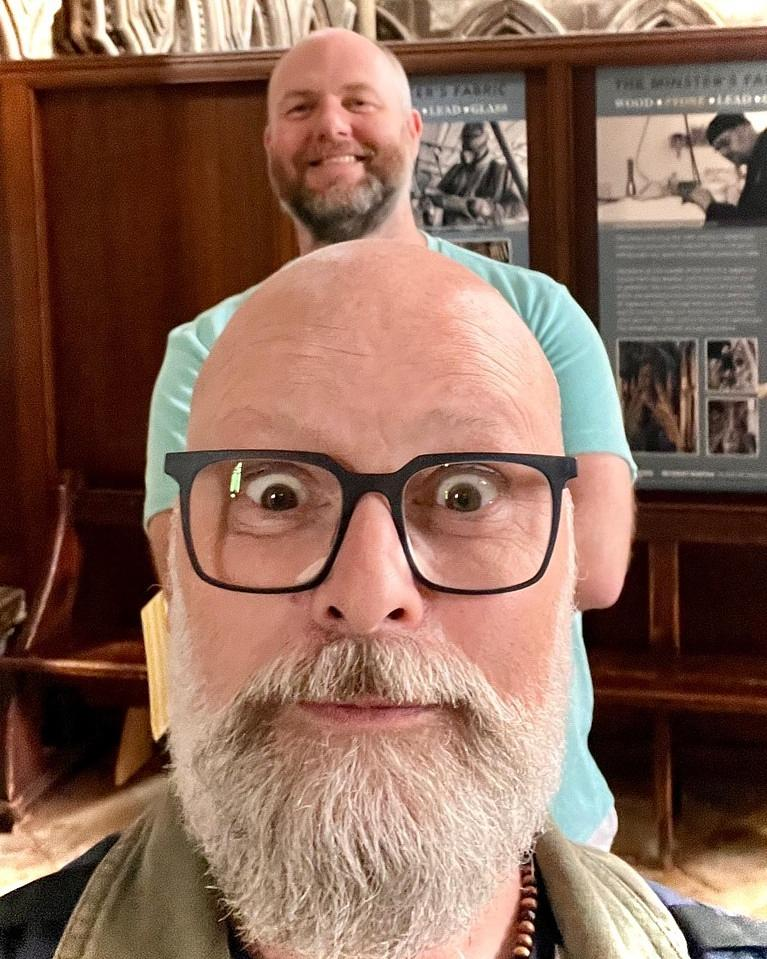
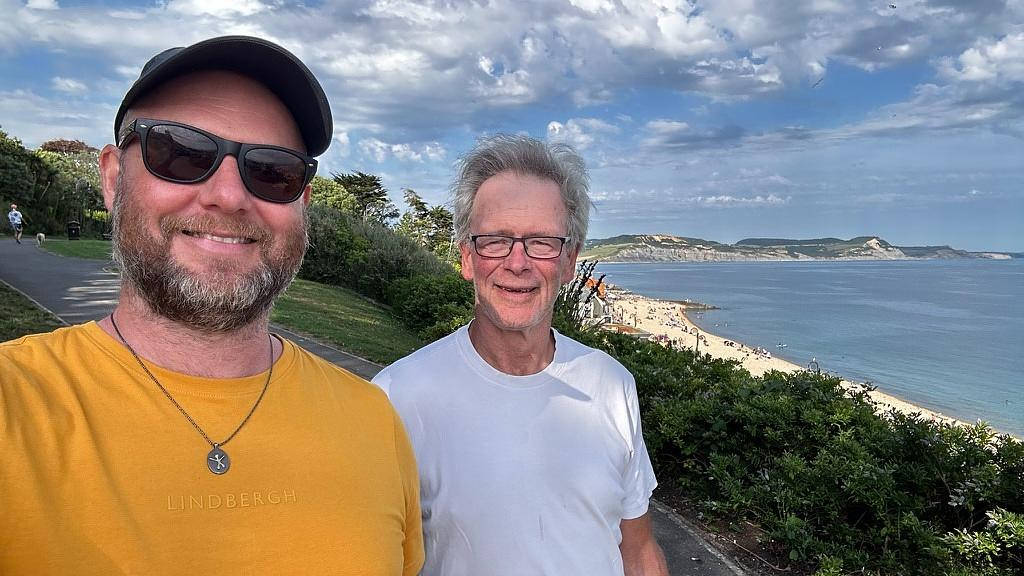
Those meetings do something no amount of good platform design can do. Which is why I keep coming back to the physical world, and to the festival, and to that growing wall of faces in the Wild.
Go and add yours to it.
Until next time, follow the breadcrumbs that catch your attention.
With curiosity and care,
Danu
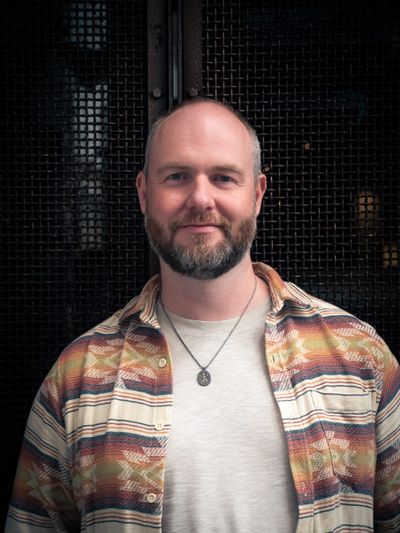
With curiosity and care,Danu Poyner
Write back
Replies from signed-in readers. They open in their own space, so you can sit with the piece first.
Write back
Replies to this letter