
Surprise meEntangled ValeSoma Isles
Life as a Lab
The best discoveries are often the ones we could never have predicted.
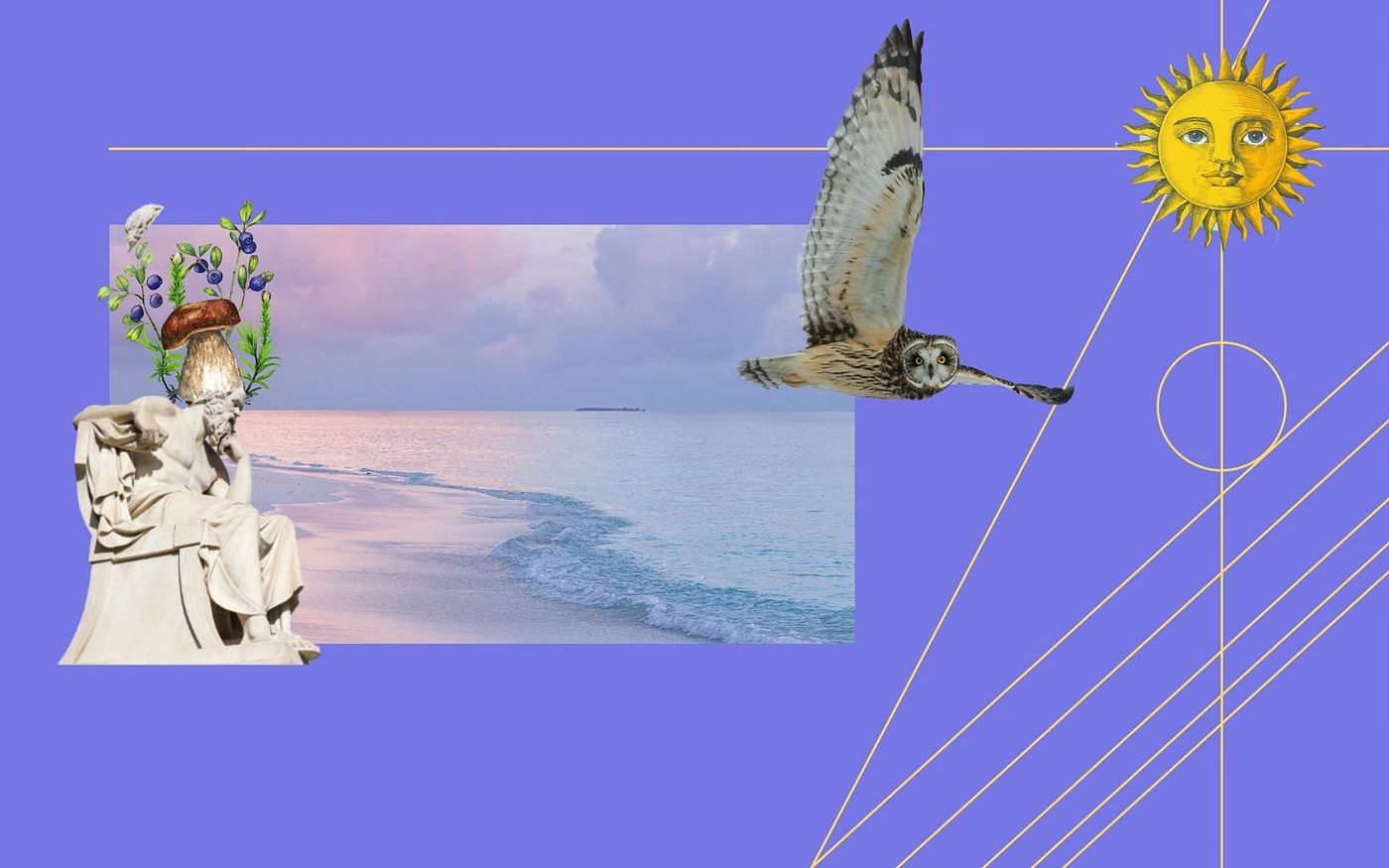
Life is many things. Some say life is a playground. Some say life is a piece of art. To me, life has always been more like one big laboratory. I have no desire to polish my life into a masterpiece. I want a life that is a wandering through the thick, breathing wilds of existence.
Many of us are tired of performance, utopian ideals, and empty representations that are progressively more hollow, less deep.
Life is deep. And life is messy.
So messy.
First we confused the map with the territory. Now we confuse ourselves with our performance.
That doesn’t mean that there is no value in acting “as if”.
It means that life is not a statue—a finished, polished piece of art to be perfected—but an experiment to be run.
Life itself is an iterative project—a work in constant progress. I am not here to arrive at a fixed state of being, but to engage in the process of becoming. I look around and see that every way of life, every culture, every philosophy, represents a communal experiment in living. No single path is a finished solution, only an approach to the ever-unfolding problem of how to be human-ing.
The “Art” of the Experiment
In a laboratory, the pressure to find the “right” way dissolves.
The real work is to experiment, innovate, and decide for myself what a good life looks like. Growth is just another name for self-experimentation. It’s a call to become an explorer of our own unknown, so that novelty and discovery can replace the stale comfort of routine.
Growth is just another name for self-experimentation.
The old idea that “if I do this, I will become that” feels rigid and lifeless. We are not here to replicate a life, but to run an experiment of our own. Our variables are different. So is our hypothesis for how to live. This is why adopting someone else’s philosophy as a blueprint often feels hollow. It skips the most crucial part: the active, messy, and deeply personal work of discovery. Life isn’t about the conclusion. It’s about formulating a question, questioning—and then living our way into the data.
Revising.
And questioning again.
The best data comes from un-controlling the experiment. We can operate on the assumption that if we designed the perfect test, with the right conditions and the right inputs, we can guarantee a specific result: happiness, purpose, success.
But my own laboratory kept producing unexpected outcomes.
I would set up the experiment for joy, and find grief. I would try to prove a hypothesis about strength, and find a lesson in being weak. At first, I saw this as a failure on my side. I failed in science. My methods must be wrong. The way I live my life must be wrong. But over time, I started to notice that my discoveries were not products of my own isolated agency. They emerged in what Donna Haraway would call “agential cut”. I am not a detached observer directing the experiment, I am a participant, configured by the very entanglements I am a part of.
I am not a detached observer directing the experiment, I am a participant, configured by the very entanglements I am a part of.
Sometimes the most vital information comes from a contaminated sample.
And they always are.
The contaminants are our lab assistants. They are fungi, rivers, forgotten ancestors, as well as the paradoxes, the pains, and the permeations we try so hard to purify.
A lab is not a path toward a Better, but a slow apprenticeship to the strange, the entangled, the messy, the unfinished.
What emerges is a different kind of scientific faith. What emerged for me was a faith, not in my ability to predict an outcome, but in the integrity of the process itself. My work is to show up with radical curiosity—to mix the chemicals, observe the reactions, and record the findings, without demanding they fit my hypothesis. This doesn’t make life more predictable. But it makes it way more interesting. Less like a proof, more like a discovery. I no longer have to think about “if I do X, I will prove Y.” I can focus on showing up with radical curiosity and attention—and letting the experiment reveal itself to me.
What emerged for me was a faith, not in my ability to predict an outcome, but in the integrity of the process itself.
And to me, that’s where the deepest satisfaction lies. Not in finding the answer, but in learning to live my life as an ongoing question—an active exploration of the never ending relational configurations I find myself in with this self, this world, these entanglements.
Jessica explores the art of practical philosophy, helping others develop their own philosophy to navigate the challenges of the Anthropocene. Her work is a blend of interdisciplinary insights—from ecology and sustainability to spirituality and psychology—crafted into wisdom you can apply to daily life.
For more thought-provoking reflections on living a good life in a complex, changing world, visit Life as Lab to discover how to live in right relation, embrace paradoxes, and thrive in the gooey soup of meaning-making.

In good company
Replies from signed-in readers. They open in their own space, so you can sit with the piece first.
In good company
Talk about this piece