
WonderUnfolding RealmEntangled ValeStill Curious
Field notes written Sunday 8 December 2024
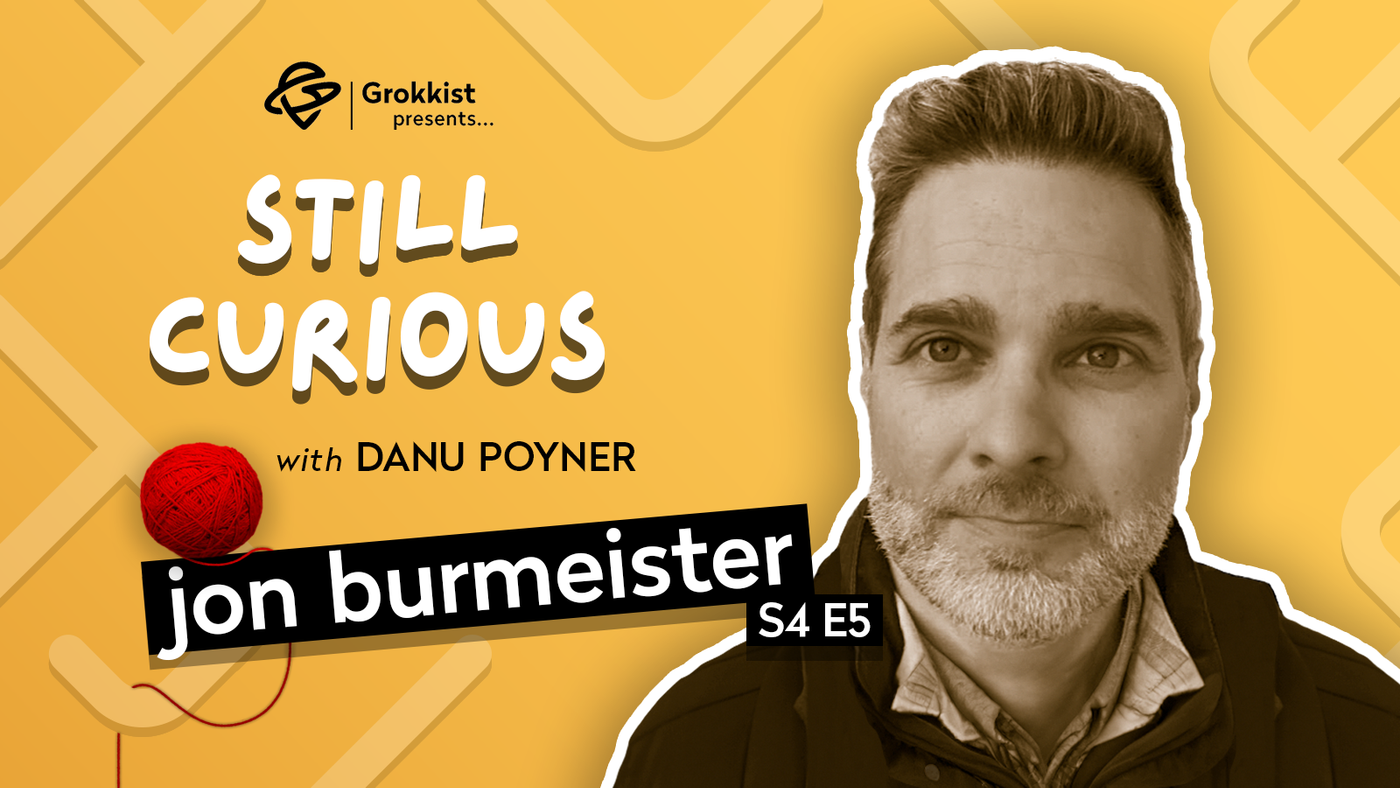
Deep Thinking, Education, and Freedom in an Age of Distraction - Jon Burmeister | S4E5
What does it mean to think deeply and live freely in an age of distraction? Philosopher Jon Burmeister reflects on his journey from analytical rigour to embodied integration, exploring whole-person education, the history of ideas, and reclaiming attention in a fragmented world.
Listen Now
Conversation themes
- Whole-person education as liberation: How liberal arts education fosters curiosity, creativity, and self-knowledge while encouraging openness to change and growth.
- Deep thinking and the attention economy: Why reclaiming focus isn’t just about resisting distractions, but about preserving our capacity to care about what truly matters.
- Ideas as living histories: Viewing philosophy as a dynamic, evolving tradition and understanding our role in shaping and inheriting the collective intellectual journey.
- Flourishing through integration: How Jon balances analytical thinking with embodied practices like yoga, meditation, and breathwork to harmonise the mind, body, and emotions, inspired by Aristotle’s vision of flourishing.
- Reimagining technology’s role: Jon’s intentional approach to living in the digital age, from setting boundaries to fostering deeper attention and presence in a world designed to fragment focus.
Recorded 4 April 2024
About the Guest
View Jon's academic profile and publications.
Episode Intro
Traditional forms of education tend to shut down curiosity and creativity. Liberal education, at its best, helps free us—from unhealthy desires, from internal slavery, and even from the oppression of others. It prepares us for citizenship, self-knowledge, creativity, and the ability to resist being spoon-fed.
And in this age of the attention economy, it’s more vital than ever to develop the mental skills we need to navigate a very unfriendly technological landscape dominated by persuasive algorithms vying for our attention.
You’re listening to the Still Curious Podcast with me, Danu Poyner, the show where I meet people who insist on relating to the world with curiosity and care – the people I call grokkists – and talk to them about the red thread that runs through their life story and which ultimately empowers them to flourish as their unrepeatable selves.
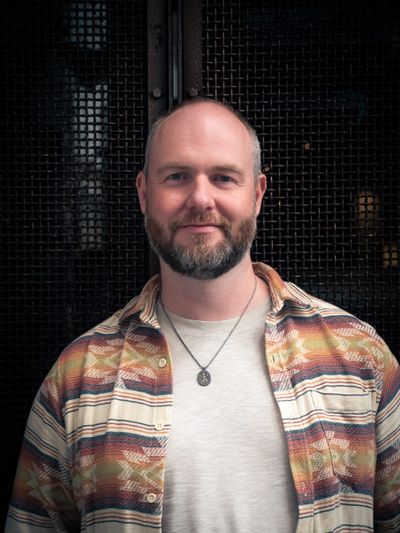
The voice you just heard belongs to my guest today, Jon Burmeister, a philosopher and educator whose wide ranging interests include the philosophy of technology and computing, the future and meaning of work and leisure, philosophy of mind, and the nature of freedom in the attention economy.
Today's episode is both a story of whole-person education and a conversation about liberation of the mind, the body and the self.
Jon grew up in a deeply religious evangelical household. Homeschooled until high school where belief and faith were central pillars of life. His parents were indifferent about higher education wary that college might undermine his religious faith.
After spending a few years as a truck driver for a print shop after high school, Jon did go to college, a conservative non-denominational institution with strict rules about drinking and dancing, primarily attracting students from Methodist, Wesleyan, and United Brethren traditions.
It was here that Jon's love of philosophy was sparked by a charismatic professor known for his humour, irreverence, and a gentle ability to question groupthink without making anyone wrong. This professor's approach gave John a glimpse of how people could be well-meaning but also confused, opening his mind to critical thinking.
It was also at college where Jon formed lasting friendships, including late night philosophical discussions with a friend at his dorm that inspired him to minor in philosophy alongside other disciplines like sociology, psychology and literature. He describes this period as an intellectual "all you can eat buffet" where his curiosity took flight.
Jon pursued his doctoral studies in philosophy at Boston College, known for its emphasis on whole-person education, intellectual, spiritual, and personal development. Choosing Boston college because of its alignment with his growing interests in Catholic philosophy and the philosophy of religion, Jon spent these years deepening his understanding of German idealism, existentialism, and the philosophy of technology, while enduring influences from Aristotle, Plato and Stoicism shaped his views on human flourishing.
During this time, Jon began teaching philosophy, offering courses on topics like ethics, love and desire, human nature, and political freedom. Inspired by his own transformative experiences. Jon became deeply invested in the philosophy of education, advocating for the role of liberal arts in fostering curiosity, creativity, and citizenship.
As you heard in the opening, Jon sees liberal education as a way to cultivate freedom. Preparing individuals for the challenges of a world increasingly designed to fragment our focus.
When information is abundant, as it is now, sustained attention on one thing is harder and more scarce. That's a real problem for human flourishing, because we start to lose the skills of deep and sustained thinking that actually lead to the solution of problems.
Jon reflects on the growing scarcity of attention in a world, saturated with information, emphasising that without the ability to focus deeply, we risk losing not just the skills to solve problems, but the capacity to flourish altogether.
As a good Hegelian, Jon also views ideas as living structures built over time through the collective contributions of history. He sees engaging with these ideas as an act of participating in an ongoing process that connects us to both the past and the future.
Ideas are historical, they are built up in a way that's similar to buildings. If you look at a modern day building, it's the result of the learnings of centuries of architecture and engineering. We ourselves, as the thinker of ideas, are part of that historical process. We are historical beings.
As Jon moved through his journey, his focus shifted from purely analytical thinking to a more embodied way of being. He began integrating practices like yoga, meditation, and breath work into his life, tools that help him connect with neglected parts of himself and cultivate what he calls the skill of "not thinking."
For Jon, flourishing means creating harmony between the analytical and intuitive parts of the self, integrating the mind, body and emotions. This integration of practices isn't just personal, it's deeply philosophical too. Jon draws inspiration from Aristotle's idea of flourishing as a process of self movement towards a goal, where the parts of one's self become more harmonised and whole.
The first 30 years of my life were focused very much on developing my thinking skills in a very laser-focussed way. In more recent years, I've come to see the importance of learning how to Not Think and learning how to pay attention to other parts of my mind, other parts of reality in a less cognitive, less conceptual way.
Despite his deep engagement with technology, he lives parts of his life without a smartphone, intentionally creating boundaries that protect his attention and focus.
One of the books. Jon recommended to me before our conversation was Stand Out of Our Light by James Williams, which we discuss in the episode, including its key insight that reclaiming our attention is not just about avoiding distractions, but also about protecting our ability to care about the things that matter most.
Jon's story calls us to re-imagine education, not as a checklist of knowledge, but as a process of liberation. To stand out of the light of distraction is to step fully into the light of purpose, connection and integration.
Links and resources
- Stand Out of Our Light by James Williams
- Superintelligence by Nick Bostrom
- Imagined Communities by Benedict Anderson
- Delete: The Virtue of Forgetting in the Digital Age by Viktor Mayer-Schönberger
- The Shallows: What the Internet Is Doing to Our Brains by Nicholas Carr
- Reader, Come Home: The Reading Brain in a Digital World by Maryanne Wolf
- Import AI: Jack Clark's newsletter
- To Save Everything, Click Here: The Folly of Technological Solutionism by Evgeny Morozov
- Who thinks abstractly?: Essay by Hegel
- Whole Brain Living: The Anatomy of Choice and the Four Characters That Drive Our Life by Jill Bolte Taylor
- The Master and His Emissary: The Divided Brain and the Making of the Western World by Iain McGilchrist
- The Nicomachean Ethics by Aristotle
- The Routledge Philosophers: Aristotle by Christopher Shields
In good company
Replies from signed-in readers. They open in their own space, so you can sit with the piece first.
In good company
Talk about this piece