
Music & Magic: On energy and other ways of becoming
From a megachurch keyboard to a requiem for God, Emily Jane DeWoolfson on music as energy, and learning to listen.
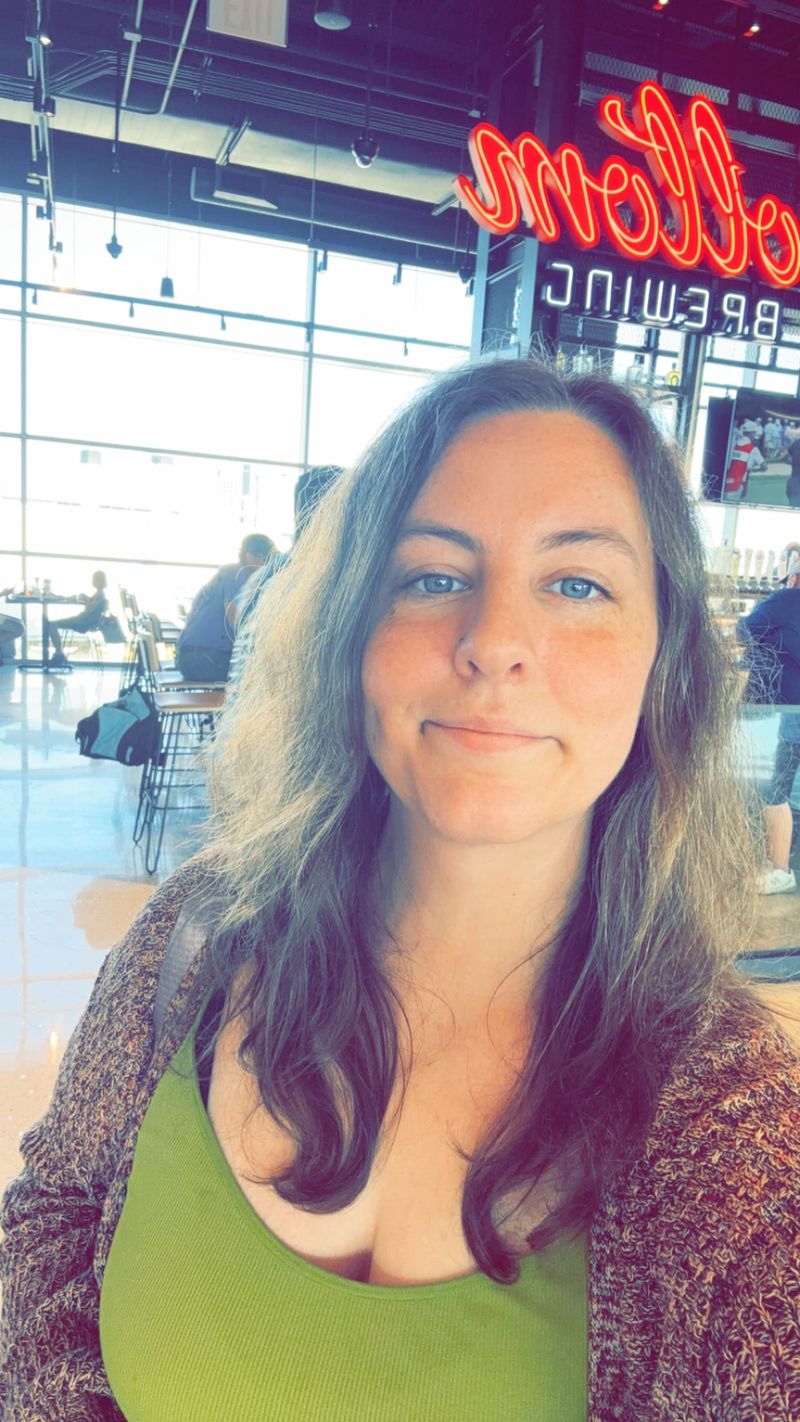
The thread followed byEmily Jane DeWoolfson
Jane is a musician, witch, and philosopher currently based in Paris, France.
Before I really get into this, I want to introduce myself with a comment on my name. I have kind of a complicated relationship with my own name, but I've been going by my middle name more and more over the last few years, for a couple of reasons. I know both Emily and Jane are traditionally women's names, but Jane just feels more non-binary to me, automatically. That matches my experience of my own gender better. I am a woman, and I'm also non-binary.
And Jane connects me to my matrilineage. It was my mom's middle name, and her mother's first name. My grandmother, just to give you a sense of her, was often described as a bitch on wheels. She took absolutely no shit. She was a great nurse and a terrible enemy. So when I was little, if I was ever mouthing off, my mom would say, "Okay, Jane." Just the other day she told me about some men trying to intimidate her in traffic, and she said, you know, Jane started coming through, and you wouldn't believe how fast those men hightailed it out of there.
There's something about that energy that makes me feel powerful, or maybe more like who I'm growing into. So: Hi, I'm Jane.
Something deeply wrong
The timeline starts on 23 January 1992, the day I was born in Falls Church, Virginia, which makes me an Aquarius. I really identify with being an Aquarius, and if you know much about astrology, you might have a good sense of why by the end of this.
Falls Church is right next to Washington, DC, and I grew up nearby in Loudoun County. The thing to understand about this area is that it had a heavy focus on politics and on tech. Today Loudoun County is home to the biggest data center infrastructure in America, with something like 70% of global internet traffic passing through it on a given day (while this is a commonly cited figure, experts place it closer to 25%, which is still more than any other location). It wasn't quite like that yet while I was growing up. But even then, you really only saw two kinds of successful people: people in politically connected fields, like diplomats, secret service and politicians, or people in tech and STEM. Or you could maybe be a teacher or a service worker.
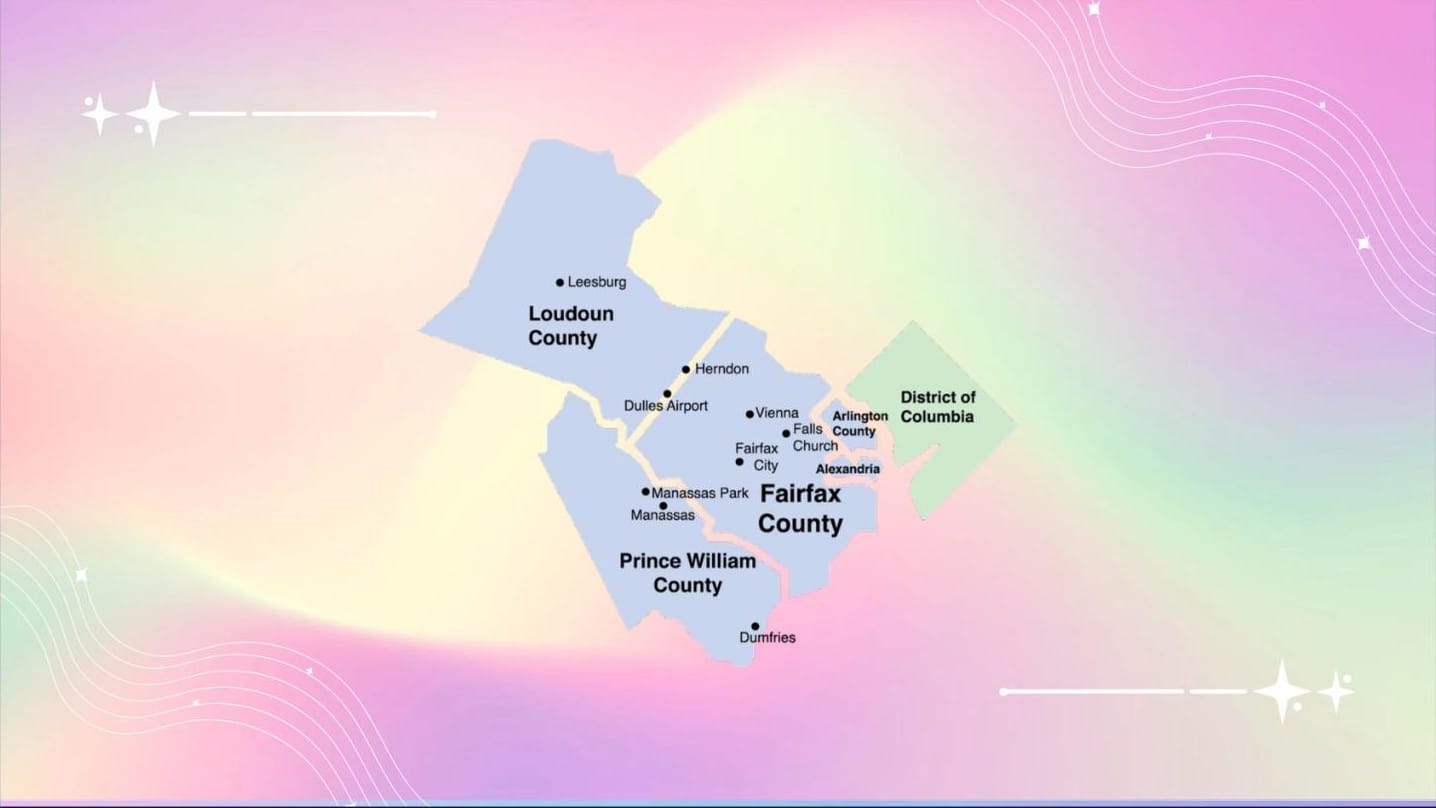
And these places weren't built for community. You drove everywhere. Entire neighborhoods were duplicates of the exact same house, and everyone was competitive about having a slightly bigger house in a slightly more expensive neighborhood. You rarely knew your neighbors. The shopping centers were the same chain stores and the same food over and over, and there was no cool art or architecture anywhere.
My entire young life, I felt like something was deeply wrong, and everybody kept telling me everything was fine, that I was very lucky and should be grateful to grow up in a place like this. Nobody could name it or validate it. Something about the whole energy of that place felt, and still feels, very sick to me.
My mother, who was an exception to the job rule, is a horse trainer. She recognized that we needed some kind of community, so she got us really involved in a place called Community Church. I went to the school there for a few years, and to the church and summer camp as well. It was a huge part of my life. I'd been taking piano lessons for a couple of years, and when I was around twelve, I started playing keyboard for some of the services.
It's a contemporary, non-denominational praise-and-worship megachurch. It became a megachurch over the time I was there. There was a huge focus on the music, which they presented like a rock concert every Sunday morning, and again on Thursday and Friday nights for the youth service. Early on, I really bought into it. I fully believed in God. I was very studious and philosophical about it. I read the Bible through so many times that I know it like the back of my hand to this day. I loved C. S. Lewis's philosophy.
And to me, one of the biggest proofs of God's presence was the music. Every week when I played, I'd see people falling to their knees in ecstasy, or sobbing, hands up to the sky, totally overtaken by this energy. I knew that must be God.
Every week when I played, I'd see people falling to their knees in ecstasy, or sobbing, hands up to the sky, totally overtaken by this energy. I knew that must be God.
Despite all of that, from very early on I felt a deep sense of self-hatred. I was extremely depressed. When I think back, I genuinely struggle to pinpoint a time I experienced happiness before my mid-twenties. I'm sure there were whispers of it. But I was one of those people who genuinely could not imagine surviving past thirty.
That got worse in high school. I had a reputation for being smart, whatever that means, and if you grew up there and were considered smart, you took a test to get into a magnet school called TJ, Thomas Jefferson High School for Science and Technology. It was a huge bragging point for parents in the area.
I got in. TJ was a really weird place. It was heavily focused on STEM, which I hated, and it had a real white savior complex: the idea was that if you went there, you were destined to be the leaders of the future. That was a whole responsibility you took on.
Then I had a pivotal conversation with a friend there called Victor. Victor was an atheist, and at this point I was into proselytizing and was really annoying about it. One day at lunch, I asked him why he didn't believe in God. He said his parents didn't, and they never taught him to, so he just didn't. I said, but wouldn't you want to believe in God anyway, just in case? Aren't you afraid you might be wrong? He laughed and said, "well, that's a silly reason to believe in God."
It was a punch in the gut, because he was completely right. Suddenly all the pieces snapped into place: oh no, God doesn't exist, and now I'm a nihilist. But that left a lingering question. If God didn't exist, what was making those people at church fall on their knees and cry and feel all that energy? I started to wonder if it was actually the music. Which was a wild thought, because I was making the music.
If God didn't exist, what was making those people at church fall on their knees and cry and feel all that energy? I started to wonder if it was actually the music.
I put a pin in that. I really did not want to be at TJ. I felt I'd been forced into it, and I got so depressed that the school guidance counsellors noticed I was hurting myself. Many days I'd come home and weep into the night. I basically brute-forced my way out of that school. My dad especially held that against me, I think because he felt I was wasting an opportunity he never had, and he'd worked so hard to give me better circumstances. That caused a lot of pain. I finished my last two years at my local public school.
A requiem for God
I graduated in 2010, still so depressed that it was hard to even think about college. But the expectation was absolutely that I go. So I thought, if I have to go, I'd like to study music. I know I have a good ear, and maybe I can learn to write music.
I applied for the composition program at Christopher Newport University with zero idea what composition looked like as a field. The requirements said to send in a written composition, and I'd never learned to write music. So for about a month, I spent every lunch period in the choir room, teaching myself Sibelius, a music engraving program, on its single computer, and wrote a song. A week before the deadline, I checked the requirements again and realized they wanted a portfolio of compositions. So I wrote three more that week, sent them all, and got in.
At CNU I minored in philosophy, and one of my textbooks was The Thinker's Guide to God. That's where I first met anti-realism. In realism, a statement is true if it's objectively true. I think they used an example about a worm on Mars: it's true only if the worm is literally on Mars. An anti-realist would say that what counts as true depends on how a community uses or lives out the claim. If a whole community believes the worm is on Mars, and acts and thinks as if he is, then it's true in an anti-real sense.
What I took from this was that maybe if I functionally act as if there is meaning, then there is. Or at least I can convince other people, through representation, that there is. It would surely be a kindness to them because personally, I was not having a fun time with nihilism at all.
What I took from this was that maybe if I functionally act as if there is meaning, then there is.
One of the pieces I was working on at the time was a setting of Nietzsche's parable of the madman, where he famously declares that God is dead. I set it against a requiem, except I rewrote all the words of the requiem so that it was a requiem for God. I sang the solo on the recording, even though it was written for countertenor. I was shaking through that entire performance. I was terrified to perform.
Another song from that time is called "Love Song." This has always been one of my favorite kinds of music to write, where I set my own poetry to music.
My bones have not changed, but the stuff between them aches
The light inside my ribcage is blinding
I am clear now, and I harbor great pain and elation
With each thundering strike of the drum of tribes who dance and call to their gods
Washing my veins and reverberating through my fingertips
The only piece I've included that I didn't write is one that was hugely important to me in the following years. I had, and have, terrible insomnia. My brain does not turn off. So I'd build YouTube playlists of music that would help me relax enough to sleep, and that's how I found Jeux d'eau, "Water Games," by Maurice Ravel. If you listen to it, see if you can hear it musically depicting the water. It's one of my favorite pieces of all time.
Cocoons
By the end of undergrad, I was still extremely depressed and had no idea what to do with my life. So of course, I applied for master's programs, and I got a stipend at the University of Delaware for a master's in composition.
I got a lot of teaching experience very early there, because music theory and aural skills are super niche to teach and a university can save a lot of money by throwing a grad student into the deep end. I even designed an interdepartmental course on music and coding. I wrote a chamber opera, Death and the Drifter, also about religion, and a through-sung short film on T. S. Eliot's "The Love Song of J. Alfred Prufrock." I'm kind of a sucker for T. S. Eliot.
So now it's 2016, and I'm still depressed, and I still have no idea what I'm doing with my life, and I still don't expect to survive past thirty. But one thing I'm good at by now is getting teaching stipends, and I like studying music. So I went to Penn State for an MA in music theory. I was getting into a lot of feminist writing in this era. I also made stop-motion short films. My friend Katie edited a lot of them, while I did the music, made the paper cut-outs and took the pictures.
My first year at Penn State was also the year Donald Trump won his first term, and that hurt my mental health enormously. I knew he would win, and I understood how bad it was going to get. I tried to sound the alarm, and nobody listened. I felt like Cassandra. It opened my eyes to how many men just do not see women as people. A lot of American women felt an enormous grief over it, and I felt every ounce of that. My grief was, if anything, aggressively not validated by most people around me.
It opened my eyes to how many men just do not see women as people. A lot of American women felt an enormous grief over it, and I felt every ounce of that.
It pushed me into a place of abject dysregulation and depression, to a level where it's kind of impressive my body didn't just shut down. It was a rock-bottom moment, and I faced a point where there was no other choice besides to die, or somehow not die. So I started walking a few miles every day, which was a kind of meditation, a way to anchor myself in something. And I started working on my relationship with food. I had, and still struggle with, disordered eating, and by then I'd gained a lot of weight.
Penn State was like a cocoon. It's way up in the mountains of Pennsylvania, a college town that's a bubble for students to figure themselves out, and the professors there were probably the most nurturing and caring I've had at any university. I didn't see my family much outside the holidays. So I started working through the outer layers of my trauma, like an onion. I lost a lot of weight while I was there, and by the time I graduated I was experiencing the world from inside a body that was perceived completely differently. I was used to navigating the world as a fat person, and suddenly I was treated differently in every part of my life, personal and professional, which was disturbing in some ways.
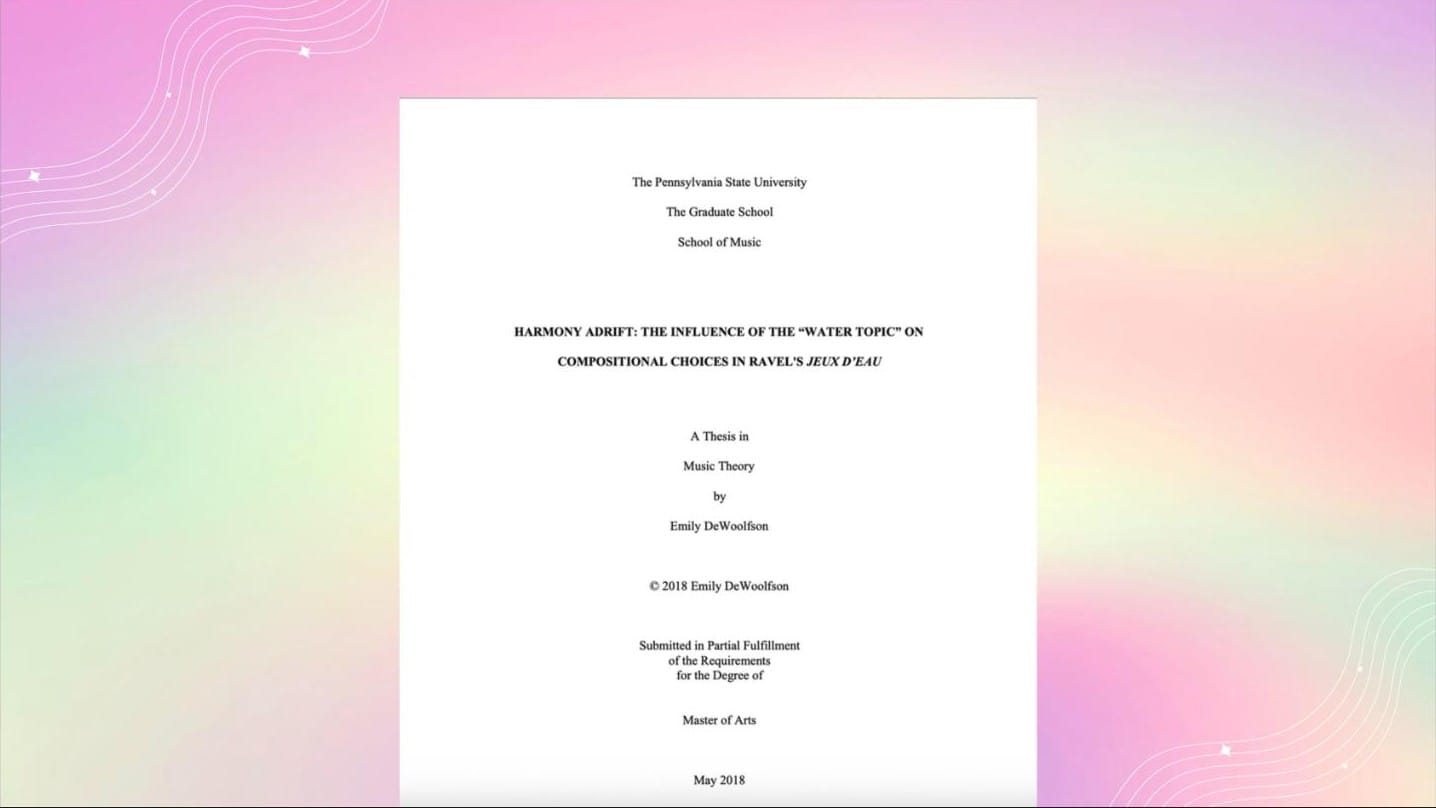
The other thing to mention is a course where the professor asked us to pick a song we liked and analyze it. By then I'd studied a lot of Bach, Beethoven, Mozart, Haydn, Handel, whatever. But I think that was the first time anyone had asked me to pick something I wanted to study. I picked Jeux d'eau. That project became the seed of my master's thesis.
Listening, not mastery
From 2018 to 2025 I got an entire third stipend in exchange for teaching, and went to Temple University in Philadelphia for a PhD in music studies, which is basically music philosophy. So now we're really cooking. I specialized in psychoanalysis and semiotics, Lacan and Kristeva. Intersectionality was a hugely important concept. I got a really robust education in critical theory at Temple, and I'm grateful for it.
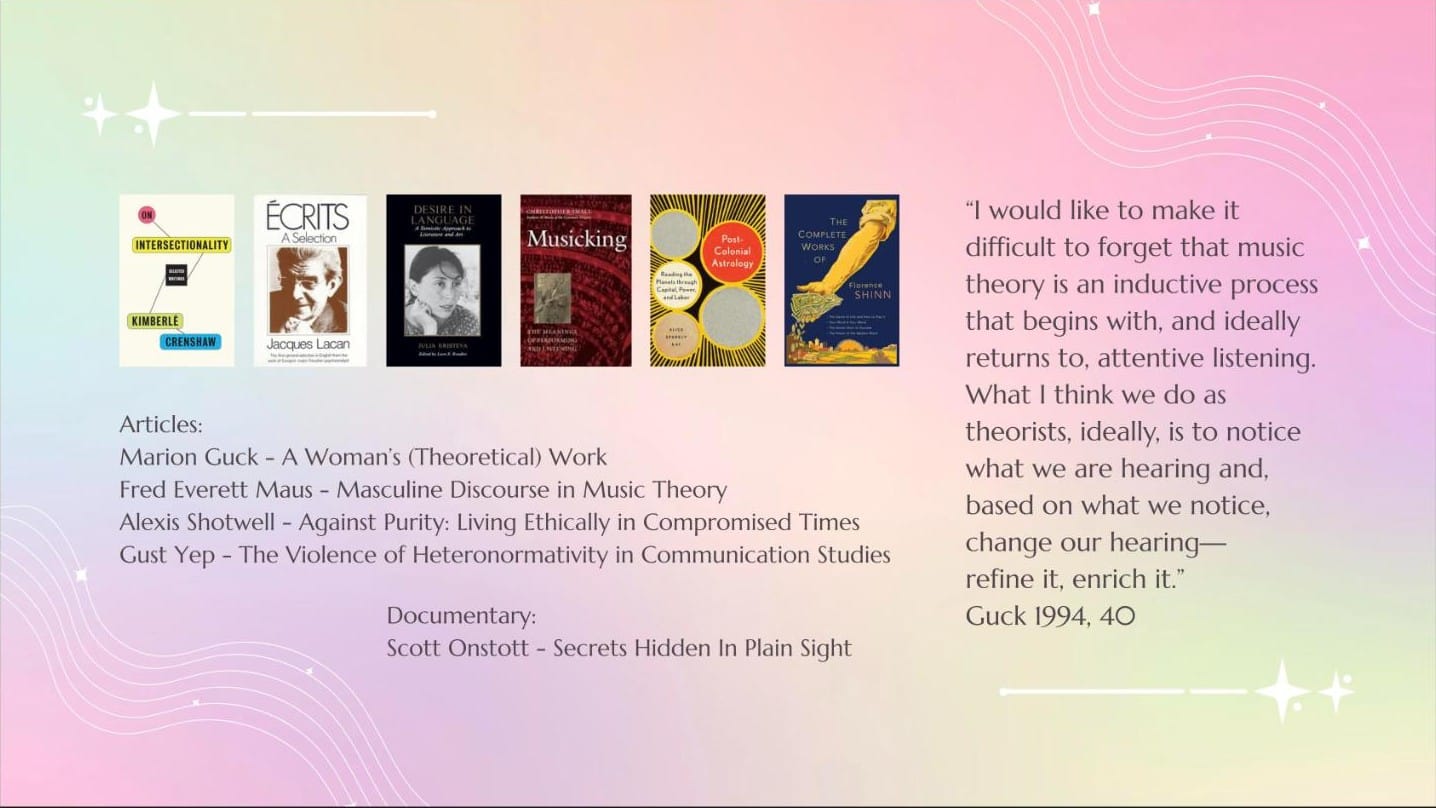
Some of what I was reading might seem less scholarly. Alice Sparkly Kat's Postcolonial Astrology was a game changer, because it gave me the tools to justify looking to astrology as a valid language for understanding myself and other people. I'd recommend it to anybody. And Florence Scovel Shinn's book is basically teaching about manifestation. I absolutely recognize there are layers of whitewashing and Orientalism baked into Western teachings around manifestation. At the same time, her work is very feminine. Manifestation is very feminine. And after teasing apart those layers, the rest of it synthesized surprisingly well with my academic work on meaning-making, psychoanalysis and feminism.
One of the main things I want to emphasize is my changing relationship with music theory. It's generally taught as a form of mastery over music. The feminist music theorist Marion Guck reframes it as an inductive process that begins with, and ideally returns to, attentive listening. That idea, music theory and music study as deep, iterative listening rather than mastery, is really key to me.
That idea, music theory and music study as deep, iterative listening rather than mastery, is really key to me.
At this time I was working on a score for a short film called World of Diamonds, my only IMDb credit so far, and probably some of my most mature instrumental work. You might hear the influence of the water music in the texture.
After the master's thesis, I kept studying Jeux d'eau and found a lot of other music depicting water, especially from the same period in France. That became my dissertation: how the water was depicted, and unpacking the shades of what it symbolized.
I also began a project where I wanted to write in a pop style, which turned into something more like trip hop. I wanted to explore a kind of queer Lana Del Rey persona, where there's really deep emotion and a struggle to access that emotion directly, a kind of dissociation. I worked with a producer in Philly, and we put a bunch of singles out on Spotify. It's dealing with the pandemic, and with a really difficult breakup, the first serious relationship I'd had with a woman.
A cold kind of comfort, don't want you to suffer
From what you discover, but I can't lie
Unceasing redeemer, I've got your number
You rise up like a pillar of smoke in the sky
Followed a pipe dream, dove into the deep end
Made it through to the other side
I don't belong here, I'm breaking tradition
I'll test my conviction, send me a sign
I have an advantage, I notice your damage
A dangerous language electrified
Set out on a mission, I bend to the vision
I'll ask for forgiveness the day I die
Happiness ebbs and flows
A lot happened at Temple in a very short span. First I moved to a place called Lewis Court, in Fishtown, Philadelphia. Fishtown was grungy and hip, with a lot of queer people and a lot of art and music and activism, and it was right up against Kensington, which is literally an epicenter of America's opioid crisis. All of that was on top of, and inseparable from, what affected me so much about the area. Lewis Court was an enclosed space behind a gate, where nine people lived in three houses around a yard, and the fourth house was an Airbnb. It was a very communal way of living, and I loved it. I was really happy there, probably for the first time in my life. Just happy.
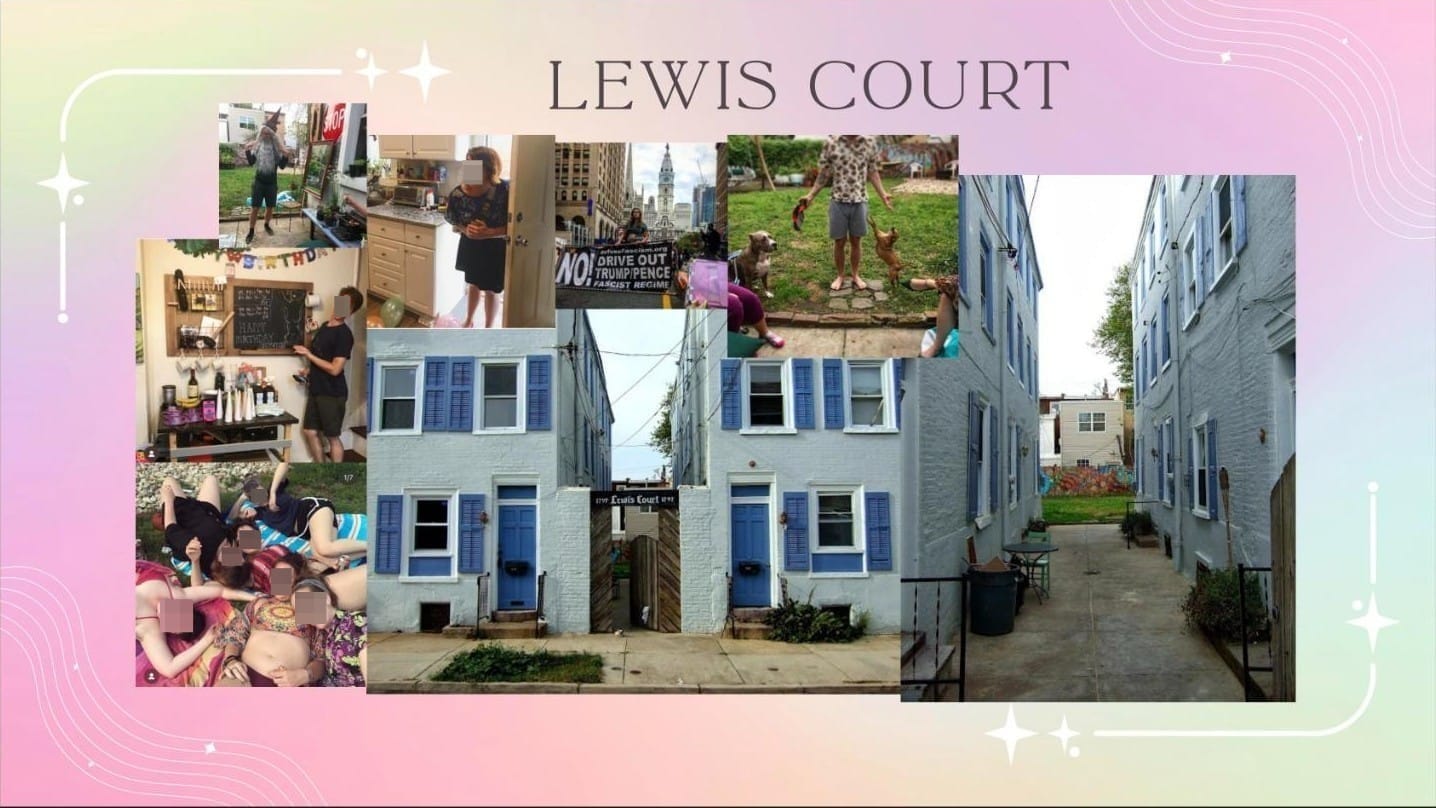
I'd had my sights set on Philly for a few years by then. If I'm honest, there was something romantic to me about living in a big city, among all these different people and lives playing out, and all this art. Fishtown was my wildest dream of what that could be.
In 2019, I lost one of my grandmothers to cancer, my dad's mom. That summer my dad sat me down and basically said: surprise, you're inheriting a ton of furniture, and you'll be receiving enough money that you can and should put a down payment on a house.
I felt totally unworthy of that money, and of owning a house, especially after living right up against the homelessness and addiction and class struggle that were such a core part of Fishtown and Philly. But I told myself that if I bought a big house and rented rooms very cheaply to friends, or to people who needed somewhere safe, maybe I could make it feel like Lewis Court, with that artsy, activist, communal vibe. That was a way to justify, in my head, not just giving all the money away.
I felt totally unworthy of that money, and of owning a house, especially after living right up against the homelessness and addiction and class struggle that were such a core part of Fishtown and Philly.
After some searching, I bought a big old six-bedroom house in East Falls, Philadelphia. I closed on it on 17 March 2020, the exact day Philly shut down for the pandemic. The plan had been for people to move in slowly once the house was set up, but suddenly friends and roommates were moving in that weekend so we could all quarantine together. We rode out the early days of the pandemic, and the BLM protests, in that house. I have so many stories about that time.
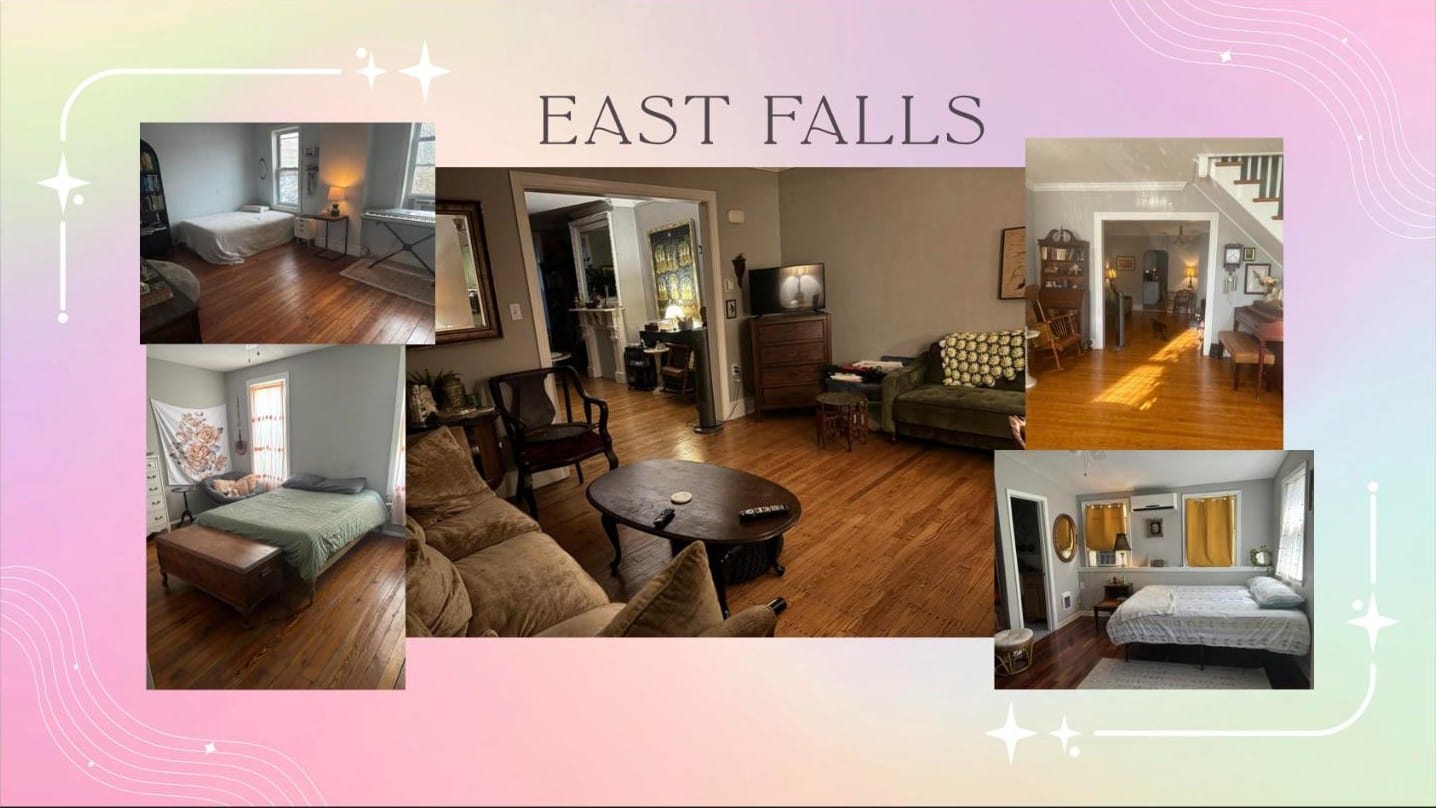
I had brought people into the house who were into psychedelics, and I tried one for the first time. Over about six months, I had several trips that felt like one contiguous experience. In what I think was the last one, I was sitting on the couch in this living room, and we were listening to music. The best way I can describe it is that I could see the music in a two-dimensional space, as if it were projected onto a veil. Then I realized I could push through the veil into an entirely other dimension behind it. And it was just raw energy, ebbing and flowing and rippling. I don't think the significance of that hit me until later.
This was around early 2022, and I think it was that same trip where I realized I needed to break up with my girlfriend. That was really painful, because I loved her, and it was a very enmeshed situation. When I did it, long story short, it turned out one of the other people in the house was not someone I should have trusted. They jumped on that moment to create a whole tornado of drama that blindsided me. Everyone, for one reason or another, took sides against me.
They all moved out in basically one weekend, and I was left with a huge empty house and a mortgage. I think I was in shock. It was weeks before it occurred to me that I'd been scapegoated, because at that point in my life I still felt like I was secretly a horrible monster and a waste of space.
It was weeks before it occurred to me that I'd been scapegoated, because at that point in my life I still felt like I was secretly a horrible monster and a waste of space.
At almost exactly the same time, I started getting lesions on my skin. They turned out to be my first flare of a horrible autoimmune disease called pemphigus vulgaris, probably triggered by COVID and stress. Before modern treatments, pemphigus had something like an 80 to 90 percent mortality rate within a few years, usually from starvation, because it gets into your mucous membranes, including your mouth, and eating becomes too painful.
I was very lucky to see a dermatologist who was one of the world's experts in it and recognized it immediately. So blessed. But it was a very dark moment. I was in constant, excruciating pain, experiencing body horror, and the friend group I'd thought of as my chosen family had left. I had to stay afloat financially, even before the medical bills. In retrospect, it was what some people call a dark night of the soul.
Magic absolutely everywhere
So I picked myself up off the ground and got to work. I turned the rooms I wasn't using into Airbnb listings, which solved the mortgage and gave me some space from letting people into my life on a deeper level for a while. Again, I'd hit what felt like rock bottom, and there was nowhere to go but up.
I started dancing more, especially while cleaning and taking care of the house. I think that, probably combined with the psychedelics, physically unlocked something in my body, energetically. Then all at once everything shifted into place, and I could see so much more clearly.
I realized that I totally make meaning in this life, because God is inside of me, and inside all of us. God as it was presented to me in childhood didn't make sense except as a patriarchal construct. This inverse of that God was so beautifully real and present. I also became very aware that everything is energy, and music is an expression of that energy, and all of it moves like water, actually.
God as it was presented to me in childhood didn't make sense except as a patriarchal construct. This inverse of that God was so beautifully real and present.
The way I've come to think of it, people are almost like a hive mind. A community of people comes to believe something, and it becomes true that way. The ways we create reality are very much like bobbing in an ocean. The individual droplets might be people, and it's all moving on a bigger, wavelike level. You can see it at rock concerts, in crowds, in traffic. Those things move in wavelike patterns. I haven't quite been able to articulate it yet, and I didn't manage it in the dissertation either. But on all these stratified levels, whatever you mean by energy, it all seems the same in a way, and it all moves fluidly, in my experience.
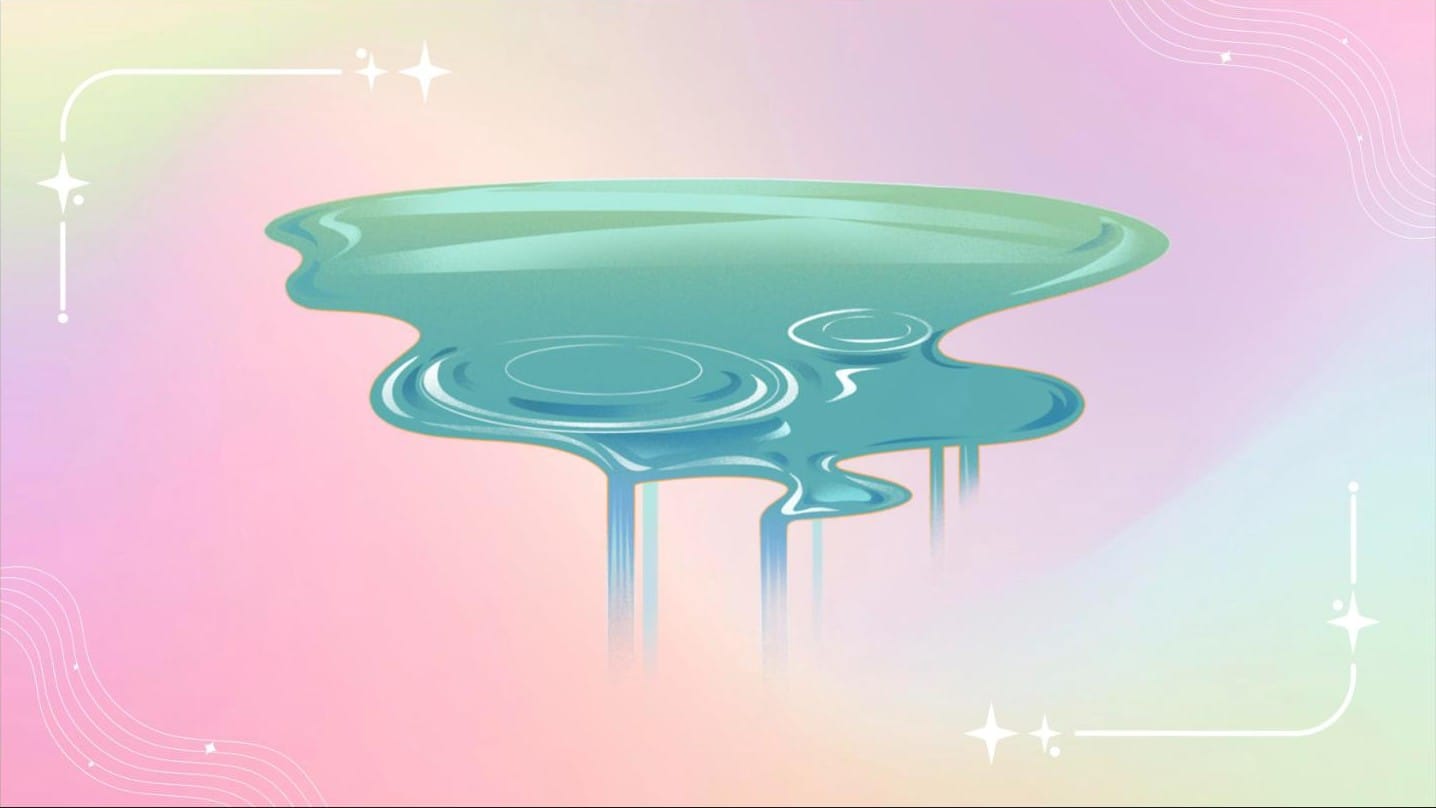
I recovered some repressed traumatic memories from childhood and was finally able to process them. I recognized the presence of my grandmothers who had passed, and of so many ancestors around me, protecting me with so much love. And I remembered an aunt who basically trained me to work with energy, and who was herself a witch. That was part of my lineage that I'd completely forgotten and blocked out because it wasn't exactly the language she used, and I was so deep in Christianity that I didn't get it at the time. I realized I had access to all this knowledge, and it synthesized exactly with what I'd been doing academically the whole time.
The difficult times did continue for a while. I lost hope in some moments, and found it again. I went on TikTok to find more of an audience for my music, and talked about some of these realizations, and ended up angering a very sick person with a large, cult-like following. I dealt with being doxxed, gangstalked and smeared for the whole of 2023. True story.
I had to go through rituximab, which is basically chemotherapy, for the pemphigus. And I was falling out of sync with my dissertation advisor. Every time I turned in a draft, he was less happy with the direction, and I didn't understand how to fix it. That culminated in a meeting where he yelled at me, dressed me down, called me lazy. It was horrible. Then he quit my committee, which I've never heard of happening to anyone else. And I left Temple.
But I had such a different outlook by then. It was a very difficult time, and I also felt so blessed, and experienced magic absolutely everywhere. The kind of experiences you couldn't explain in words to someone who hasn't lived them.
I wish I had more time to unpack this. A major point of pain my entire life was that I didn't feel heard. I didn't feel listened to. I think even going into composition had something to do with that. I didn't feel listened to by my family. I felt misunderstood.
Even after all these big revelations, part of going on TikTok was the hope that I could teach and share what I'd realized, and maybe people would finally listen. Some people did. Some of them are here listening to this now. But so many didn't. One big way I've been shifting, even in the last few years, is letting go of that pain around not being heard, and instead radically listening to other people. Completely receiving, without needing to correct or add on. I'm not at all perfect at it, but it has been an extremely healing shift.
One big way I've been shifting, even in the last few years, is letting go of that pain around not being heard, and instead radically listening to other people.
Stepping back into the timeline: in 2024, as everyone knows, Trump won a second term, and I for sure cried that night. Then I resolved, basically the next morning, to move to France. It just became immediately, intuitively apparent that I should.
Around that time, my dissertation advisor contacted me on Facebook, out of the blue, about a year later, and apologized. He asked me to come back and finish. So I did. He helped me get re-affiliated with Temple, and we wrapped it up within a couple of months, because it was basically done when I left. I also went into remission from the autoimmune condition, and I'm still in remission, which is a huge deal.
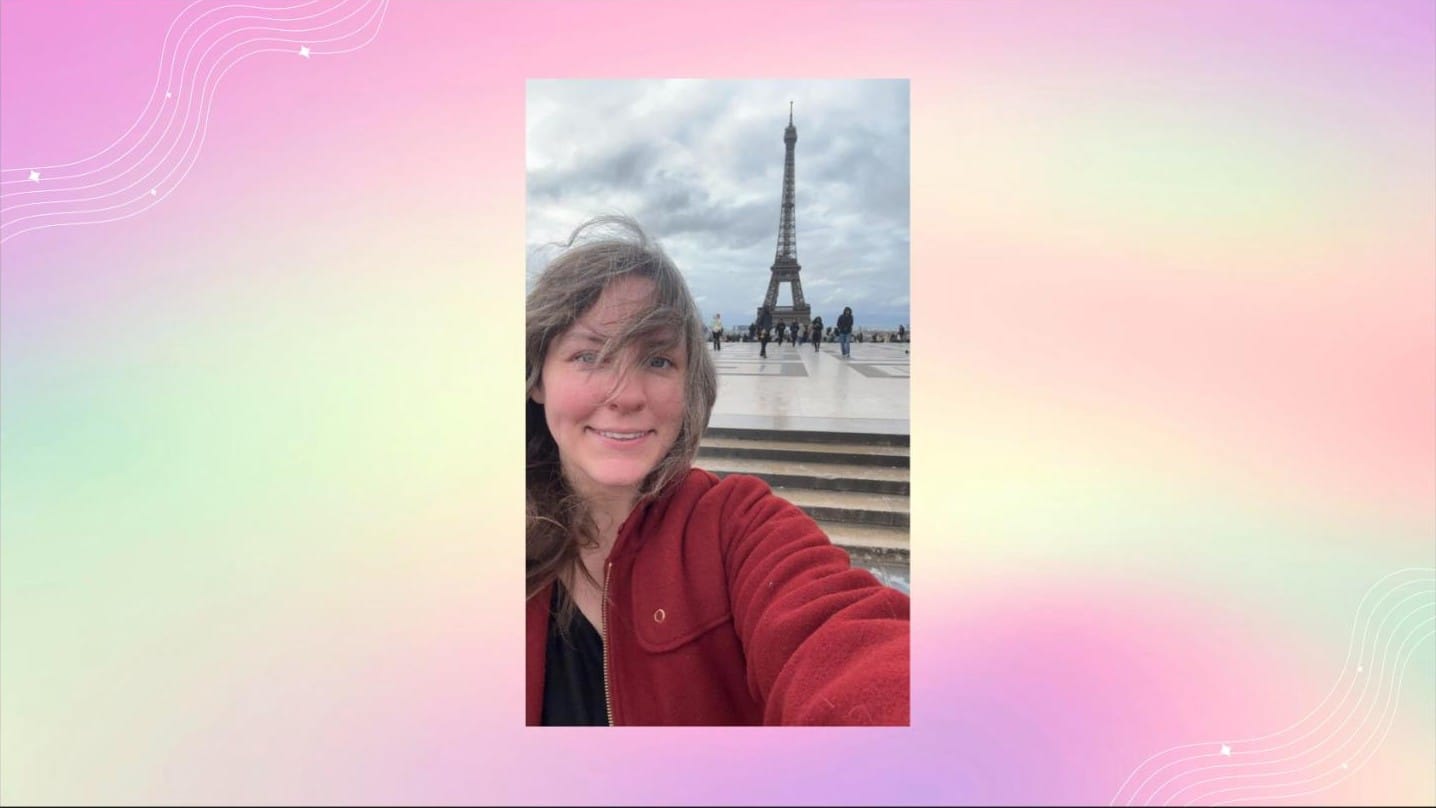
I officially got my PhD in August 2025, for Charting the Currents: A Cartography of the Water Topic in Fin-de-Siècle French Music. I gave away 90 percent of my belongings, sold my house, and moved to France. I've been living in Paris since August, and frankly I have no idea what's next. But I know it will be magical.
The full recording
This thread was followed in good company by Emily Jane DeWoolfson.
More Red Thread Talks

In good company
Replies from signed-in readers. They open in their own space, so you can sit with the piece first.
In good company
Pick up the thread