
The Speed of Grief
Grief is nearly always unchosen, brutally unfair, heartbreaking and crushing. And it asks to be welcomed gently in.
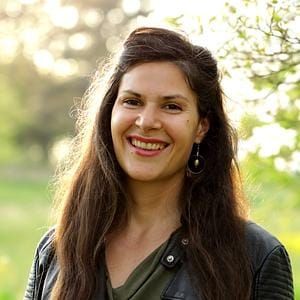
The thread followed byNaomi Sonne
Naomi (she/all) is a coach, strategist, and equity-centered practitioner with a breadth of experience supporting individuals and communities through transition, healing, and systems change.

Both of my parents carried the grief of their ancestors, silently bearing the weight of their pain, their hard work, and the expectation to make a better life than what they had. We now know much more about epigenetics, how trauma can be carried through our DNA. We feel things we didn't directly experience outside the womb. I would add to that conversation that we also carry generational grief. When I look back, I feel compassion for my ancestors, starting with my parents. So many of them did not get what they needed.
I think a lot about the role of both individual and collective ritual in spirituality, and where they fit into the story of our grief and vice versa. Sometimes they are sorely missing. The spiritual environment in which my parents met was the Jesus Movement of the 1970s in the United States. It welcomed people like my father, lacking formal education and class standing and white privilege, into spaces that promised acceptance and freedom and family. It also encouraged what we would now call spiritual bypassing of trauma and grief, claiming instant healing and the erasure of long-held pain.
I was not supposed to be a daughter
I was my mother's least favorite daughter. I was the least like her, perhaps, out of all four of us daughters. Active, mischievous, outgoing, bossy, sassy, always looking for freedom and adventure and whimsy available to me wherever I could find it. And if I couldn't find it, I would make it. I was not supposed to be a daughter, but then I failed at being that too. Too loud, too tomboyish, too stubborn, always being told to be less uncouth and more ladylike. (Am I couth now? I still don't know.)
Also, strangely, I was my father's favorite daughter. I might still be the most like him out of all my sisters, maybe all my siblings. I think I understand him from certain angles. I understand a tiny bit of what it may have been like to grow up as he did. And I understand how hard one has to work just to get to the baseline that everyone else appears to have arrived with.
My father never felt safe anywhere, even in his own family of origin, so he set out to make his own family, on his own terms, in his own name, and with his newfound spiritual identity, to claim and create what he never received at home.
I am the sixth of ten children born to the same parents. I realized at some point in my childhood that I was on my own. I was surrounded by siblings, which was a joy and a comfort in some ways, but painful in others. Ultimately, I felt instinctually that if I wanted anything, I had to do it for myself. I was raised in a spiritual environment that taught us to depend on God, but really, I mostly depended on myself. At a young age, I could see through a lot of the spiritual bypassing, and I questioned so many things I was taught. The only thing I came away with was a sense of connection to the divine, who maybe walked with me through everything.
I owe much of my spiritual formation to my grandparents. (Please excuse the poor quality of these photos. They are all I had in my recent move!)
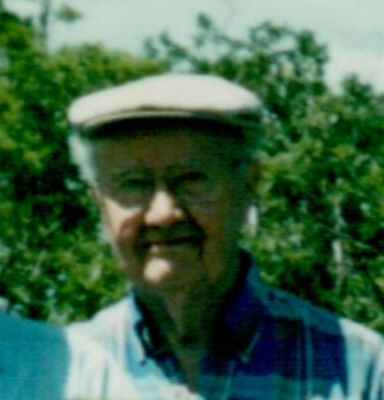
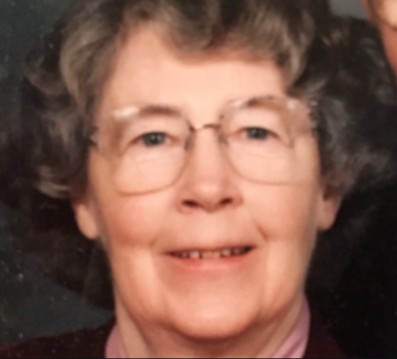
In college, I lost them a year and a half apart. My grandmother died right after Christmas, and after her funeral, I went "home" to the big, old house I was renting with college friends. They were all on winter break with their families still, and I spent almost a week alone in that house, crying for hours each day. This was one of my first experiences of acute grief.
I was aware that it may have appeared to be a rather extreme display of grief. I didn't know until years later that I was actually grieving many things around and beyond her loss. She was one of the only safe adults in my family, and her loss was devastating in more ways than I knew as a young adult.
It is also telling that I chose to return to an empty house rented to me and my friends, rather than the house of my family of origin. Even then, my grief came when it needed.
The body responds the same way
Grief can feel like a ton of bricks on your chest in the middle of a sleepless night when you can't seem to get enough air into your lungs. There are physical symptoms of grief, so much so that our bodies feel it as an injury — temporary weakening of the heart, a brain searching for someone who should still be here, registering grief in parts of the brain that process physical injury. It is one of the only emotional experiences powerful enough to measurably affect the entire body at once.
In my early twenties I got a Groupon (anyone remember those?!) to see an acupuncturist for the first time. Her initial assessment included checking my twenty-four pulses, which was a new concept to me. She told me details about my health history with superb accuracy that I had not told her, including that I had broken my right clavicle in a bike accident. Then she paused, looked a bit puzzled, and asked me, "Was the bike accident severely emotionally traumatic for you?"
"Not really, no."
"Did you move this weekend, or did you help somebody else move?"
"Nope."
"You weren't lifting heavy things for an extended amount of time over this past week?"
"No..."
She paused, looked at me, and said, "The body responds the same way to carrying physically heavy things and emotionally heavy things." She didn't say anything else, but my wheels were already turning.
"The body responds the same way to carrying physically heavy things and emotionally heavy things."
If anyone is familiar with the Enneagram, I am a type seven. My core fear is to be trapped in emotional pain, and my core desire is to experience the joy and fullness of life. This can lead to some apparently high-functioning and busy behaviors. I always had multiple jobs, was constantly travelling or planning a trip, literally running, sometimes off to the woods or to the beach, sipping tiny little tastes of solitude before I escaped into socialization or media to distract me from the dull, hungry heaviness.
Carrying heavy things can make you an athlete in that way. If you've always carried it, you don't know what it's like to not have to, and setting it down feels like you've forgotten something. Yet avoiding my grief inhibited my ability to experience true joy.
I grew tired of being called resilient
Much of my early career was in social work and mental health, working with people through incarceration, trauma, addiction, homelessness. We worked with death and loss nearly every day in some form. We routinely completed a Five Wishes death preparation for each new client on intake. We memorialized deceased participants on a regular basis.
Yet somehow I wasn't thinking much about my own losses, my own death, and what kind of life I deeply wanted to live before that happened. I was aware that things were not right within me. If I stayed still for too long, I could feel the heaviness creep in, but I didn't know how to diagnose or change any of it. I eventually grew tired of being called resilient, but I didn't feel like I had another option.
In 2019 I reached a point of great internal dissonance, such that I couldn't move forward without doing something about it. The clearest thing I could name at that time was trauma stemming from the way my parents had treated me and my siblings my whole life, too much to explain here. I started to see that they had had us to meet their needs, but they were unable and unwilling to meet our needs. Even in adulthood, requests for change were typically met with refusal.
Finally, I spoke to each of my parents very clearly and honestly about the specific ways they had been deeply hurtful, and also the specific ways I needed them to change how they treated me. They both refused. That's the short version of the story. Their refusal came in a series of waves over several years, compounded by multi-generational conflict that laid bare some of the ugliest behaviors and intentions one can imagine within a family. I was repeatedly asked to show up for the youngest generation in my family, which I did willingly, and it also broke me.
By 2023 my entire system was so overloaded that nothing I used to do to cope was working anymore. Everything ground to a halt. I could barely make my way through a simple conversation or a spreadsheet. Nowadays, there is much talk of trauma recovery tools and nervous system regulation and saying no and finding ways to protect your peace, all of which are needed. But still, all of these felt like fixing a problem. None of them deeply addressed grief or made space for it to exist.
Nowadays, there is much talk of trauma recovery tools… But still, all of these felt like fixing a problem. None of them deeply addressed grief or made space for it to exist.
I think the most confusing thing about grief is this contradiction. It is nearly always unchosen, brutally unfair, heartbreaking and crushing. We do not ask for it, yet grief asks to be welcomed gently in at the same time that it seems to be barging through our door unannounced and frantic. What do we do with this?
What do you need from me?
By late summer 2023, I started to ask my grief: what do you need from me? Maybe it was like a loving but anxious dog that needed to be taken for a lot of walks. Maybe it was like a rescue cat who needed lots of cuddles. Clearly my grief was begging for attention and care.
What exactly was I grieving? At the time, I wasn't able to name it all yet. The most obvious things were the absence of parents who actually cared for me, the realisation of what I never had growing up, the childhood unlived, the confirmation of how my parents actually saw me, the cumulative losses that come from having to survive, the people and opportunities I missed throughout adulthood because I didn't know how to trust others deeply, the versions of my life I never got to live, the time and energy I had to spend undoing damage instead of knowing and following my own dreams.
My grief felt so heavy. I could barely go for runs, as was my previous habit, but I could walk. My body was so overstimulated that I couldn't even drink decaf coffee, but I could drink one cup of tea per day. I could barely take in any media at all, not even a podcast. It was too much. But I could listen to a playlist I called Grandma Piano, which is, to me, a positive thing. I love everything associated with grandmotherhood.
So, every morning, I got up early, made a cup of tea, had my Grandma Piano playing in my earbuds, and I took my grief for a long, slow, meandering walk.
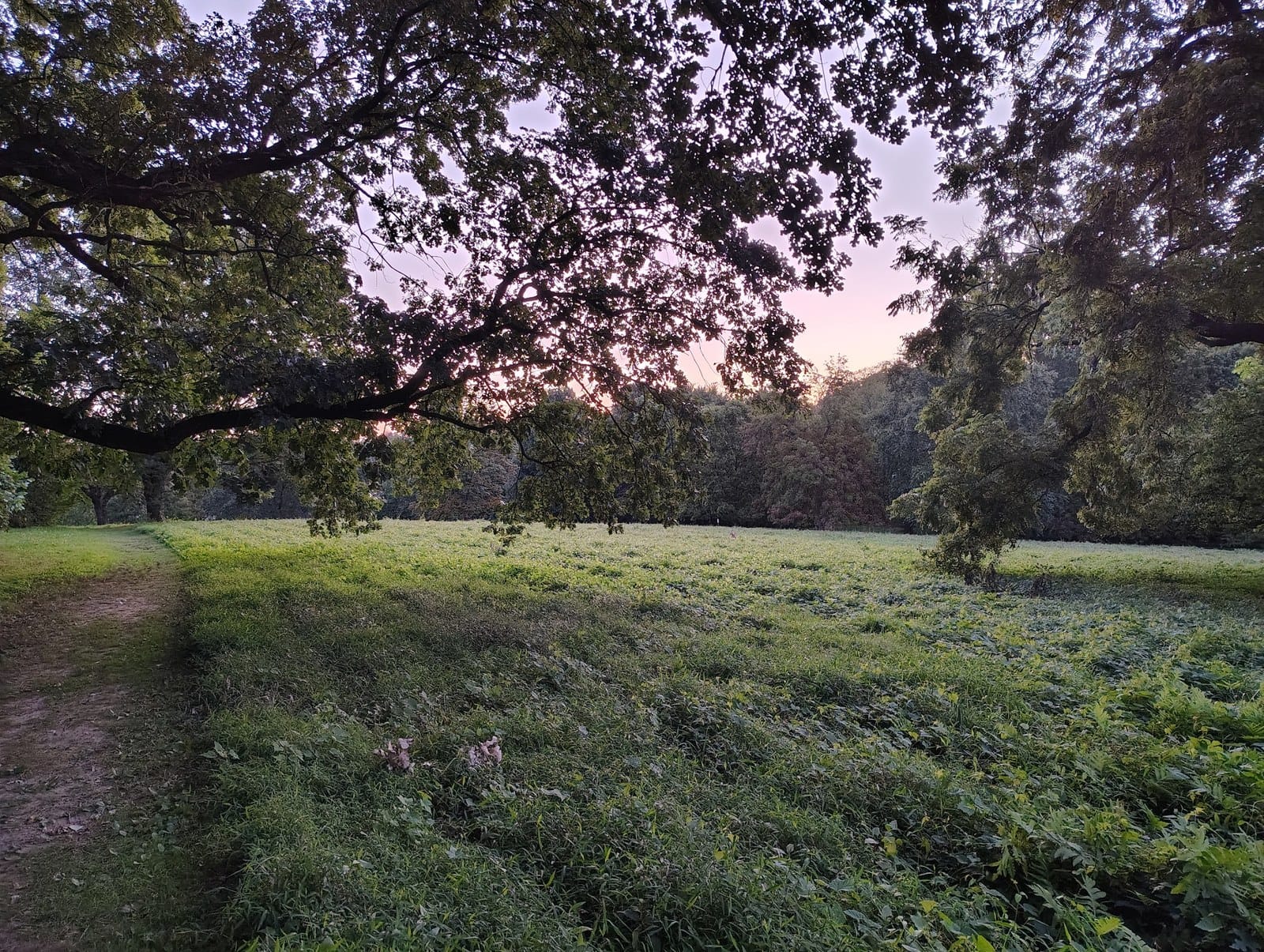
These walks felt like survival. I needed to move, but a slow walk was all I could manage. I needed nature time, but I could barely make myself go anywhere except this arboretum right down the street. I needed a sense of quiet power over my day, and somehow starting it this way felt necessary to get through the rest of it. I didn't start off thinking of it as a way to befriend my grief. I just knew I needed it.
These walks felt like survival... I didn't start off thinking of it as a way to befriend my grief. I just knew I needed it.
It took me some time to accept that this was my "new normal." (Did anyone else begin to cringe partway through 2020 when everyone started using that term? I still do.)
And yes, I was in therapy all that time, and with her I let out a lot of my rage at how unfair everything was, at how I had to carry this heavy grief on top of everything else I didn't ask for. At some point I think I yelled to her, "When am I going to feel better? This is taking forever!" And she said something like, "It takes as long as it takes. It needs to all come out. If you fight it, it will take longer." ...You can imagine how I received that news. I was desperate to stop feeling so useless.
In its apparent uselessness
I used to subscribe to an idea that grief and loss could or should be composted into gratitude and new life. I later found that to be a symptom of our late-stage capitalism and productivity mindset, seeking to squeeze every last drop of "value" out of every beautiful thing.
One thing I observed as I composted in my own backyard was that out of a pile of kitchen scraps, each component decayed on its own timeline. Some took well over a year; others rotted in a month. But the thing that started to bother me the most was the idea that everything had to be useful, productive. Compost, after all, should be spread under the roots of human food-producing plants, right? Wrong. Is the leaf compost in the middle of the forest any less valuable just because it's nourishing a tree that no human harvests or sees?
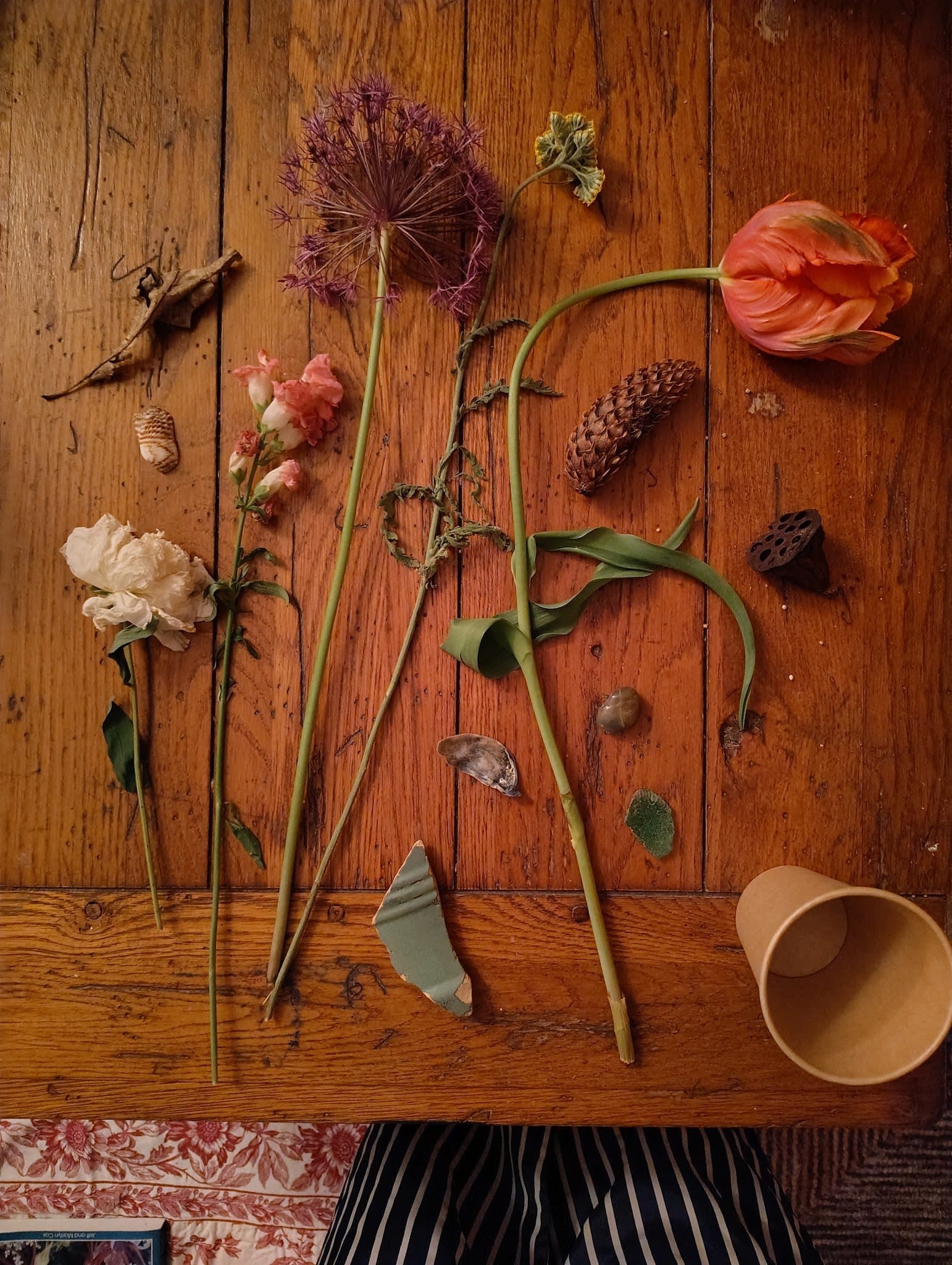
I got so sick of hearing the narrative that grief had to be composted into immediate generativity. I felt like all grief should be allowed to just exist in its apparent uselessness. It already had its own inherent value. I don't think anyone needs to agree with me on this, but I feel we need more spaces and narratives about grief in our world, and a more extensive support system to let people experience their grief in whatever shape or timeline it actually is.
I felt like all grief should be allowed to just exist in its apparent uselessness.
You might have heard about the five gates of grief (not to be confused with the stages of grief - a very different subject). Other authors have added a sixth and a seventh. I would love to talk about those in depth another time, and about what I experienced with them. For now, I'll share that one thing I learned by accident and heard articulated in my grief training is that many of us are unable to enter the gates that are hardest or heaviest, but we can come in through a gentler gate and then access our heavier grief through the back door, so to speak.
One of the harder experiences is that when we are forced through one gate, we may also find on the other side the cumulative losses of the other gates, and it can feel crushing to feel it all at once. Some people understandably avoid their griefs because of this. There is an idea that if we are tough and strong we won't need to feel our grief, but I think the opposite is true. Grief is so painful, it requires immense strength, and opening ourselves to it is one of the toughest things we can do.
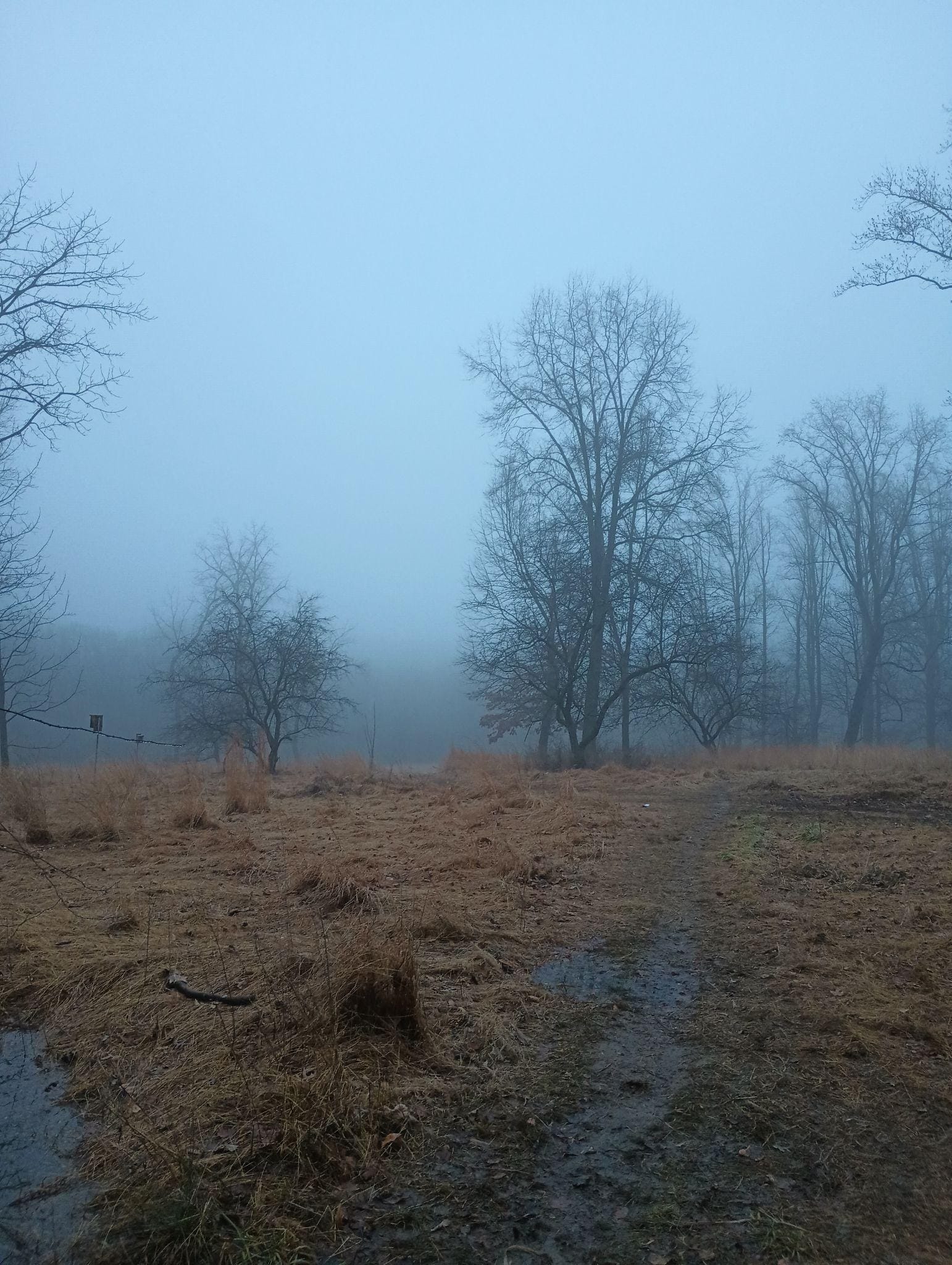
It is walking through a fog, through a bog - quite the slog, if you don't mind my accidental rhyming. The fog is so dense, I can barely see in front of me, and the bog forces me to carefully put one foot in front of the other. That's all I can do to keep moving without sinking with my heavy backpack on.
Better with company
I've been on plenty of uncomfortable hikes, and I can tell you that slogging through a foggy bog is almost always better with company.
I started working with a grief coach, and he asked what I needed on a daily basis. Since everything I had to do in a day was already so hard, the only thing I could come up with was moving outside, preferably with friends - the Sam Gamgee kind of friends. My grief was my own, but it needed to be held and witnessed by my people too.
I got invited to go on a long hike through the Zagros Mountains in Kurdistan during that time. A group of humanitarian workers from different parts of the world had organized a nine-day hike. The first morning it was raining quite hard. Not really the kind of weather I wanted to start in, but there was nothing to do but get out and start moving, and of course we did.
It rained the entire first three days. Each day when we got to our homestay for the night, we took turns in the shower and joked about whether any of us would find a single inch of dry clothing on our bodies. We did not, despite wearing waterproof gear. Hoods up against the rain, we couldn't really hear one another, so we walked mostly in silence. All we could do was move to keep warm and take in the scenery, which was some of the most beautiful I've ever seen, like I was on another planet.
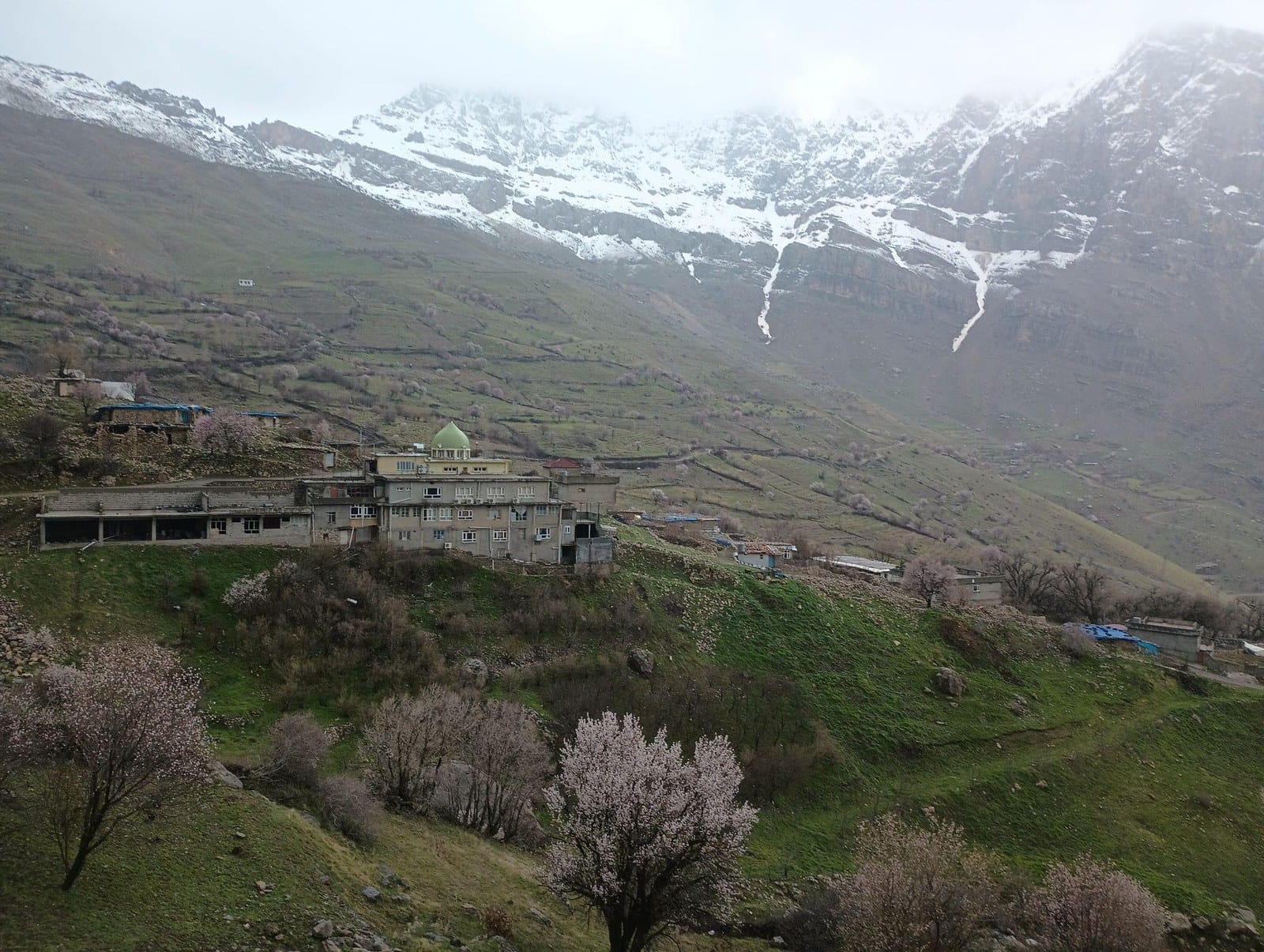
And then, when the rain stopped, the scenery changed. It was still beautiful, just different, and I actually found myself missing the views from the rainy days. It reminded me that sometimes the experiences we think we do not want open us to beauty we could not otherwise access.
… I actually found myself missing the views from the rainy days. It reminded me that sometimes the experiences we think we do not want open us to beauty we could not otherwise access.
There was something refreshing and clarifying about the simplicity of that experience, and I can't quite name what it moved through me, but I could feel a shift. I think part of it was releasing something in me that needed permission to be boring, to just exist in nature with fellow humans, walking and eating and sleeping. Something about the heaviness of grief made me much less able to care about being interesting or right, but that felt like a new kind of freedom I didn't know I needed.
I also found myself thinking about my own trajectory of humanitarian work and how I wound up in it. My grief coach helped draw parallels between the narrative of my family of origin, where my existence was only validated insofar as I served their needs, and the narrative of my career choices. I had always chosen jobs that felt meaningful and impactful. Yet as I found myself grieving the absences of my childhood and the people I had lost, I also felt a shift in my motivation.
Grief limited my capacity in such a way that I could only do what I genuinely needed and wanted to. Instead of approaching my work from a place of "should," wherein my career was only valid insofar as it served the world in some way, I started to think of it more as a way to express genuine care for both myself and others, coming from a place of deeper self-knowing and respect for my limits.
Processing with my grief coach, and in grief groups where others had resonant experiences of loss, I decided to expand my own coaching practice to pursue a certification in grief coaching. I felt supremely underqualified to hold anyone else's grief, as I could barely hold my own most days. But then I thought, how can any of us hold one another's grief well, except by being present? That is one of the most precious gifts we can give each other, especially in a world starved for attention, time, and deep, consistent fellowship.
Chamber by chamber
There is so much wisdom in our grief, so much that deserves to be respected and protected. It also hurts so much worse and for so much longer than we would like.
You may have seen this image of grief, and our capacity growing around it over time. That can be a helpful metaphor. Another one I like to use is a spiral, or a nautilus. One day I was at a museum looking at nautilus shells, as nerds like me do, and it dawned on me that they grew their own home around themselves, chamber by chamber. The spiral makes it seem like they're revisiting previous territory, but with each lap around, the chambers are a little bit bigger than they were before. Not moving in circles, but in a gradually growing spiral.

I feel like this helped me think of my slowly growing ability to make a home for myself around my grief, knowing it won't disappear. Each time I come back to the same place with my grief that feels like I should be farther along, I remember that I'm often revisiting these same spaces with a slightly increased capacity to hold it.
Each time I come back to the same place with my grief that feels like I should be farther along, I remember that I'm often revisiting these same spaces with a slightly increased capacity to hold it.
At some point in autumn 2024, I felt a slight increase in my capacity. I remember having an ugly cry after I finished a work project in a timely, straightforward manner for the first time in over a year. I still needed the morning walks and at least a full day of recovery time after any travel or social interaction, but something started to feel just a bit less foggy.
Just when I started to feel some of my capacity building, I was hit with a double whammy of the US presidential election results and a layoff a few short months later. I felt a fresh wave of deepening grief and anger at the state of our world, the state of my country, the people upholding policies that seek to destroy every community and defund and dismantle every system of care I invested in.
The spiritual tradition I was raised in is complicated, but has always been a part of my identity as a human connected to all other life, designed for mutual flourishing. I felt the grief of watching people claim that tradition to justify doing the opposite. I witnessed them cheer on the destruction of everything I had worked to protect and create, in the name of a spirituality that claims to uphold love and justice and truth. I felt done with all of it, but I also felt rageful and heartbroken. Some of these people are still in my family and community.
Earlier this summer, I went to see my aunt, who is living with early-onset aphasia and dementia. What I didn't anticipate was to be hit by the kind of grief that comes from witnessing someone so beautiful and kind, and then seeing them lose parts of themselves to memory loss. This was a gate of grief I wasn't ready to enter until I had already come through another gate. Grieving the obviously awful realities of my family of origin softened me enough to fully feel the grief of my aunt, who could welcome me into her home for the hundredth time but could not remember my name or my relationship to her.
She and my uncle cared for me, played with me, encouraged me, literally fed and clothed and housed me when my family was homeless growing up. There's a story I was too young to remember, but my grandmother recalled it. When my father came to pick me up from her house, I ran to my Uncle John instead.
It feels so deeply unfair that some of the best people get some of the worst diagnoses and outcomes and experiences. Sometimes my grief just feels like a long scream into the darkness, or kicking the inside of my car at how horribly, brutally unjust things feel, and I want to burn things down in my rage.
Alongside this feeling of devastation, I feel immensely grateful that I have had the life infrastructure to support my grieving process. There are still days when grief incapacitates me, and I've learned how to make space for it. I believe everyone deserves that. I also observe so many people who do not have that support, and who seem to be experiencing some degree of long grief, maybe masked as burnout or depression. Maybe it's from the state of the world, the death of a loved one, the loss of a pet, estrangement, the absences of their childhood that never had space to be felt. Maybe there was no obvious or recent loss, but there is still an awareness of deep exhaustion or heaviness.
If this is you, I'm with you in your grief. It deserves to be witnessed and held and shared.
Our grief is exactly as it should be
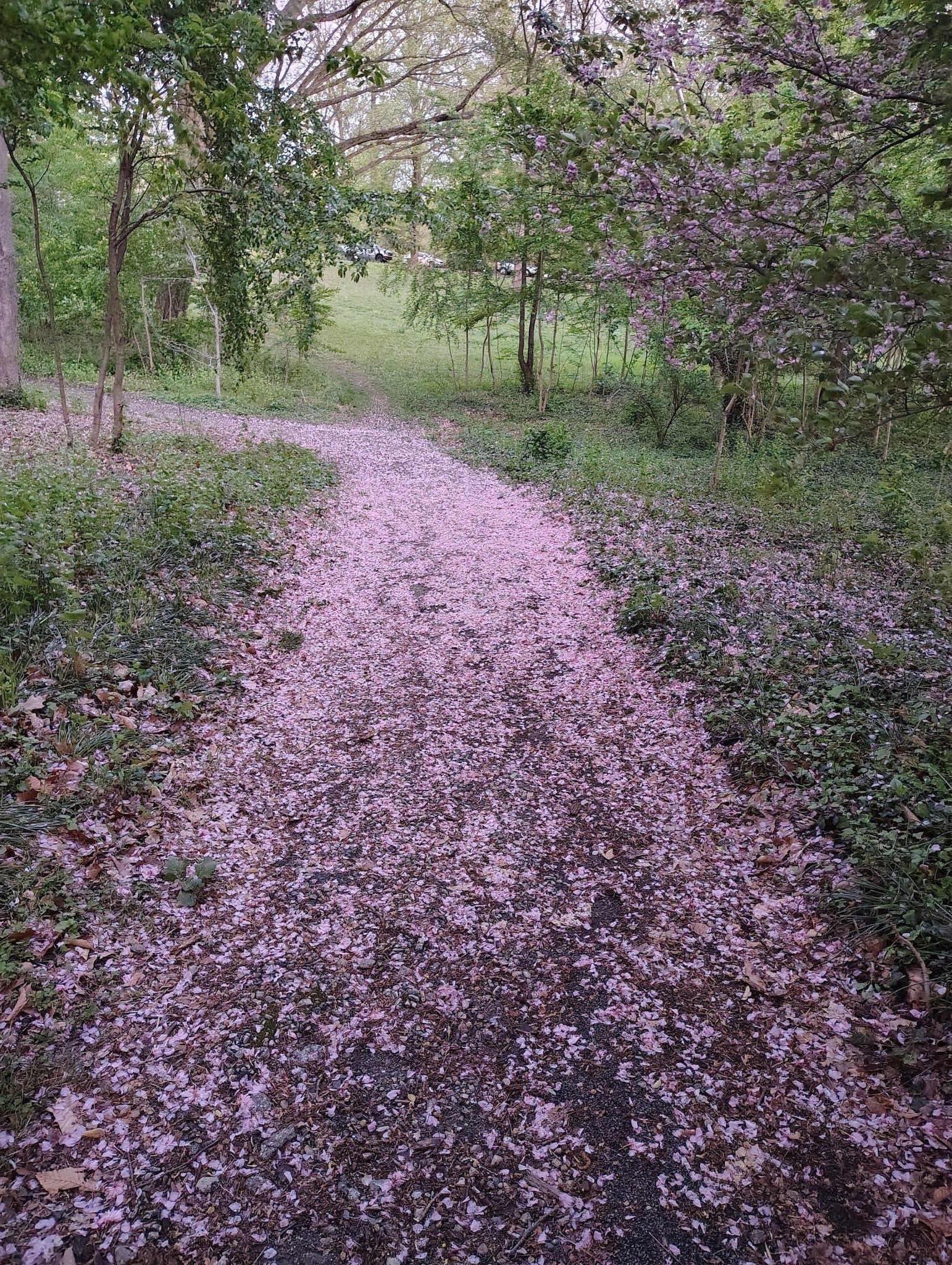
I think a lot about the shoulds we carry around everywhere, and I feel so much of this with grief. Complex grief asks us to cultivate an inner practice of listening, of validating our grief and what it's trying to say to us, of quieting the inner critic that tells our grief it should be different. Maybe the circumstances that led to our grief should have been different, but our grief is exactly as it should be.
Our inner sense of presence helps us to stay with ourselves, to feel safe enough to imagine a future where things are different, while also holding the reality of our grief, so we don't abandon it or ourselves in the process.
What is it like to feel your particular experience of grief? Is it heavy, foggy, dense, stretching, suffocating, crazy-making, simplifying, quiet, angry, bellicose, guttural, softening? It's been each of these things and more at different times for me, and sometimes all at once.
What does your grief need from you?
What are you carrying that needs to be witnessed?
I ask these questions of myself on a regular basis, and I ask them of the folks in my life as I navigate grief work, and also my personal relationships. I could say a lot more, but at this point I would love to give some space for folks to share their own questions and stories.
What the room did with it
An editor's note on the hour that followed. No one is named or quoted, and no one's story is retold.
The room sat in silence for a minute first, and then it talked for an hour.
The accounts had strikingly little in common with each other. Grief turned up in that hour as a visitor who comes and goes, as a permanent feature of a personality, as an administrative task, as something felt about a person who is still alive, and as something attached to a future rather than to a past. More than one person opened by saying their experience was nothing like Naomi's and then described something that plainly belonged to the same conversation.
One thread ran through most of it. The body sets its own schedule and will not be talked down to a more convenient one. That was said about bereavement, about the aftermath of a shock that came to nothing, and about the year after a life changes shape.
Whether a regular grief space would be good for people was put to the room directly, and the room did not settle it. Speaking grief is not automatically good for the person speaking it, and a space built without that in mind can open someone up and leave them there. The answer offered from the other side was that nobody present was a stranger, and that the safety everyone had assumed came from knowing each other rather than from the format.
Where people did converge, it was on two things. That the differences were the interesting part. And that the thing none of them is given enough of, in the lives they actually lead, is time.
This thread was followed in good company by Naomi Sonne.
More Red Thread Talks



In good company
Replies from signed-in readers. They open in their own space, so you can sit with the piece first.
In good company
Pick up the thread