
Grokkist Newsletter #53
The bi-weekly newsletter for grokkists who insist on relating to the world with curiosity and care. Each edition contains the latest from the Grokkist Press, events and highlights from our community, and a care package of snackable outside links selected to nurture your curiosity.

Hey friends,
One of my favourite things about working on Grokkist is meeting people I connect with and finding out they have a whole hinterland of favourite books, sayings, and other references of which I was previously unaware.
It's like having your own real-life recommendation engine!
It's also one of the many reasons I spend barely any time on social media these days.
Anyway, one of those sayings I was gifted and have found myself repeating often since is this:
"Trying to define yourself is like trying to bite your own teeth" – Alan Watts
Because I am nothing if not an experiential learner, I did spend more time than I care to admit sitting in my chair trying to bite my own teeth to test the truthiness of the statement.
I stopped short of dislocating my jaw, but not before twisting my face into a variety of strange, silly, and vaguely terrifying shapes.
And yep – this is often what it feels like when we try to navigate the world as grokkists.
In Terry Pratchett's Nation (which for my money is the single best thing he ever wrote), there's a mysterious old lady character with no teeth who has to have her food chewed for her. They call her Mrs Gurgle.
It's incredibly humbling and a little bit gross both for the chewer and the chewee. But without it she will die, and the main character refuses to accept that as an option, so just gets on with it, and finds joy in it.
That is the work.
(And later, Mrs Gurgle turns out to be a woman of great power.)
At first glance you might not think that 'trying to define yourself' is a matter of survival, but the more people I meet, the less sure I am.
As grokkists, many of us have epic levels of figure-it-out-ive-ness.
We tend to avoid asking for help, and this is commonly a point of pride.
We call this independence, resourcefulness, resilience, creativity under constraint, adaptability, and many other things that are both wonderful and true.
Perhaps we could also call it an unfamiliarity with the experience of receiving care.
Maybe what feels like independence, this endless figuring-it-out-ive-ness we grokkists are so good at, is really just a different kind of jaw contortion.
We stretch and twist and bend ourselves to bite our own teeth, when all along, maybe, we’ve been hungry for someone to step in – to see us, to know what we need before we ask, and, in their own way, to gently chew our food for us.
The old woman in Nation found care in an unexpected place, and the beauty wasn’t in her independence, but in the messy, humbling dance between giver and receiver.
Maybe that’s the real work – to allow ourselves to be seen, to accept that kind of care, even if it feels a little gross, even if it means admitting we can’t quite chew everything on our own.
With curiosity and care,
Danu
'Unlock Your Grok' is now available!
Regular readers will know that I've been working hard on a new offering called Unlock Your Grok.
It's designed for newly-discovered and/or restless grokkists who have realised they can't bite their own teeth and want to unlock their next phase of transformation through a 1:1 guided project experience.
Unlock Your Grok is a distillation of everything I've learned since starting Grokkist – I intend to shape it into our signature starting experience.
Thanks to all of you who replied last time for your various questions and encouragement.
I've made a brand new page that takes you through who it's for, what to expect, and everything else you need to know.
And below is a tidy summary of how it works in a nutshell.
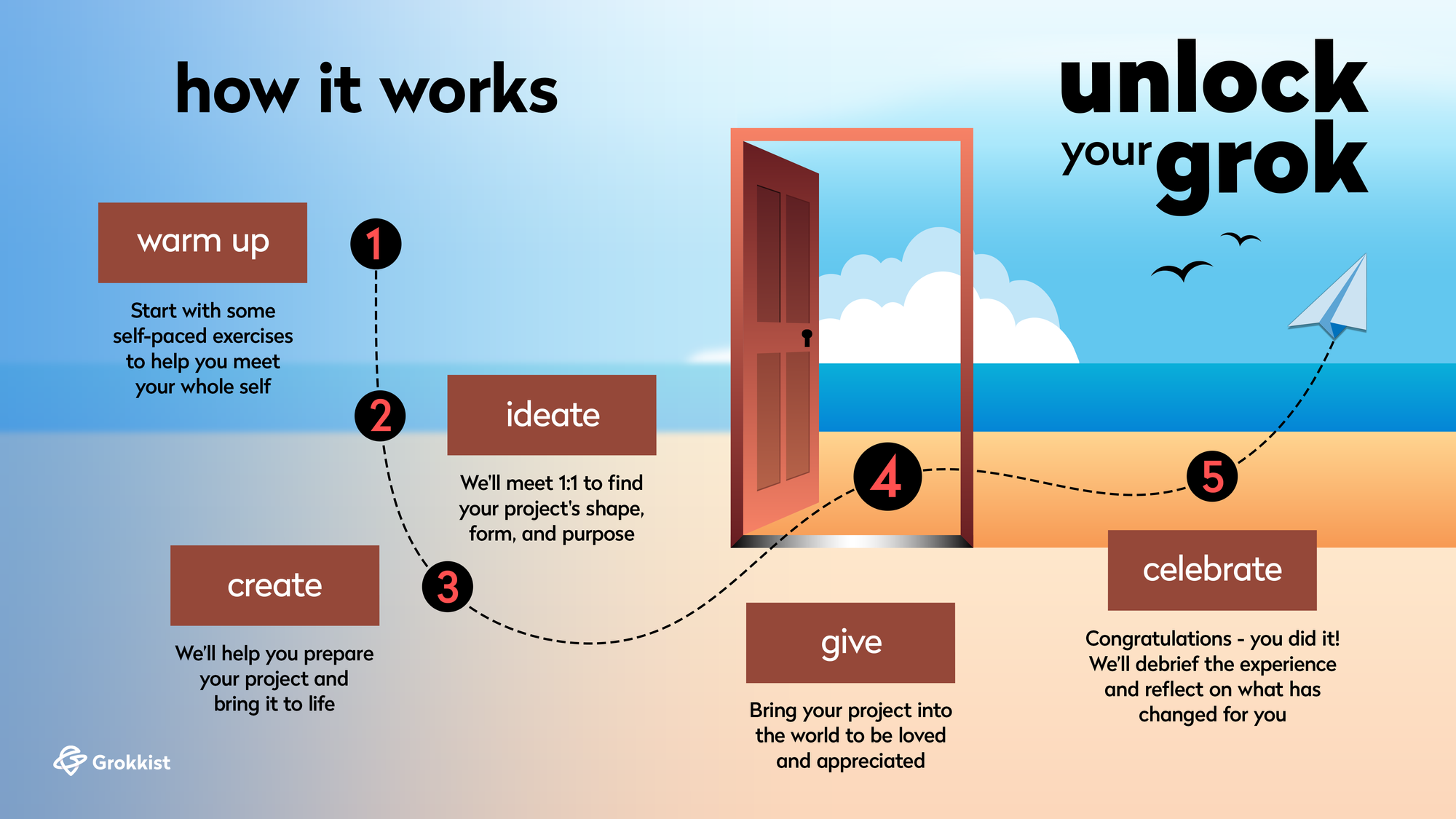
The door to Unlock Your Grok is now open! I look forward to helping some of you through it soon.
Community Highlights
Events, creations, and offerings from the grokkiverse
Learn more about the Grokkist Network ↗Upcoming Events
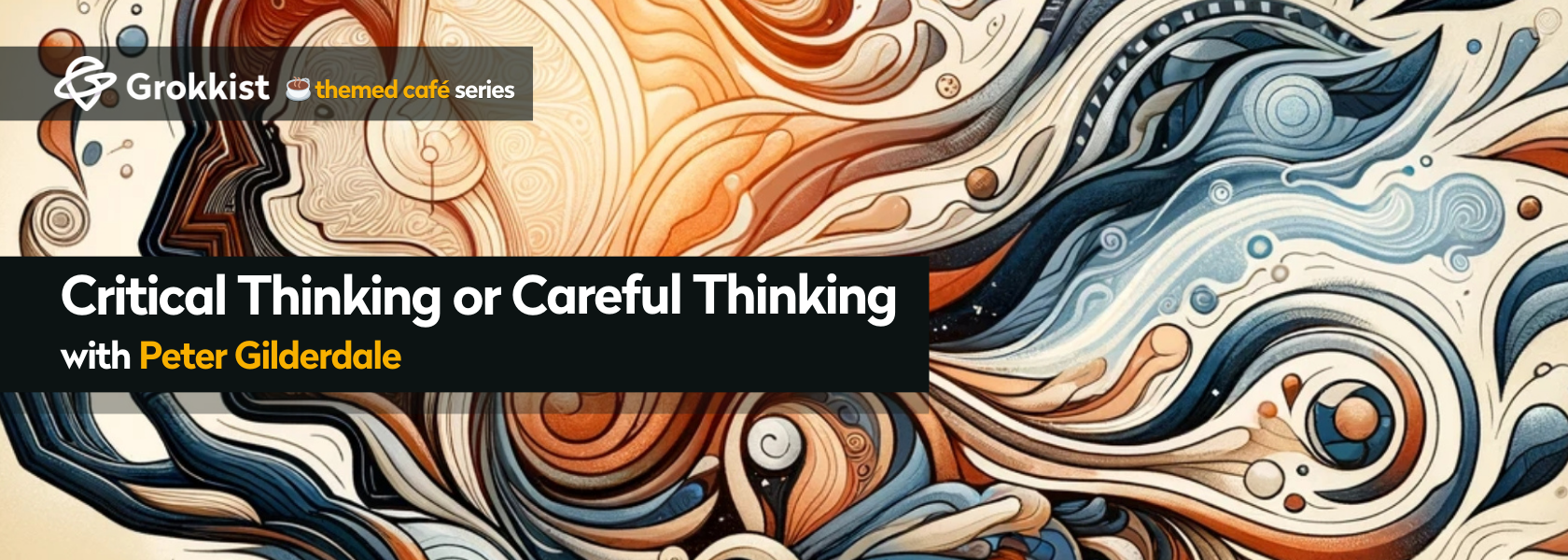
Critical Thinking or Careful Thinking? - themed café
🗓️ Fri 18 Oct | 12–1.30pm NZT (UTC+13) (view in your timezone)
Hosted by Peter Gilderdale
🟢 Free and open to all
Critical Thinking. Most of us use it, or think we do. But what does critical thinking mean to you? Did you learn it? Can you define it? Is your idea of critical thinking the same as other grokkists'?
In this café we will explore these questions and more. It is a chance for Grokkists to build on my article "Critical Thinking or Careful Thinking."
I will give a brief overview of the ideas in the article (so don't worry if you haven't read it yet) and then there will be plenty of time for discussion. Looking forward to seeing you there.
Other Upcoming Events
- 14 Oct | 🟢 Our Hour: a space for sacred activism [weekly until 4 Nov]
- 24 Oct | 🟢 Grokkist Network Office Hours
- 7 Nov | 🟠 The Juggling Lifestyle: Walking the Playful Path
- 14 Nov | 🟠 Comfort in Contradiction: The Art of Non-Dual Thinking in a Polarized World
Grokkist Academy
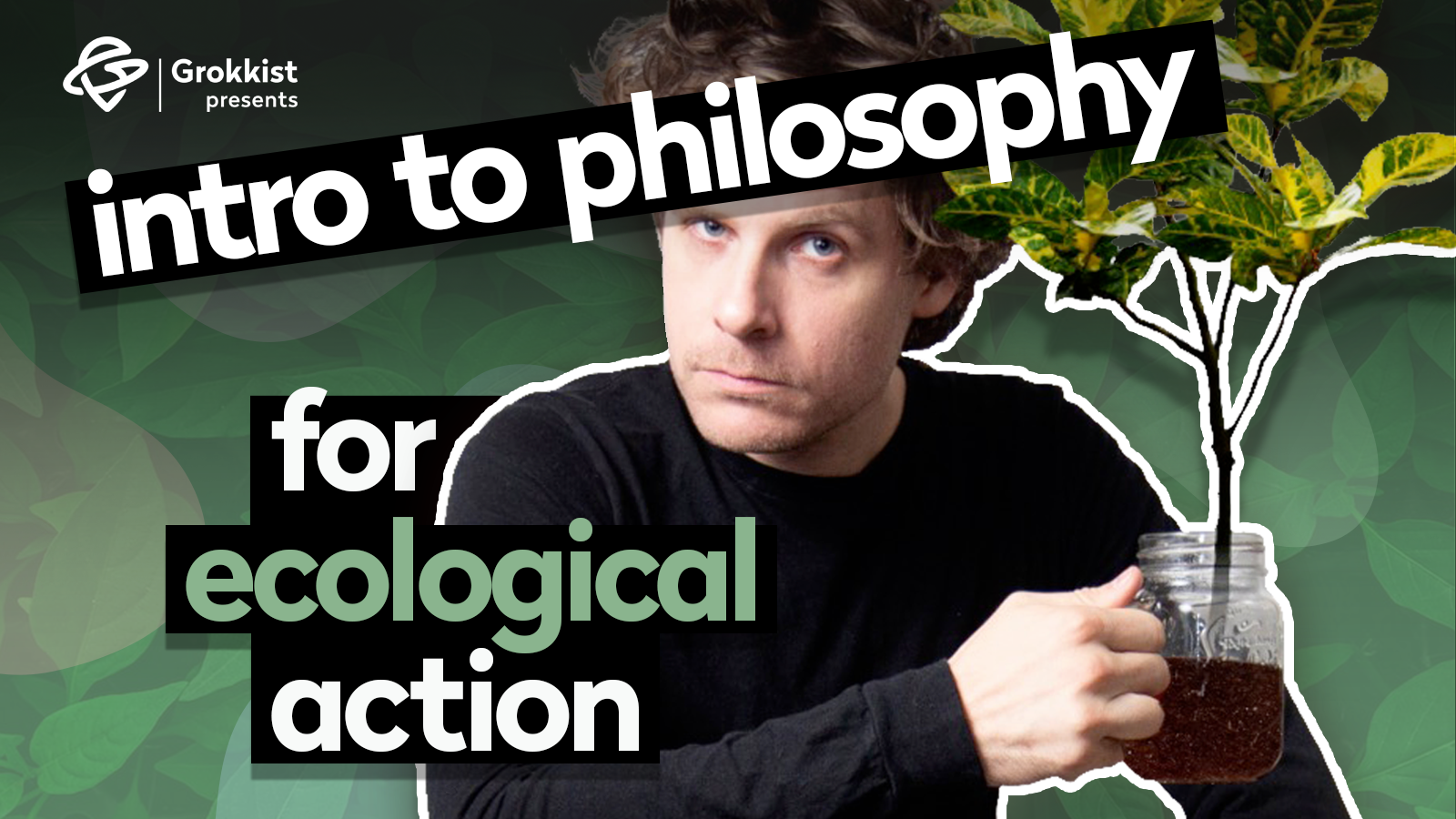
Ecosophy course Cohort 6 now open
🗓️ 12 Nov – 10 Dec | Tuesdays 7–9pm ET (view in your timezone)
Led by Nathan Dufour Oglesby
Suggested tuition USD$220* (20% discount for full members)
(*Can't afford it? Forget About the Price Tag)
Every mind houses a philosophy. Learn to express and live yours, and make your existence truly home.
Join us for the next instalment of our online ecosophy course, designed to guide you through these tumultuous times of environmental and societal change.
Everyone has a philosophy, whether they know it or not.
This course invites you to explore how your personal philosophy—your ecosophy—interacts with the larger ecological and social shifts, and discover how to articulate and act upon your values with clarity and purpose.
Together we’ll take a tour through philosophical ideas and thinkers both ancient and modern.
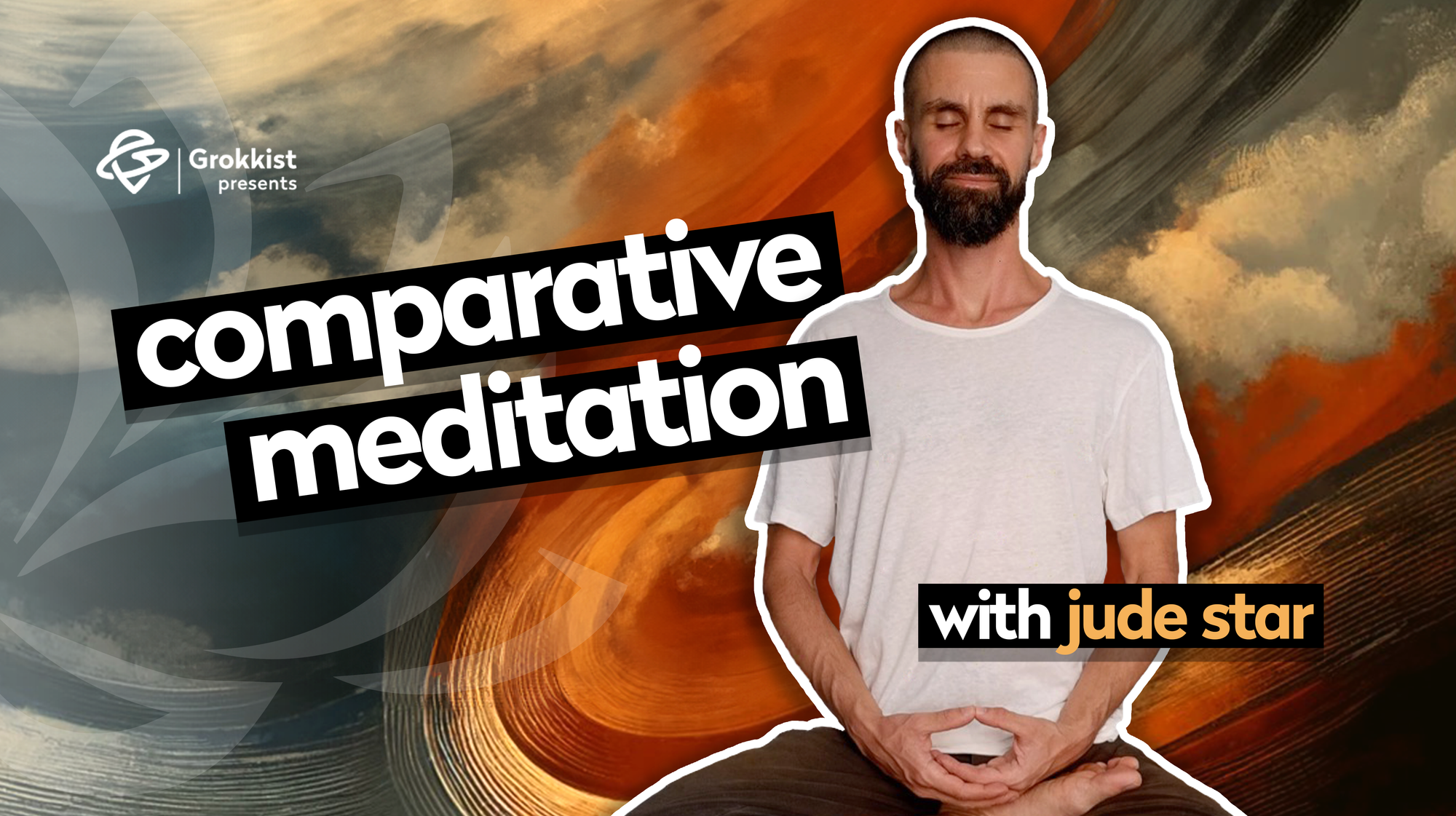
Comparative Mediation course Cohort 2 now open
🗓️ 18 Nov – 18 Dec | Mondays & Wednesdays 7–9pm ET (view in your timezone)
Led by Jude Star
Suggested tuition USD$220* (20% discount for full members)
(*Can't afford it? Forget About the Price Tag)
Explore the richness and depth of meditation in an experiential journey that weaves together the philosophical underpinnings and transformative practices of Shamatha, Vipassana, Tantra, and Non-Dual meditation.
This course will give you a crash course in a wide spectrum of meditative techniques through an integrative and comparative lens.
My goal is to help you understand the essence of each and in turn better grasp meditation and its dynamic yet complementary philosophies better as a whole.
While each category encompasses countless traditions and practices that could be explored for lifetimes, I've distilled the core themes and techniques to convey the essence of each.
🍬 Snackables
Assorted awesome links to nurture your curiosity
#1 - How does the language of headlines work? The answer may surprise you.
 Chi Luu

Anyone can appreciate the economy of wordplay in a well-written headline, from “Headless Body in Topless Bar” to "Bezos exposes Pecker". But "headlines these days have often been derided as the empty calories of information, sensationalist trickery, “the art of exaggerating without actually lying” as Otto Friedrich put it." And nobody likes clickbait, which "exploits what’s known as the curiosity gap, with just enough information to anticipate what the story might be about, which entices readers to click on the link to find out more."
So what's the difference between a 'good' headline and clickbait, and is there a common language to how headlines work? This article mixes a bit of history with a bit of linguistics and a lot of examples. "What you’ll learn may surprise you (or not)."
#2 - "Mum does the washing" – political theories explained according to who does the laundry
Maybe you're familiar with the "you have two cows" style of one-sentence satirical summaries of popular political forms. Here is a 5-minute short film, shot in the style reminiscent of Childish Gambino's This is America, that summaries political attitudes of today according to who does the laundry – usually 'mum does the washing."
Liberalism:
you watch your mum do the washing
and feel really really bad.
“Something must be done” you say.
Something may or may not get done
You're welcome.
#3 - The "lostwave" movement bringing forgotten songs back to life
 Chris Dalla Riva
When nostalgia meets curiosity. An engaging article that explores the allure of “lostwave”, an online subculture dedicated to unearthing long-forgotten tracks, such as the infamous “Mysterious Song” taped by a German teen in the ’80s, or a tiny song fragment nicknamed "Kenya Dance":
Back in 2013, a video called “HOW TO PICK UP WOMEN IN 30 DIFFERENT CULTURES” used a four-second snippet of an African-sounding song for the “Kenya” portion. Creator Joji – formerly known as Filthy Frank – had no idea where he got it, the assumption being he googled “African music” and grabbed something random. After ten years, YouTuber nbduckman created an informational video about the song accompanied by a $300 bounty. One day later, a viewer found the song by searching “east Ugandan gospel before:2013.” It turned out to be a Christian worship song called “Katonda Alinawe” by David SonJC. It wasn’t from Kenya, but rather from its western neighbor Uganda.
The sleuthing process is a collaborative effort – with fans scouring online music forums, comparing grainy cassette recordings, tracking down and getting in touch with old band members, and pooling collective memories to identify elusive tracks.
#4 - An AI scientist that automates the entire research lifecycle
 Sakana AI
An AI research lab in Japan has collaborated with researchers at the University of Oxford and the University of British Columbia to use "nature-inspired methods to advance cutting-edge foundation models" and create an AI scientist.
For decades following each major AI advance, it has been common for AI researchers to joke amongst themselves that “now all we need to do is figure out how to make the AI write the papers for us!” Our work demonstrates this idea has gone from a fantastical joke so unrealistic everyone thought it was funny to something that is currently possible.
The AI Scientist automates the entire research lifecycle, from generating novel research ideas, writing any necessary code, and executing experiments, to summarizing experimental results, visualizing them, and presenting its findings in a full scientific manuscript.
Impressive results. The page includes an overview of the method, examples of full AI-generated papers (including one on grokking!), and a discussion of strengths, limitations and ethics.
#5 - The wonders of bird engineering
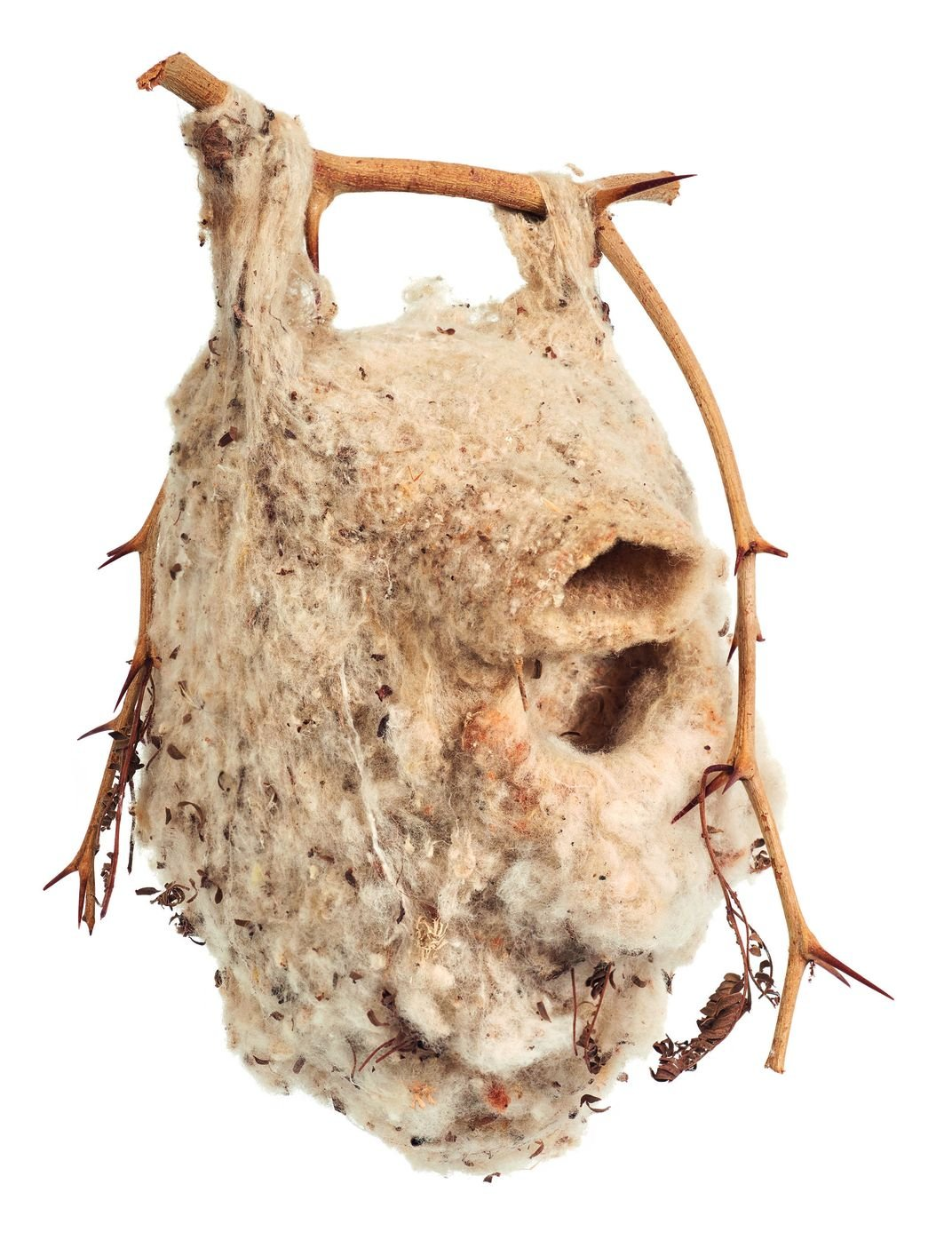
Article from the Smithsonian Magazine that explores the diversity and intricacy of avian architecture, showcasing the ingenuity behind different species’ nesting habits and offering a window into evolutionary adaptation. From the Cape penduline tit’s pear-shaped nest (shown here) with a decoy chamber to fool predators, to the Liben lark’s fragile breeding sites on Ethiopia’s dwindling plains, to the common house sparrow, each example reveals how nests serve as both homes and survival strategies.
The article draws from Douglas G.D. Russell’s extensive work with the UK Natural History Museum’s vast collection of nests and egg specimens, which provide insights into past climates and local ecologies. In the case of the echo parakeet, they've also helped with conservation efforts. “You’d be hard pressed to find a more poignant example of how the studying of the nesting and breeding of a species can bring something back from the absolute brink of extinction.”
A pair of parting thoughts...
“Most people rush after pleasure so fast that they rush right past it.” — Søren Kierkegaard
“Go out on a limb. That’s where the fruit is.” ― Jimmy Carter
That's it! Thanks for reading.
Hit reply and get in touch anytime – I love hearing from you.

In good company
Replies from signed-in readers. They open in their own space, so you can sit with the piece first.
In good company
Talk about this piece