


New here? Start with the First Sparks series, visit the Grokkist Network Welcome Hub, or check out the Glossary of Grokkistry.
Changed your mind? You can update your settings or unsubscribe anytime using the links at the bottom of the email — no hard feelings. We respect your inbox.
Hey friends,
I want to bring you inside something we’ve been nurturing with our Red Thread Talks.
Someone stands up and offers something that’s alive in them. An idea, a practice, a question, a story that hasn’t finished unfolding. They’re speaking from the middle of something.
You can often feel the threshold. A slight tightening. The risk of being seen without the usual armour.
And then they say it anyway.
When a still-forming truth is spoken aloud in the presence of people listening with curiosity and care, it becomes more real because it has been witnessed.
I’ve come to see Red Thread Talks as a kind of rite of passage within the grokkiverse. A way of introducing yourself to the community through something alive in you. A way of saying: this is the thread I’m following right now.
And in saying it, you make a version of yourself real by speaking it publicly.
If you are deeply nerdy about such things, as I am, you could think of it as performative speech in the Arendtian sense — speech that does something in the world. It brings a particular “who” into being in relation to others.
And when you articulate something still-forming, it takes clearer shape. It becomes more legible — to others, and often to yourself.
Legibility is one of my deeper themes for this year.
How do we make Grokkist more understandable without flattening it? How do we articulate what’s happening here without turning it into a slogan?
I notice that the same movement happening inside a Red Thread Talk is happening at the level of the whole project. Individual unfolding involves becoming more visible to oneself and to others. The project itself is also becoming clearer in shape and articulation.
So I’ve been working on that in fairly ordinary ways. There’s a brand new About Grokkist page. I wrote How to Be Here. I refreshed the Curiosity and Care deep read article. Each of them is an attempt to speak the subtext more plainly and make the underlying orientation easier to see.
Red Thread Talks remain one of the clearest expressions of what this place is about. They create a space where curiosity and care are enacted. You see how people want to be met. You see how they want to be known.
This week we have two more coming up.
One explores what it feels like to realise you’re no longer lost, and yet still aren’t sure where you’re going. It lingers in that space where insight has arrived but life is still catching up. There’s something honest about that territory.
The other traces a journey through music — from disciplined study into a more reciprocal relationship with sound and attention. It reflects on how we are shaped by what we practice and how listening changes the listener.
Both are someone stepping into that threshold and saying: this is what I’m living with.
If you’re curious about what this community actually is, come and witness one of these conversations. Sit in the room while someone makes a thread of their life more visible. Sometimes we share the recordings and sometimes we don’t, depending on what feels right to the speaker. Even watching later can give you a feel for how people here want to be seen.
And if you’ve been here for a while, there may come a moment when you feel that tightening yourself. The sense that something you’ve been circling wants to be spoken.
There’s a simple form to propose a Red Thread Talk. You can put in what you have and let it lead to a conversation. Or we can talk first and the form can follow. It exists to make the invitation tangible.
Before we finish, please indulge me if I also shoehorn in a little pride in our recently published hardback edition of Flirting with Wisdom, which I think you'll agree looks rather handsome.
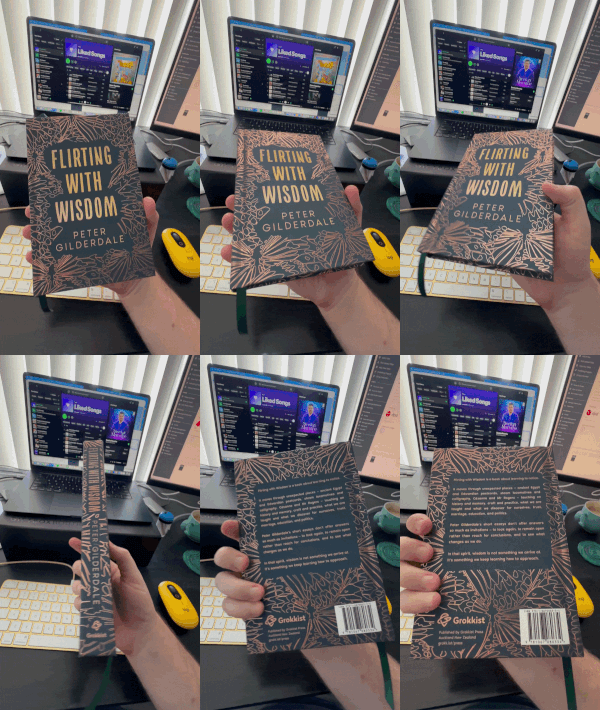
A book is a physical manifestation of legibility. It gives enduring form to something that has been unfolding. You can hold it. You can return to it. It stays put.
There’s room here for both the still-forming truth spoken into a room and the finished object placed into the world.
Both are ways of making what matters a little more legible.
With curiosity and care,
Danu
Become a Grokkist Member to take part in Groksmithing in community and turn resonance to practice through hands-on gatherings, self-guided courses, and member access to Signature Projects where we help you bring your ideas to life.
For those standing at bigger thresholds, I also offer bespoke Groksmithing engagements — this is the heart of my livelihood, and how I support others to do their most meaningful work.
Your support keeps Grokkist open, regenerative, and dignity-first — sustaining a home for curiosity, care, and creative action.
Grokkist Press
Visit the Press ↗Fresh and Featured Pressings

The Dance of Lead+Follow | Letter 2: Trust your own lead
By Margarita Steinberg (8 minute read)
Whether leading or following, the first person you have to trust is you.

How to Be Here
By Danu Poyner (3 min read)
A quiet charter of presence for Grokkist.
More from the Press
- The Unconsented Arrival (Rodney King, 3 min read) – In a life we didn't choose, what would allow us to make our own decisions?
- Curiosity and Care: the essence of being a grokkist (Danu Poyner, 24 min read) – On meeting the world with attentiveness, generosity, and the courage to remain open to what could be otherwise. [updated for 2026]
You can also read our guide to learn how the Grokkist Press works and how to get involved.
Grokkist Network
Visit the Network ↗Upcoming Events
Access Key
🟢 Open Access: Free and open to all.
🟣 Member Access: Exclusive to Grokkist Members.
🟠 Ticketed Access: Open to all with a cover charge (members enjoy a 30% discount).
Check out our guide to our events and gatherings to learn how our events work and how to host an event of your own.
Featured Gatherings
🟢 Living What I've Seen
🗓️ Sun 22 Feb | 12pm–1.30pm ET (view in your timezone)
Hosted by Zaheer Merali
What does it feel like to realize you’re no longer lost, yet still aren’t sure where you’re going?
Living at the edge of uncertainty — awake, present, and no longer organized around a fixed identity or life plan — changes how we move. The project of fixing ourselves begins to fall away. The familiar sense of “who I am” loosens.
Old habits tug. Work tugs. Money tugs. The reflex to be useful returns.
The question “Who’s in the driver’s seat right now?” becomes real.
This talk explores that in-between space — not crisis, not arrival — but the ongoing edge of embodiment. What happens when the need to figure everything out recedes, yet nothing feels finished?
It’s a reflection on living without drama and without a final answer. On freefall without panic. On being alone and deeply held at the same time. Ordinary. Unfinished. Enough.
🟢 Music & Magic: On energy and other ways of becoming
🗓️ Wed 25 Feb | 7pm–8.30pm ET (view in your timezone)
Hosted by Emily Jane DeWoolfson (Jane)
Many people engage with music as a discipline—a field of study, a craft to be mastered, a practice of shaping sound with care and intention. But music is also a reciprocal relationship that shapes us in return.
In this Red Thread Talk, Jane reflects on a personal journey shaped by deep study and spiritual transformation, opening new ways of listening and becoming. With original compositions as touchstones, the talk traces a path shaped by sustained engagement with music, from rigorous academic training as a composer and music theorist to an evolving practice of listening and becoming that reaches beyond the concert hall. Along the way, music becomes a site of inquiry into perception, relationship, and the making of meaning.
Listeners will be invited to consider how music moves through their own lives, and how deep listening might play into their own engagement with the world and with other people.
Other Upcoming Gatherings
- 2 Mar | 🟢 Grokkist Writing Salon
- 3 Mar | 🟣 Members Lab & Lounge [Timezone B]
- 10 Mar | 🟢 "Shoes-On" Studio – a space for finding your voice in public
- 17 Mar | 🟣 Members Lab & Lounge [Timezone A]
- 19 Mar | 🟢 PhilosophyGym @ Grokkist
🍬 Snackables
#1 - When a culture no longer wants to live
 Nuño Domínguez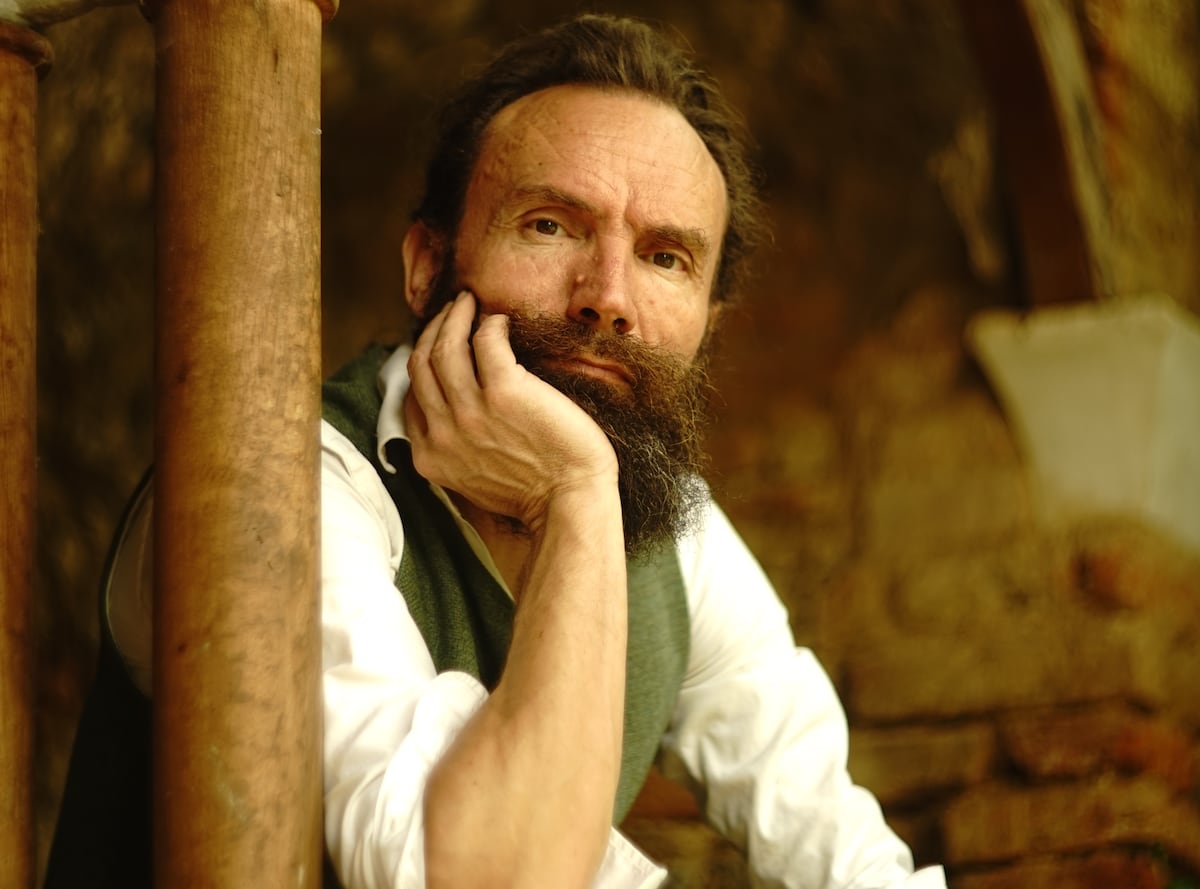
For years, Neanderthals were framed as evolutionary losers. Then came the rehabilitation: they made art, controlled fire, interbred with us. Almost like us. Paleoanthropologist Ludovic Slimak pushes somewhere more unsettling. What if they were neither inferior nor “basically sapiens,” but genuinely different? Different minds. Different relationships to territory, tools, perhaps even to meaning itself. He suggests their disappearance may have followed a collapse of their “mental sphere” after contact with Homo sapiens — a cultural unravelling rather than a simple conquest.
“We’ve killed Neanderthals for the second time by not wanting to understand them.”
The piece wanders from prehistoric caves to 20th-century genocide to present-day Greenland, circling a question that feels uncomfortably contemporary: what makes a culture resilient, and what makes it lose the will to continue?
#2 - A real company staffed by fake people

Shell Game is a hit podcast in which a journalist investigates entrepreneurship in the AI age by trying to create a real company staffed by fake people. [Listen to the 2-minute trailer]
The show lands somewhere between investigative journalism and deadpan performance art. It offers neither breathless futurism nor moral panic. Instead it demonstrates that a lot of what we call “running a company” already resembles a shell game — slides, signalling, delegation, abstraction. If a company can be convincingly enacted by software, how much of startup culture was theatre to begin with? Equal parts bizarre, compelling, funny, and disturbing — which is to say, perfectly calibrated for the moment we seem to be living in.
#3 - Caroline Hampton’s rubber gloves
 Kaushik Patowary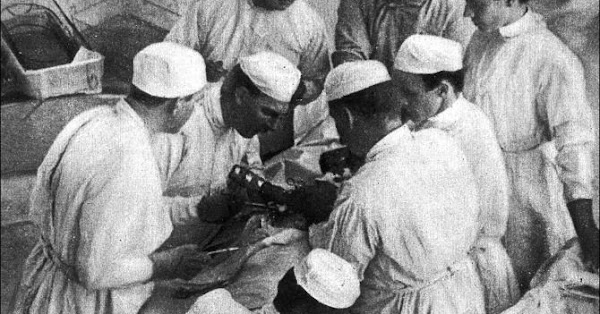
Many world-changing innovations don’t begin as grand visions of progress. They begin as local patches or workarounds. Small acts of care for a specific human constraint. In this case: a nurse’s injured hands. In the late 19th century, surgeons scrubbed with increasingly brutal chemical solutions in the name of sterility — soap, potassium permanganate, oxalic acid, mercury chloride. Effective for germs. Less so for skin. Caroline Hampton, chief surgical nurse at Johns Hopkins, developed severe dermatitis and was on the verge of leaving the operating room altogether.
So her boss, William Halsted, commissioned custom rubber gloves to protect her hands. They weren’t conceived as an infection-control breakthrough. Just a practical fix for one person’s suffering. But once others began wearing them, infection rates dropped dramatically, and gloves slowly became standard surgical equipment. Naturally, there was resistance. Some surgeons warned that gloves would dull the “sense of touch” and degrade surgical skill. Which is often how improvements first appear: as threats to expertise, tradition, and the way things have always been done.
#4 - Antidepressants or Tolkien?

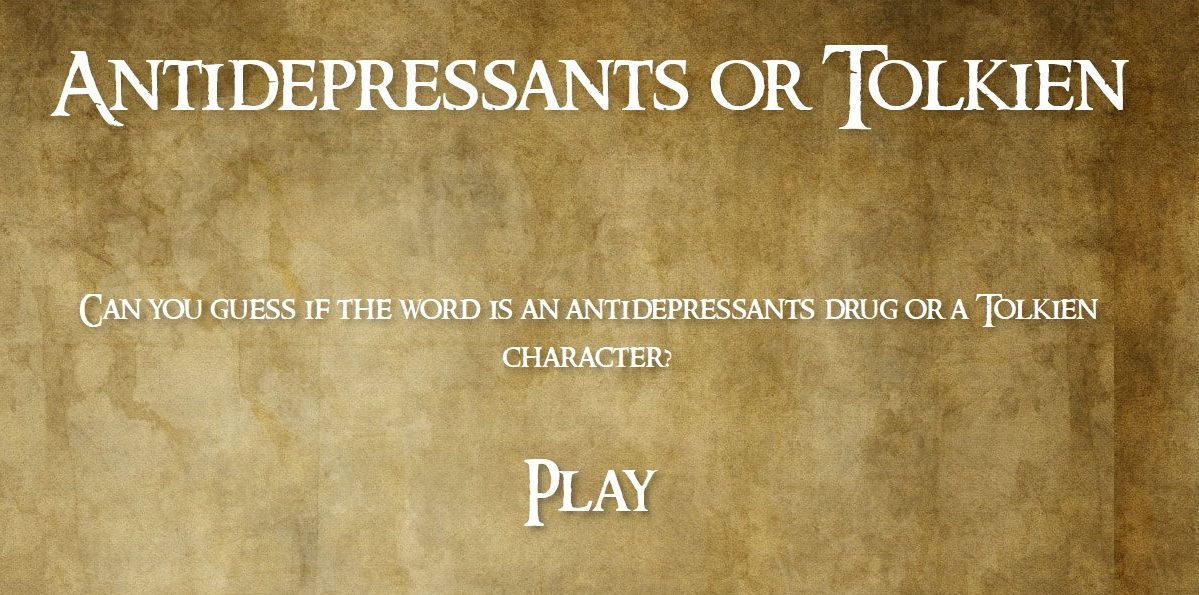
A tiny web game that shows you a name and asks you to guess whether it’s a Tolkien character or a modern antidepressant. I got 15 out of 24 and laughed out loud several times.
#5 - And then he threw a whale
A boy throws his kite into a tree. To retrieve it, he throws his shoe. The shoe gets stuck. So he throws another shoe. Then a ladder. Then a paint can. Then a chair. Then a kitchen sink. Eventually: a whale. I'm sure you can guess what happened. Stuck by Oliver Jeffers is a children’s book with an impeccable sense of escalation — and a suspiciously accurate model of how problems sometimes get handled. (🙏 Rona M)
Grokkist is a living ecosystem — 🟢 free to enter, powered by members 🟣.
If you’d like to go deeper, you can join as a member, explore Signature Projects, or work with Danu.
Parting thoughts...
"Kindness begins with the understanding that we all struggle." – Charles Glassman
"I used to think I was the only one who suffered. Then I went to the rooftop and saw that every house was on fire." – Nadeem Aslam
This newsletter was delivered to 850+ curious and caring subscribers. Help us expand the grokkiverse by telling a friend about our newsletter. You can share this edition directly with others using this link:
grokk.ist/newsletter/85/
That's it! Thanks for reading. Hit reply and get in touch anytime – I love hearing from you.

Member discussion