





Unforgetting becoming legible to yourself
The shrink-wrapped octopus
Why “So what do you do?” bites so hard, and the story shapes that fit a life better than a straight line.


“A civilisation of means without ends … an ample body with a meagre soul.” — Richard Livingstone, 1945
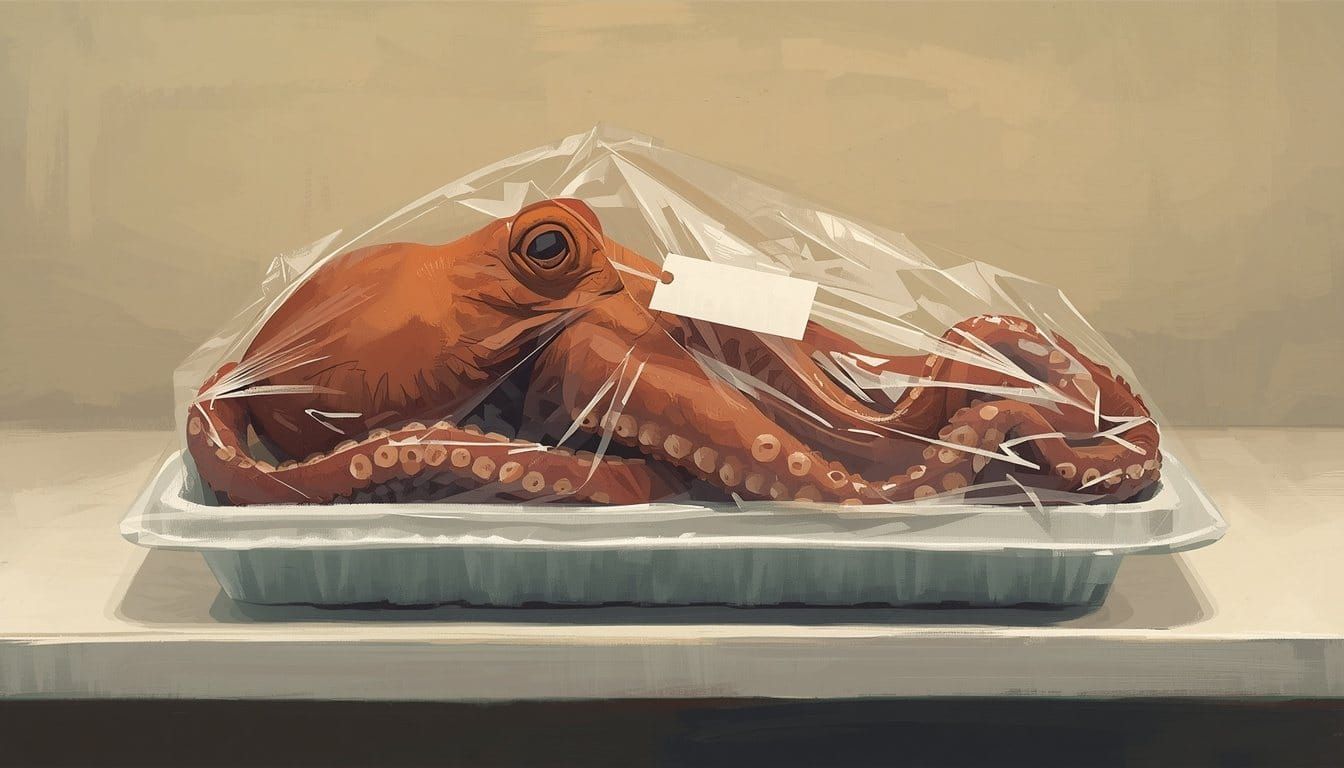
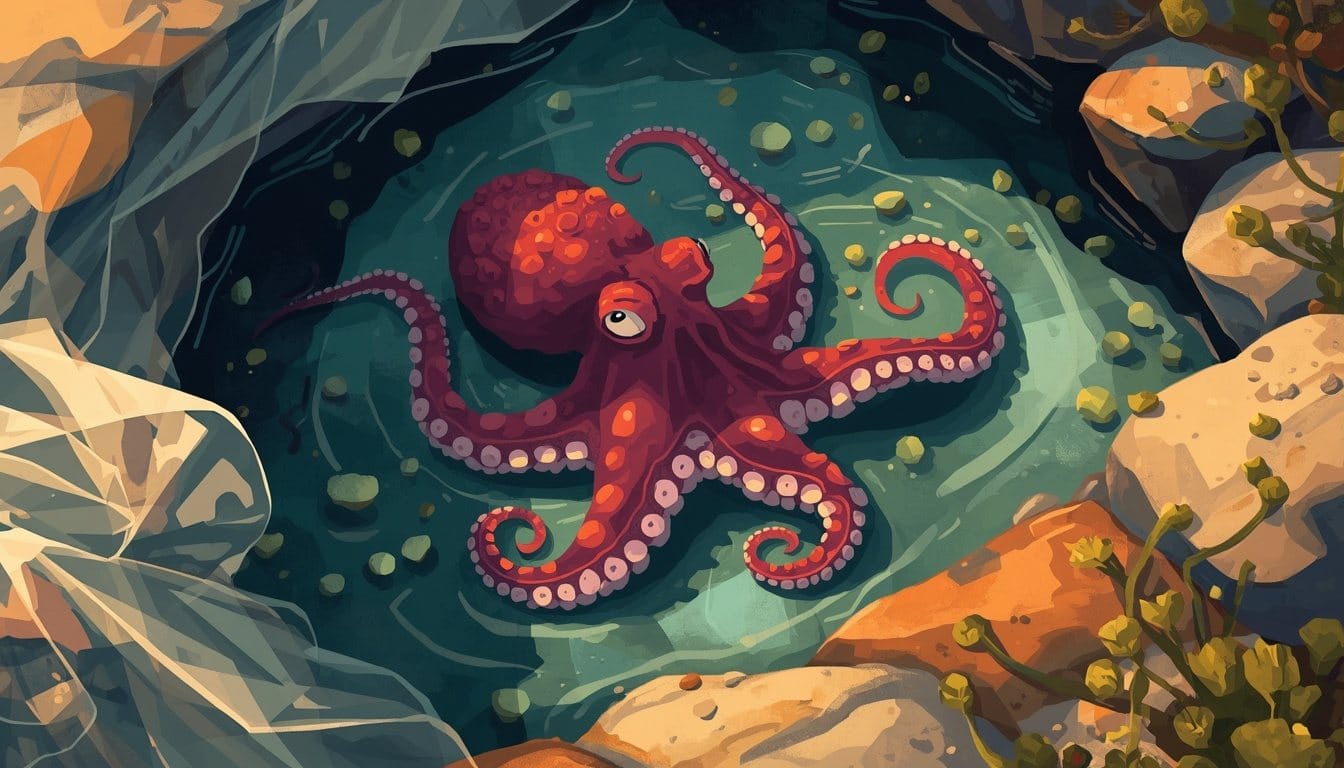
Picture an octopus on a supermarket tray, sealed under plastic, with a price sticker on top.
See the real photo. It's confronting.
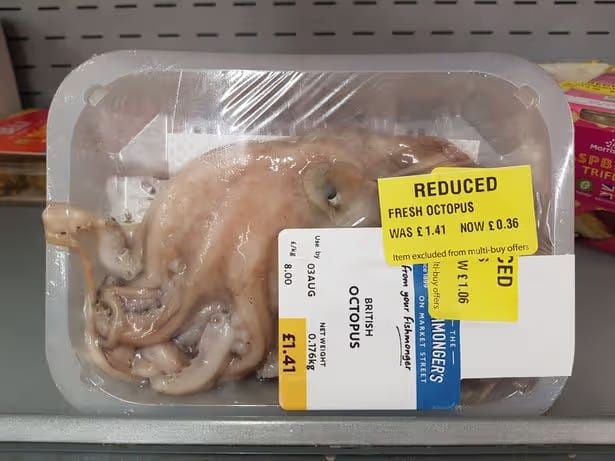
It's an upsetting picture, and that's the point of it. An octopus is one of the cleverest creatures in the sea. It solves puzzles and changes colour at will. Here it has become a product, to be bought, sold and consumed. Somebody else has set the terms. Somebody else is telling its story.
Most of us have felt like that octopus at some point. This is why the ugly question from last time bites so hard.
Self as a product
A commodity is something that can be bought and sold because each one is much like the next. One bag of rice can stand in for another, and that's what makes it useful. There's nothing wrong with commodities. Much of modern life depends on them: the standard parts, the shared formats, the sameness that lets things fit together without friction.
The trouble comes when life asks you to become one, and it asks early. This isn't the same as wanting to be understood. Being legible to other people is a good and necessary thing, and much of this series is about it. Commodification is something else: being asked to shape yourself into whatever is most useful and easiest to exchange, until the shape starts to feel like who you are.
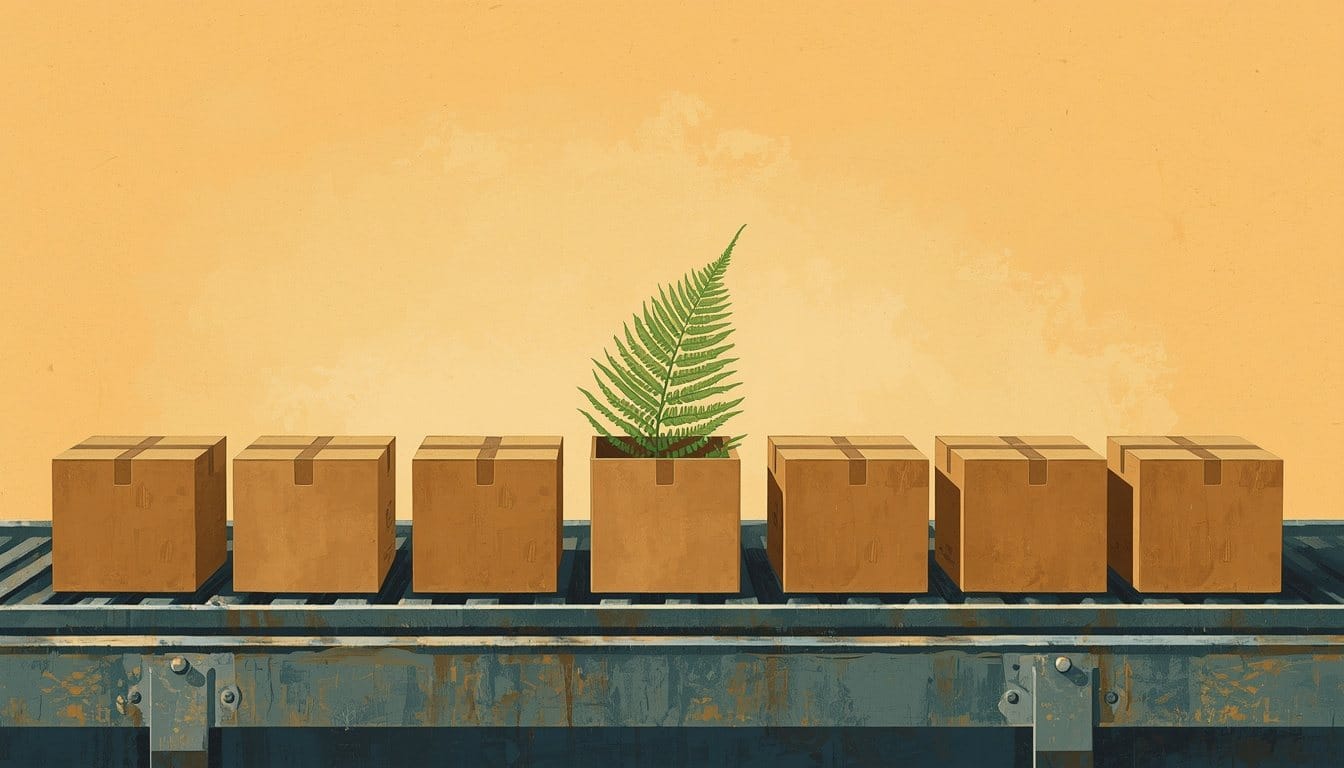
At school you learn fast that the game is to pass tests, win the prizes and collect gold stars, and to give an account of yourself as someone who achieves. Curiosity and achievement part ways very early. You can get very good at the gold stars, and drift a long way from whatever you were actually curious about.
Applying for jobs, you write a CV, the ultimate piece of self-commodification. It asks you to stretch, contort and reduce yourself into a two-dimensional, upwardly cascading story that ends, conveniently, with this job. Everyone at the table knows that person doesn't really exist. It's a performance everybody agrees to give.
Online, if you make things and share them, you soon learn that the platforms that share your work have incentives built in. They quietly shape what you say, how you say it and where, because that's the price of being seen. Anyone with an artistic bent knows the particular ache of watching their work bend, a little or a lot, towards whatever the algorithm rewards.
And then the most tender one. Out of love, and the wish to keep the people close to us proud and at ease, we often set our deepest dreams to one side. That can go on for years before we notice.
Go back to the octopus for a moment. What makes the picture hard to look at is what's happened to its story. It isn't its own any more. It's being passed around, priced, used. Modern life does a quieter version of this to people. It teaches us to measure our worth by output and achievement, and it flattens our experiences, our creativity and our dreams into something that can be packaged, and trimmed if it doesn't suit the market. That leaves us out of touch with a question that matters more: how do I live as a custodian of my gifts?
The answer isn't to avoid commodification altogether. In the world as it is, that isn't possible. It's to find firmer ground somewhere else first, and then to meet the market from there, on terms you've chosen.
When have you felt like the octopus?
Putting the labels down
One of the first steps is to loosen your grip on the identities you've picked up along the way. Identities are powerful. As soon as one becomes part of how you belong, you have to defend it, and the defending takes energy. Many of us live inside stories like these without noticing: I'm a misfit. I'm unemployable. I'm the high achiever who never got the right break. They feel like facts, and they're really labels from the shrink-wrap.
Letting them go is harder than it sounds. Rousseau had a line about people hugging their chains, and the familiar can be comforting even when it's tight. There's a saying, usually credited to the Tibetan teacher Chögyam Trungpa, that helps here: the bad news is you're falling through the air, with nothing to hang on to and no parachute. The good news is there's no ground. If setting your old self-stories aside feels disorienting, that's all right. You won't hit anything. You might even enjoy floating for a while, as several characters in search of an author.
Dissecting the bird to find the song
The second pressure is quieter. It has a name: disenchantment. It's what happens when everything gets reduced to what can be explained, measured or optimised.
Reason, science and measurement are great achievements, and modern life rests on them. The problem is a habit of mind that wants to pin everything down for its own sake, like dissecting the bird to find the song. Wonder, beauty and depth get pushed aside for whatever is useful, and talk of soul or magic starts to sound faintly embarrassing.
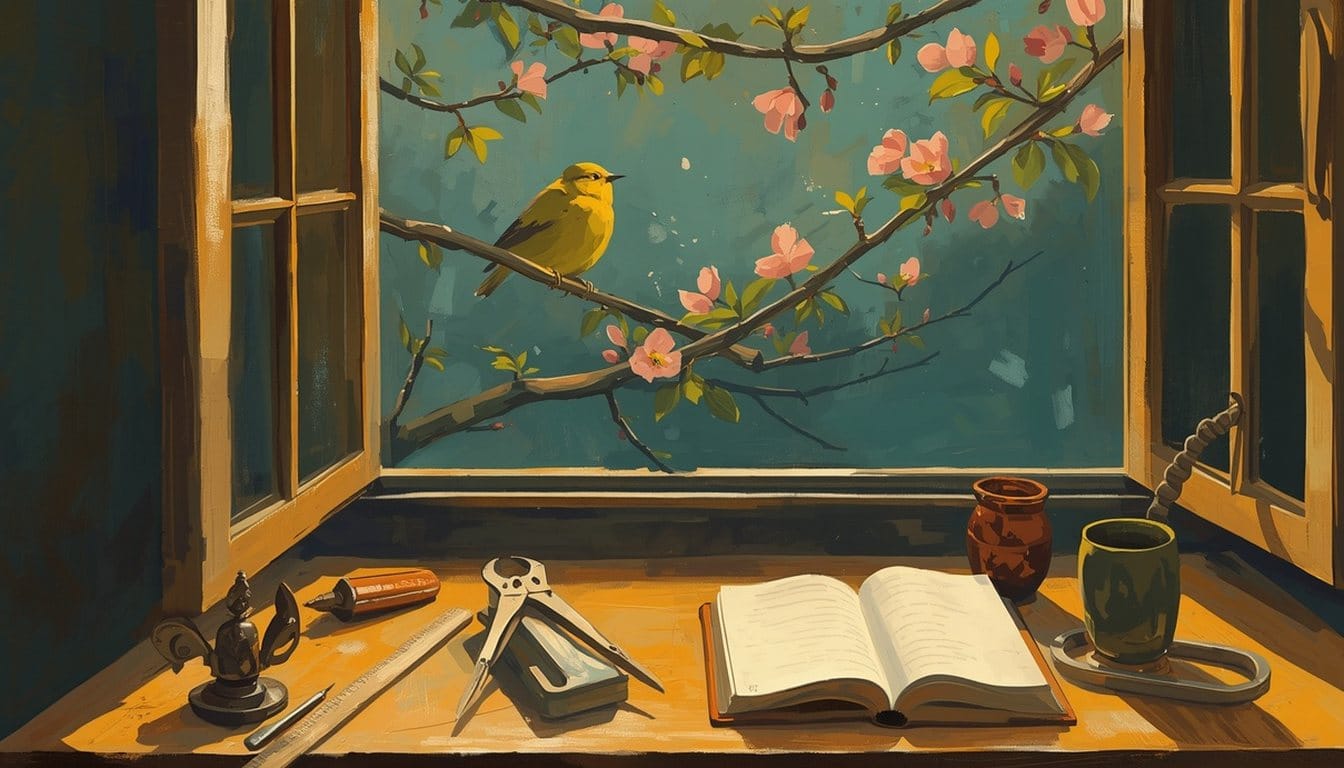
The sociologist Max Weber, who gave us the phrase the disenchantment of the world, distinguished between acting for a purpose and acting from a value. The first weighs means against ends and looks for the most efficient route. The second does something because it matters in itself, whatever comes of it. Weber worried about the first spreading into every corner of life. Things go strange when it does and the means become the ends: growth for the sake of growth, achievement for the sake of achievement, numbers that must go up while nobody quite remembers why.
Put the two pressures together and you get a world rich in means and starved of meaning. You also get a small, everyday question shaped by both of them. So, what do you do? It's a request for a marketable identity. No wonder it's hard to answer.
Two stories
Most of us walk into a room with two stories about ourselves already running.
The first is the social armour story. It's linear: a series of achievements and milestones on the way from A to B, always heading up. It's the one on LinkedIn and the CV, for whenever you want to seem polished, runway-ready, and sure of where you're going. It keeps you safe, and it's worth having.
The second is the shadow story. It's messy, complicated and non-linear, teeming with weird and wild moments, half-forgotten hopes, curiosities and hidden threshold moments. It mostly comes out at 3am to a friend who'll understand, or over drinks on a Friday night. It has far more to do with how you really got from A to B to D and back to B again. And it knows what you need.
Life doesn't have to be linear
If your social armour story were made into a film, it would be a classic three-act movie: one clear hero, one goal, and every scene building towards the moment they arrive. School, first job, promotion. Nothing makes the final cut unless it moves the plot forward.
Most people live far less tidy lives. A truer adaptation might be a long-form TV show: a run of self-contained episodes with a longer arc underneath. Or an anthology series, with a new setting and a whole new cast each season, where somehow it still feels like the same story. Would you rather be a novel, or a book of poems?
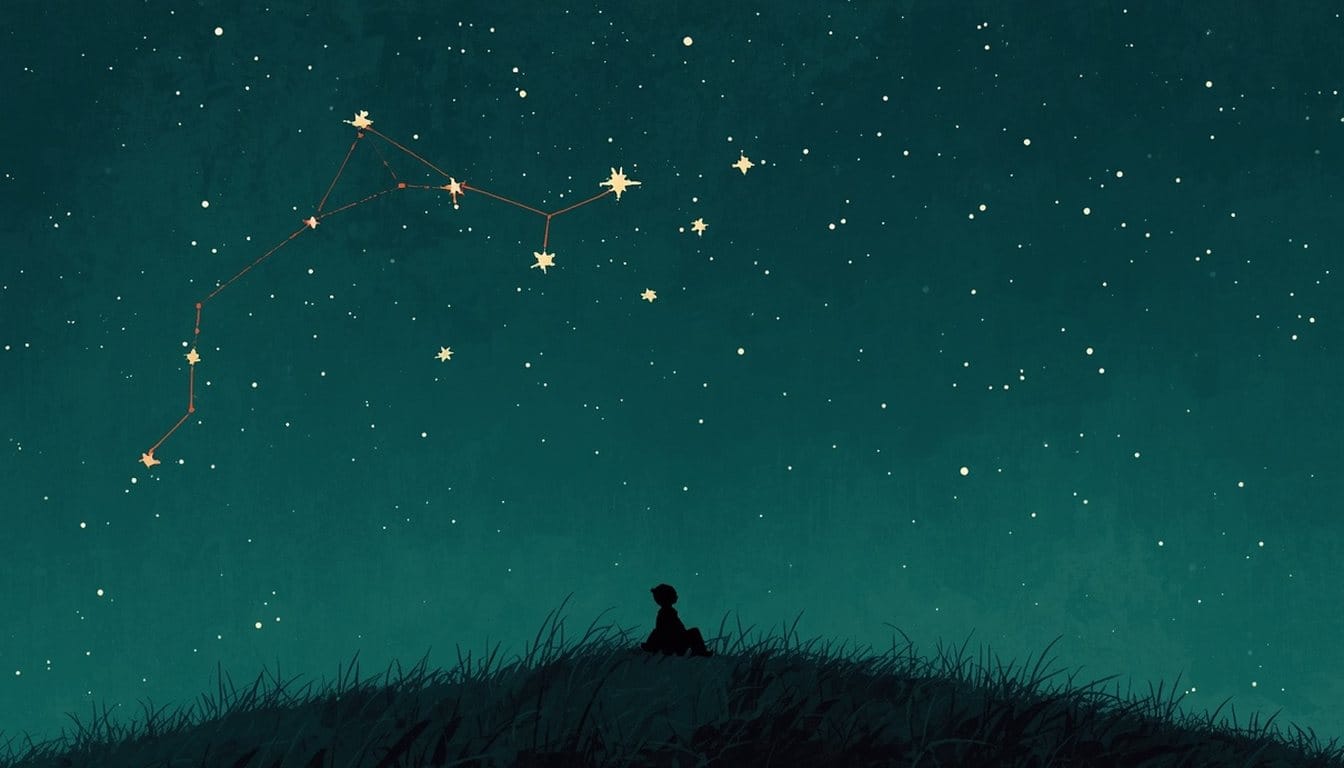
Or a spiral, coming back to the same themes a little deeper each time round. Or a constellation: a scatter of bright points, joined into a picture by whoever is looking.
Some of the oldest storytelling in the world works like this. The Australian Museum describes First Nations stories that happen continuously, in circles and patterns, where no matter where you start, eventually you'll hear the whole story.
The words author and authority share a root. Choosing the shape of your own story is one way to take some of that authority back.
Room to breathe
The roles, the achievements and the pay all still matter. We live in the world as it is. The invitation is to put down the pressure of it all, the stakes you may have absorbed like a shrink-wrapped octopus, for long enough to breathe.
Think of a self-inflating camping mat. Open the valve and it fills slowly, taking twenty minutes or so to come back to its full shape. People need time like that too. From that fuller place, you can go back to a commodified world on terms you've chosen yourself.
Try this
Give this an evening, or a long walk.
- List six to ten moments that shaped you. Turning points, thresholds, strange side quests. Include a few that would never make the CV.
- Read them through as a straight line. Notice what that version leaves out.
- Try them in two or three of the shapes below. Which one feels most like your life?
- Plot your story in that shape, any way you like: written out, as a storyboard, or with pins and string like a detective's murder board.
- Ask yourself what this shape says about how you understand yourself, and which connections showed up that you hadn't seen before.
The shapes to try:
- Linear: one clear path from start to finish.
- Episodic: self-contained episodes linked by a theme.
- Poetic: standalone moments that add up to a feeling.
- Spiral: the same themes revisited, at a new depth each time.
- Mosaic: fragments that come together into a whole.
- In medias res: start in the middle and let the backstory follow.
- Constellation: bright points, joined the way you see them.
Or go and sit by the beach for a long think. That counts too.
For a printable version of the seven shapes, the five mapping steps and some further reading, there's a sheet to keep: Story shapes (PDF) ↗
Preparing a Red Thread Talk? Your story map is the rough skeleton of one.
Alongside this piece
Try it for yourself
Two small things to do with what you've just read. Open either one.
1 Armour story or shadow story?
Here are some lines from one person's life. A few of them tell the same thing twice. Make the call on each before the answer appears.
2 Map your story
List the moments, then try them in different shapes and see which one feels like your life. It saves in this browser as you go, so you can come back. When you're ready, gather it into one page you can keep.
Moments
Six to ten moments that shaped you: turning points, thresholds, strange side quests. Include a few that would never make the CV. A few words each is plenty.
Try a shape
Try at least two. The straight line first, then whatever tugs at you.
Pick a shape to see your moments in it.
Reflect
Nothing you write here leaves your browser.
Unforgetting · becoming legible to yourself
In good company
Replies from signed-in readers. They open in their own space, so you can sit with the piece first.
In good company
What came up for you?