







Unforgetting becoming legible to yourself
The rooms of your inner home
Imagine yourself as a house. A short guided tour of your inner rooms, and a map to draw when you come back out.


“I am large, I contain multitudes.” — Walt Whitman
There's a voice that tends to turn up just as you're about to step forward. Who am I to speak about this?
It pays little attention to your experience or your achievements. It speaks up anyway, often while you watch other people claim the same space with less to say. Hype doesn't quieten it. A cheerleader shouting you've got this doesn't either.
What helps is a reply with some depth to it, one that draws on the whole textured richness of who you are: everything you've lived through, and everything you've stitched together along the way. Only you have walked your particular path, so nobody is better placed to tell its story. To answer from there, though, it helps to know what's in there.
So this piece is a tour.
Imagine yourself as a house
Picture yourself as a home, with different rooms for the different parts of who you are. A lived-in place, a bit cluttered in corners, where all your many parts reside.
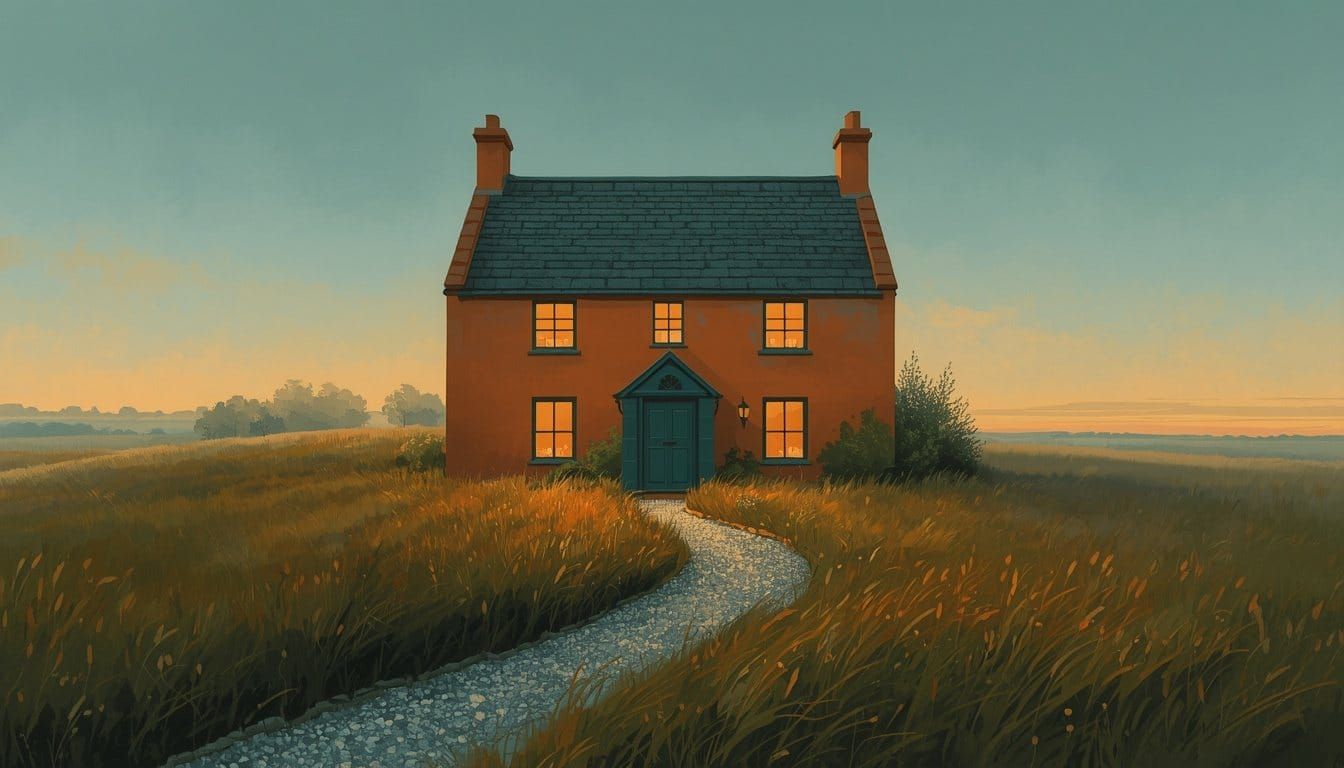
Start outside. Approach as if you're arriving for the first time. Where is this place? What surrounds it: is it calm, busy, wild, welcoming? What does the house look like from the path, and how does it feel to see it come into view?
Then, in your own time, step through the door. Welcome home.
The rooms
Look around with fresh eyes, like a visitor. Notice how things are arranged, and how each room makes you feel.
The living room is your social self, the part of you that meets other people. The bedroom is your private self, for rest, comfort and retreat. The kitchen is where you nourish yourself and others, in body and in creativity.
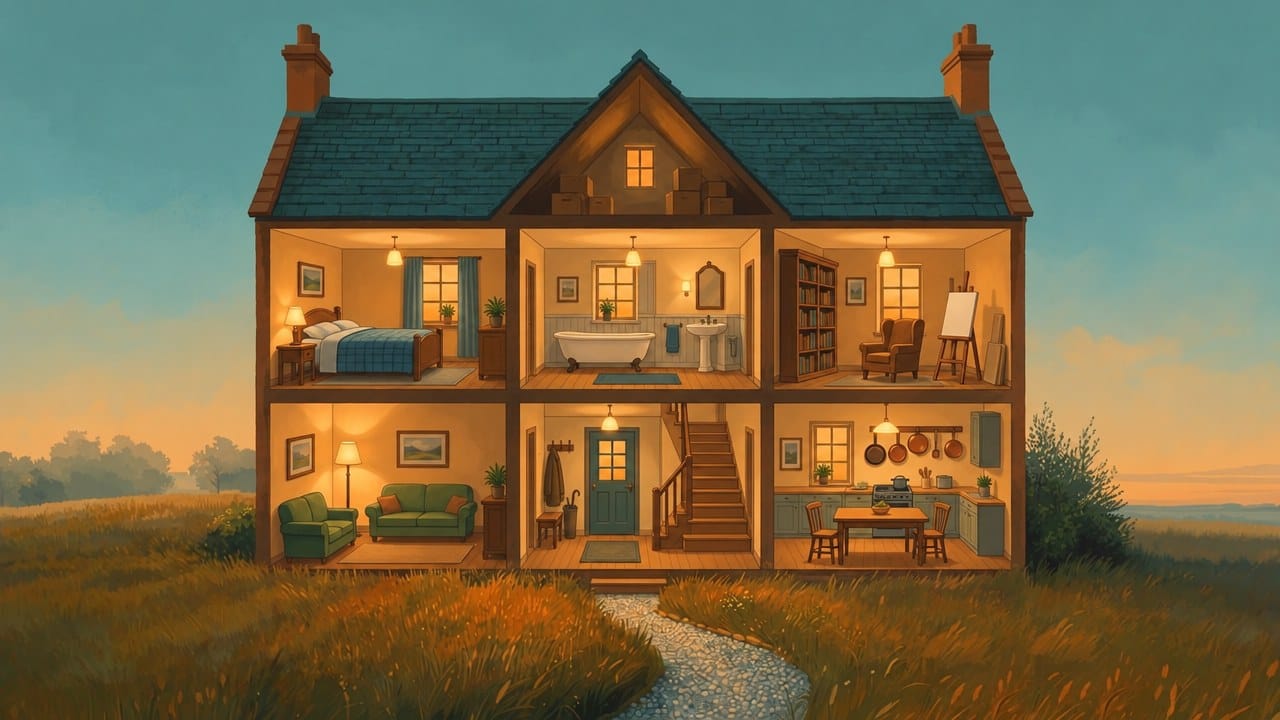
Then see what else is there. Perhaps a dining room for nourishment and connection. A home office for work and purpose. A bathroom for self-care and renewal. A garden for growth and for nature. A library, a studio, a playroom, a gym, a quiet room for meditation or prayer. A closet for the parts of you that you keep out of sight. And rooms nobody else has, which belong only to your house.
Some questions to wander with. Which rooms do you naturally drift towards? Where do you love to spend time? Which rooms call out to you? Are there any that have been neglected, shut up or left to gather dust?
The only task is to notice what's there, and what wants your attention.
The attic and the basement
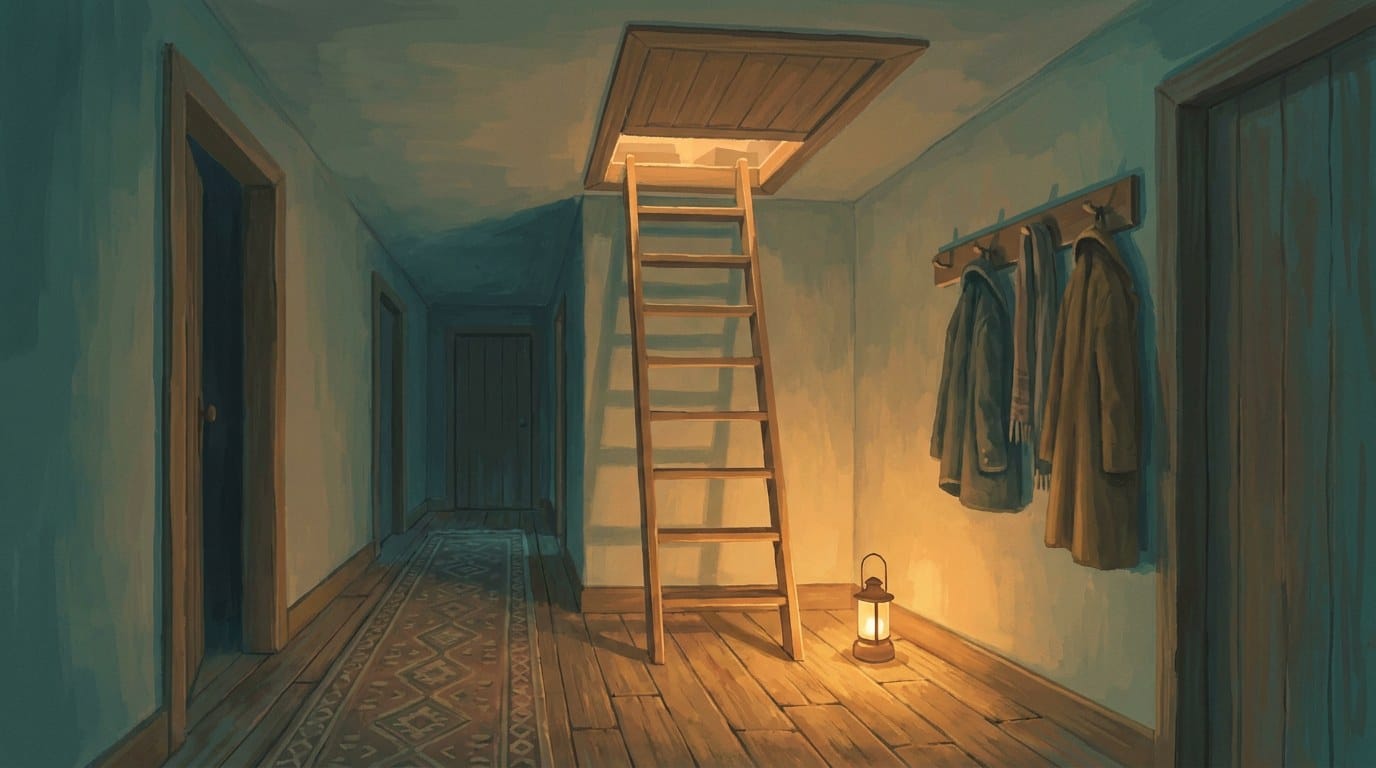
Most houses have somewhere for the things we plan to sort through later: old memories, piles of stuff, half-resolved business. In this house it's the attic, or the basement, or both.
There's no need to go in today. It's enough to notice that it's there, and to acknowledge it. That noticing is a small act of respect in itself.
This is a creative reflection, and it's meant to stay light. If something stirs that asks for more care than an evening with a pencil can give, take it to someone you trust.
Renovations
Houses change, and so do the people in them. Think about how your rooms have looked at different stages of your life. Has a new room appeared? Has one been renovated, or turned into something else? Did a room you once lived in end up as storage?
The idea of a self with many rooms has deep roots. Roberto Assagioli, who founded psychosynthesis, often described the psyche in spatial images and wrote about subpersonalities, the different selves each of us contains. Richard Schwartz's Internal Family Systems works with the many parts of a person, with a calm, curious Self at the centre, a little like the person who lives in the whole house and looks after it. Both point at something many people already sense: we are plural on the inside.
When you start to see that every part of you belongs in your story, something shifts. There are no bad rooms. Some just haven't had visitors for a while.
Draw the map
When you come back out, draw a simple map of your inner home. Label each room and jot down a few words about what you found there. A quick diagram on the back of an envelope is plenty. So is a full art project, if you'd enjoy one. Masterpiece or mad scribble, it's yours, and nobody else needs to see it.
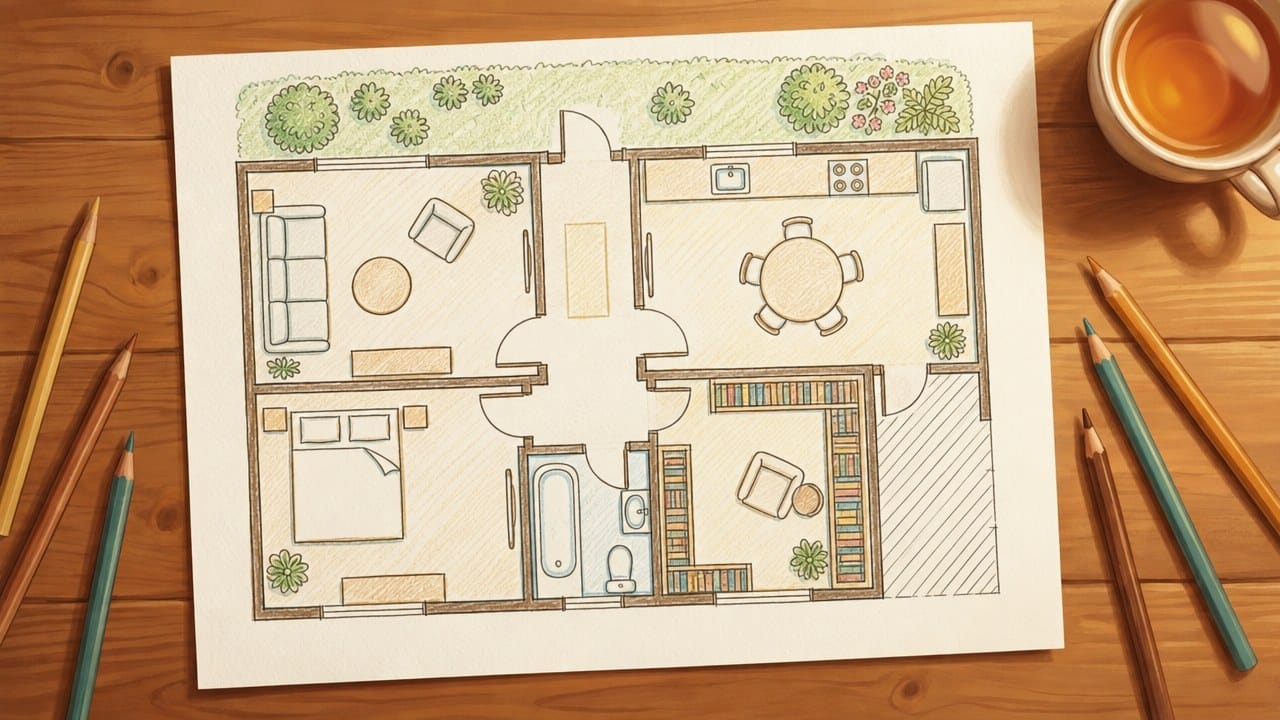
If you like, add layers: how the rooms looked then, how they look now, how they might look later. Or draw more than one map.
Keep it somewhere you'll find it again. It works more like a companion than a drawing, and the rooms will keep changing.
Try this
Give yourself twenty quiet minutes and some paper.
- Arrive. Close your eyes and picture your inner home from outside. Where is it? What surrounds it? How does it feel to approach?
- Step inside. Notice what you feel as you come through the door.
- Tour the rooms. Begin with the living room, bedroom and kitchen, then find whatever else is there. How is each room arranged? How does it make you feel?
- Acknowledge the attic and basement. Notice them, and leave the doors closed.
- Linger. Spend a while in the rooms where you feel most at home.
- Come back. Open your eyes, and draw your map while it's fresh.
Then write a few lines:
- What surprised you?
- Which room, or which feeling, stood out most?
- Which part of your inner home is asking for more attention or care?
For a printable version of the tour, a guide to fourteen rooms and what each one can stand for, and some further reading, there's a sheet to keep: Your inner home (PDF) ↗
Alongside this piece
Try it for yourself
Answer the voice from the start of the piece, then gather your rooms into a map. Open either one.
1 Answer the voice
Back to the voice from the start of the piece. You're about to step forward, and it turns up on cue.
“Who am I to speak about this?”
Which is closest to yours?
One answer from the whole house
“Who am I? I'm someone who has spent years in kitchens of one kind or another, feeding people and half-formed ideas. I keep a library of questions I can't put down, and a studio where things get made badly before they get made well. There's a room I'd closed off for a while; I've started opening it again. Nobody else has walked through these rooms in this order. That's who.”
2 Draw your map
Note what you found in each room. It saves in this browser as you go, so you can come back and renovate. When you're ready, gather it into a map you can keep.
Which rooms does your house have?
The living room, bedroom and kitchen are always there. Tap any others you find, or name one of your own.
Looking back
Nothing you write here leaves your browser.
Unforgetting · becoming legible to yourself

In good company
Replies from signed-in readers. They open in their own space, so you can sit with the piece first.
In good company
What came up for you?